-
E-mail
1914312640@qq.com
-
Phone
13256363899
-
Address
1003, Building 2, Weifang Financial Service Area, No. 5087 Shengli East Street, Kuiwen District, Weifang City
Product Categories
Shandong Runchuang Environmental Protection Equipment Co., Ltd

Promotion of sewage treatment equipment in township hospitals
NegotiableUpdate on 01/21
- Model
- Nature of the Manufacturer
- Producers
- Product Category
- Place of Origin
Overview
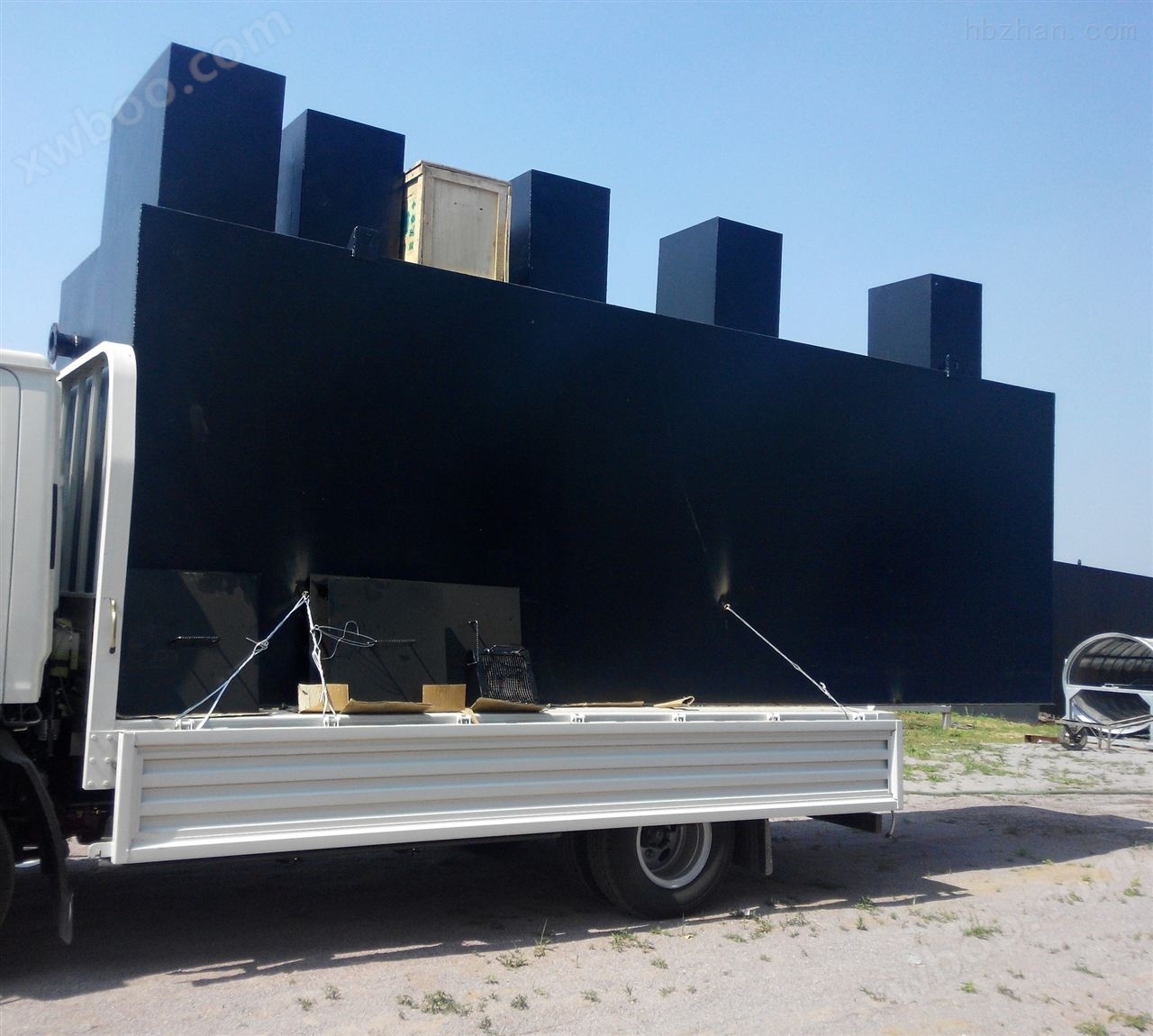
The promotion of sewage treatment equipment in township hospitals involves burying the equipment below the ground surface. The surface above the equipment can be used for greening or other purposes, without the need for building houses, heating, or insulation. The entire equipment treatment system is equipped with a fully automatic electrical control system and equipment fault alarm system, ensuring safe and reliable operation. Generally, there is no need for dedicated personnel to manage the equipment, only timely maintenance and upkeep of the equipment is required.
Product Details
Promotion of sewage treatment equipment in township hospitals
What are the methods for treating medical wastewater? That method has good processing effect, low cost, small footprint, and simple operation.
At present, there are small-scale medical wastewater treatment equipment on the market, including:
1. Ozone treatment equipment
High concentration ozone is fully dissolved in water, forming high concentration ozone water with bactericidal ability and degradation function.
2. Chlorine disinfection equipment
It refers to the method of oxidizing and disinfecting by adding chlorine to water after transformation. As a widely used disinfectant in various fields, it is currently the most commonly used method for water treatment disinfection
3. Sodium hypochlorite disinfection equipment
It is formed through its hydrolysis to form hypochlorous acid, which further decomposes to form new ecological oxygen. The oxidizing properties of new ecological oxygen cause denaturation of bacterial and viral proteins, leading to the death of pathogenic microorganisms.
4. Chlorine dioxide disinfection equipment
It refers to the method of adding chlorine dioxide to water to complete oxidation and disinfection.
Shandong Runchuang Company introduces that it is currently developing and producing small-scale medical wastewater treatment equipment. This equipment does not require a collection tank, and sewage can be connected to the inlet of the equipment. When the sewage reaches the liquid level, it will be automatically treated. If the water level is low, it will automatically stop without adding raw materials. The transportation cost is low, and only the power supply needs to be connected.
Characteristics of ozone disinfection
High efficiency ozone is a highly effective sterilizing agent. The health organization has summarized and compared the efficacy of disinfectants, and the killing effect on Escherichia coli is ozone (O3), followed by hypochlorous acid (HClO)>chlorine dioxide (ClO2)>silver ions (Ag+)>hypochlorite (ClO -)>ferrate (FeO42-)>chloramine (NCl3). Ozone sterilization is 600 to 3000 times faster. High purity ozone is produced by utilizing oxygen in the air. During the disinfection and oxidation process, excess oxygen atoms (O) combine to form oxygen molecules (O2) after 30 minutes, without any toxic residues. Broad spectrum ozone has a destructive effect on the internal structure of bacteria, viruses, and other microorganisms, and can kill various bacteria such as bacterial reproductive bodies, spores, hepatitis A and B viruses, fungi, and protozoan cysts, as well as destroy botulinum toxin and rickettsia.
Introduction to Hospital Sewage
Hospitals are generally divided into two categories: comprehensive hospitals and infectious disease hospitals. The types and concentrations of pollutants in hospital sewage are similar to those in urban fecal sewage, but not * *. Because in addition to general pollutants, hospital wastewater also contains some special pollutants such as drugs, disinfectants, diagnostic agents, detergents, etc.
Hospital sewage mainly comes from various wards, especially from infectious disease wards, operating rooms, and laundry rooms. In addition to containing a large number of pathogenic microorganisms, parasite eggs such as roundworm eggs, and various viruses such as hepatitis virus, tuberculosis bacteria, and dysentery bacteria, it also contains a large amount of pollutants, of which organic matter accounts for about 60% of the total pollution and insoluble substances account for about 40% of the total. Due to the precipitation of a large amount of substances such as muscle tissue, heavy worms and their eggs, as well as a large number of bacteria, are deposited together in the sludge.
1. The entire equipment processing system is equipped with a fully automatic electrical control system and equipment fault alarm system, which operates safely and reliably. Generally, there is no need for dedicated personnel to manage it, and only timely maintenance and upkeep of the equipment is required.
2. The buried sewage treatment device is buried below the ground surface, and the surface above the device can be used for greening or other purposes without the need for building houses, heating, or insulation.
3. The biochemical tank adopts the biological contact oxidation method, which has a relatively low volume load of the filling material, and the microorganisms are in the self oxidation stage, resulting in low sludge production. It only takes more than three months (90 days) to discharge the sludge (using a manure truck to suction or dehydrate it into a sludge cake for external transportation).
4. The deodorization method of this buried domestic sewage treatment equipment not only uses conventional high-altitude exhaust, but also includes soil deodorization measures.
5. The secondary biological contact oxidation treatment process adopts push flow biological contact oxidation, which has a better treatment effect than mixed or two-stage series mixed biological contact oxidation tanks. And it has a smaller volume than activated sludge tanks, strong adaptability to water quality, good shock load resistance, stable effluent quality, and will not cause sludge expansion. A new type of elastic three-dimensional packing material is used in the pool, with a large specific surface area and easy biofilm formation and detachment by microorganisms. Under the same organic load conditions, it has a high removal rate of organic matter and can improve the solubility of oxygen in the air in water.
Township hospitalPromotion of sewage treatment equipment
Technical features:
1. Timeliness in operation. Practice has proven that for the same aeration equipment, the A/O process has a higher oxygen utilization efficiency compared to traditional activated sludge processes. The A/O reaction tank is usually carried out in four stages according to time: aeration, sedimentation, drainage, and idle.
2. Dissolved oxygen undergoes periodic changes with high concentration gradients.
3. The non steady state of the operating process. At the beginning of the drainage cycle, the liquid level in the A/O tank is highest, and at the end of the drainage, the liquid level is lowest. The magnitude of the liquid level change depends on the drainage ratio, which is related to the concentration of treated wastewater, discharge standards, and the difficulty of biodegradation. The volume of the mixed solution and the concentration of the substrate in the reaction tank both vary, and the degradation of the substrate is non steady.
4. Continuous water intake and intermittent drainage. However, the actual sewage discharge is mostly continuous or semi continuous, and the A/O process can continuously feed water, which is more suitable for the characteristics of actual drainage.

Cultivation and domestication of biofilm
The cultivation and domestication of biofilm is to create a certain environment and conditions, so that biofilm can adhere to biological fillers, and microorganisms can use this as a carrier to purify sewage. To successfully coat the packing material, it is necessary to maintain a certain concentration of activated sludge in the oxidation tank. Therefore, the cultivation and domestication process of biofilm is also the cultivation and domestication of activated sludge.
Due to the similarity between hospital wastewater and domestic sewage, and the presence of microorganisms in raw water, vaccination is generally not necessary. But due to the tight schedule, in order to accelerate the cultivation process, an appropriate amount of activated sludge from urban sewage plants can be inoculated and specialized biological agents can be added.
The purpose of sludge cultivation and domestication is to promote microbial proliferation, achieve a certain sludge concentration, and eliminate and induce mixed microbial communities, so that microorganisms with the ability to degrade the wastewater become dominant species.

The specific method is
Inject the mixed solution of inoculated sludge into the contact oxidation tank and add domestic sewage to the normal operating water level in the tank. Start the aeration system for closed aeration (i.e. continuous aeration without inlet or outlet) for about 24 hours. After stopping aeration, settle the mixed solution statically. After 1-1.5 hours, remove the supernatant, add fresh sludge and a small amount of sewage, add clean water to the normal water level, and re aerate (close aeration). After 2-3 hours, replace half of the sewage in the tank with the sewage in this system. After three days, all the sewage in this system will be added.
When the effluent quality meets the requirements and the sludge properties are normal, it indicates that the sludge has matured. Mature activated sludge has a cotton like appearance, a yellow brown color, good settling performance, and a slight earthy smell.
Observe the membrane formation of the packing material daily while observing the activated sludge. The specific method is to set indicator fillers at different positions in the contact oxidation tank. When observation is needed, the seasoning should be taken out of the tank and then returned to the tank after observation.
After the cultivation and domestication of activated sludge are mature, trial operation begins. The purpose of trial operation is to determine the operating conditions.
By changing the aeration time and drainage time, different reaction tests are conducted on the sewage (usually for about two days) to determine the operating mode, the achieved effluent quality, and the operating mode.
When the inlet water volume is increased to the design concentration and the operating mode is determined, the shape of the suspended activated sludge in the water is good, and the daily treatment capacity and effluent quality meet the design requirements; When the effluent of the system meets the discharge requirements, the system enters the stable operation stage. During the stable operation phase, the removal of system pollutants and the stability of system operation should continue to be examined.
The main adjustment parameters during the system debugging process include mixed liquid sludge concentration (MLSS), air volume, SV30 (sludge settling ratio, which refers to the volume of sludge occupied after 30 minutes of static settling in the reaction tank), etc.
Similar Product Recommend