- Phone
-
Address
Building 21, No.1 Shuinanzhuang, No. 1069 Huihe South Street, Chaoyang District, Beijing
Product Categories
Beijing Oubotong

Oxygen/Hydrogen Analyzer ELEMENTRAC OH-p 2
NegotiableUpdate on 04/29
- Model
- Nature of the Manufacturer
- Producers
- Product Category
- Place of Origin
Overview
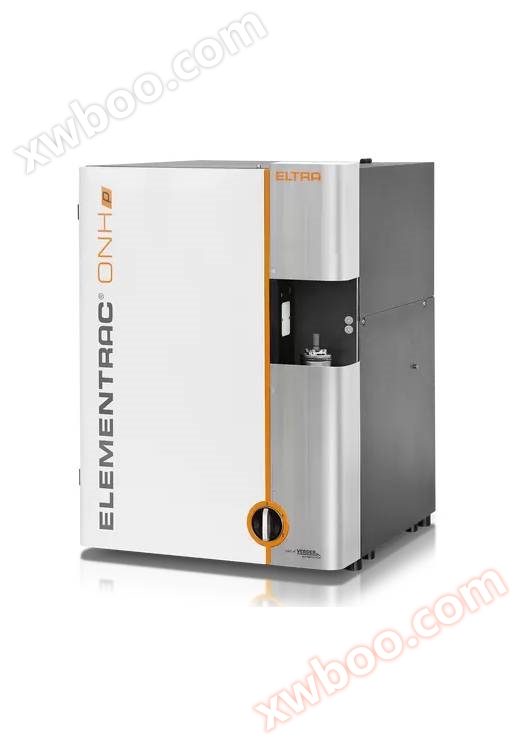
The all-new ELEMENTRACOH-p2 is a powerful elemental analyzer used to measure oxygen and hydrogen concentrations in inorganic samples such as steel, iron, copper, or ceramics
Product Details
The all-new ELEMENTRAC OH-p 2 is a powerful elemental analyzer used to measure oxygen and hydrogen concentrations in inorganic samples such as steel, iron, copper, or ceramics. High sensitivity non dispersive infrared detectors and thermal conductivity detectors can detect element contents ranging from extremely low ppm to high percentage, providing stable and reliable results. The innovative injection system features pulse degassing and vertical injection design, making it easy to analyze rod-shaped, granular, and powdered samples with analysis weights up to 2g. The ELEMENTRAC OH-p2 elemental analyzer can meet or even exceed the requirements of all relevant international standards, such as ASTM E 1019 or DIN EN 3976.
Oxygen/Hydrogen Analyzer ELEMENTRAC OH-P 2
☆ A closed gas system reduces the consumption of carrier gas and improves detection sensitivity
☆ It can be well applied to needle like, powder like, and granular materials
☆ Economical argon gas can be used as a carrier gas option
☆ Shorten analysis time
☆ Induction power up to 8.5kw
☆ Optional automatic cleaner
☆ Reliable analysis of OH elements for inorganic materials such as steel, non-ferrous metals, ceramics, slag, and ore.
Operation and Analysis Process of Oxygen/Hydrogen Analyzer ELEMENTRAC OH-P 2

Step 1: Enter the sample information into the Elements software
The sample name is entered into the software, and the weight information will be automatically transferred to the software (see step 2)

Step 2: Weigh and put the sample into the injection port
ELEMENTRAC OH-p 2 can safely and accurately analyze sample sizes ranging from a few milligrams to 2 grams. Rod shaped or granular samples can be directly analyzed. For elemental analysis of powders, nickel capsules do not need to be sealed for analysis.

Step 3: Analysis
Then place the empty graphite crucible on the lower electrode and click on 'Start' using the Elements software to perform elemental analysis. The software will control all subsequent analysis steps.

Step 4: Output data
From 120 to 180 seconds after the analysis begins, the detected content can be reported or exported through LIMS
Oxygen/Hydrogen Analyzer ELEMENTRAC OH-P 2configuration
ELEMENTRAC OH-p 2 can be used as a single element analyzer to analyze oxygen or hydrogen separately, or to measure both oxygen and hydrogen simultaneously. Among them, oxygen is measured in the form of carbon dioxide in two infrared detectors, while nitrogen and hydrogen are measured in elemental form in a thermal conductivity cell.
Detection pools of different lengths

High sensitivity thermal conductivity detector

ELEMENTRAC OH-P 2 one-stop standard solution for oxygen/hydrogen analyzer
The chemical reagents and filters required for the operation of the ELEMENTRAC OH-p 2 element analyzer are conveniently located at the front of the instrument panel and can be hidden behind a movable door during daily operation. This arrangement greatly reduces the time required for maintenance and increases the overall experience. In addition, innovative details greatly improve the reproducibility of measurements.
Innovative sample inlet&pulse degassing sample chamber
The sample inlet of the OH-p2 element analyzer ensures convenient operability and reproducibility. Samples of different shapes, such as solid blocks, particles, or powders in capsules, can be analyzed with a weight of up to 2000 milligrams, and the surrounding air is removed through high-pressure degassing at the injection port. Then they are vertically placed into the preheated graphite crucible for analysis.
☆ Strong prevention of dust accumulation
☆ No longer require sealed nickel capsules
☆ Can directly analyze particle samples weighing up to 2000mg
☆ Easy to maintain and durable
Closed gas management
The ELEMENTRAC ONH element analyzer series uses a closed gas system under high pressure to ensure that the released sample gas can be 100% sent to the detector, ensuring good sensitivity and reproducibility.
Oxygen/Hydrogen Analyzer ELEMENTRAC OH-P 2optional
In addition to the one-stop solution of ELEMENTRAC OH-p 2 elemental analyzer, it also provides further options to improve analysis efficiency and expand application scope.
Automatic cleaning device
Melting the sample in a graphite crucible at temperatures up to 3000 ° C can cause carbon deposition in the upper electrode and furnace, which will have a negative impact on the repeatability of ONH testing. The new optional automatic cleaning instrument can reliably remove these carbon deposits and achieve accurate elemental analysis even under high-throughput conditions. In addition, the elemental analyzer also has efficient gas calibration function and carrier gas pre cleaning function in furnace cleaning.

The comprehensive element analysis software based on Windows is an essential component of all element generation element analyzers. The central window (analysis and results) is the starting point for all the functions required for daily work. From here, analyzed samples can be grouped and exported, or new samples can be registered and analyzed. Users can call various dependent functions, such as application settings, calibration, diagnosis, or status.

Oxygen/Hydrogen Analyzer ELEMENTRAC OH-P 2Typical sample materials
Alloy, aluminum, dust, carbides, cast iron, copper, ferroalloy, iron, metal, ore, refractory metal, silicon, steel ..

Oxygen/Hydrogen Analyzer ELEMENTRAC OH-P 2Technical Specifications
|
Analyze elements |
Oxygen, hydrogen |
|
sample |
inorganic |
|
Furnace calibration |
vertical |
|
Sample loading |
graphite crucible |
|
Application field |
Steel, metallurgy, ceramics, metals, engineering, electronics |
|
stove |
Pulse furnace power up to 8.5 kW, temperature 3000 ℃ |
|
Detection method |
Infrared detection method for measuring oxygen; Thermal conductivity method for measuring hydrogen |
|
Typical analysis time |
120 - 180 s |
|
chemicals |
Schuetze reagent, sodium hydroxide, magnesium perchlorate |
|
carrier gas |
Compressed air, nitrogen purity 99.995%, all gases (2-4 bar/30-60 psi) |
|
Power requirements |
3~ 400 V, 50/60 Hz, Power 8500 W |
|
Equipment dimensions (width x height x depth) |
56 x 78 x 64 cm |
|
weight |
~ 165 kg |
|
Required equipment |
Computer, monitor, balance (accuracy 0.0001 grams) |
|
Optional accessories |
Cooling cycle unit, gas standard unit, carrier gas purification furnace |
|
- |
*6.8 kW during application setup |
Principle of operation of ELEMENTRAC OH-P 2 oxygen/hydrogen analyzer
The measurement principle of the ELEMENTRAC OH-p 2 elemental analyzer provides a wide range of measurements. When analyzing the sample, weigh the sample and put it into the sample port. Rinse with carrier gas to prevent atmospheric gas (oxygen) from entering the furnace. The graphite crucible is degassed in the pulse furnace of the analyzer to reduce possible contamination (such as residual hydrogen). After the stable phase, the sample is put into the crucible and melted. Carbon monoxide is produced by the reaction between carbon in a graphite crucible and oxygen in the sample. Hydrogen is released in elemental form. The carrier gas (nitrogen) and sample gas must pass through a filter before entering the Schulz reagent, which converts CO to CO2 while hydrogen remains in its elemental form. Carbon dioxide is measured by an infrared detector and removed using chemical reagents. Then the hydrogen content is measured by a thermal conductivity detector.