-
E-mail
hogem2020@126.com
-
Phone
13611983028
-
Address
2nd Floor, Block B, Building 1, No. 618 Chengliu Middle Road, Jiading District, Shanghai
Product Categories
Shanghai Hongjin Technology Co., Ltd
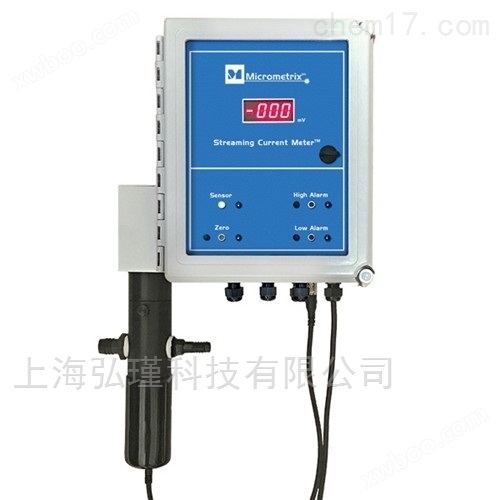
Micrometrix PCA Particle | Particle Charge Analyzer from the United States
NegotiableUpdate on 01/22
- Model
- Nature of the Manufacturer
- Producers
- Product Category
- Place of Origin
Overview
Product Name: Micrometrix PCA Particle | Particle Charge Analyzer $r $n Product Model: PCA $r $n Product Features: Micrometrix PCA Particle Charge Analyzer | Particle Charge Analyzer $r $n Based on streaming current measurement technology, it can quickly and accurately measure ion and colloid charges in aqueous solution samples. PCA can quickly determine the charge demand and chemical addition amount. The instrument can directly display the sample
Product Details
PCAMicrometrix PCA Particle | Particle Charge Analyzer from the United StatesDetailed information:
Micrometrix from the United States
PCA Particle Charge Analyzer | Particle Charge Analyzer | Particle Charge Analyzer
Particle Charge Analyzer
Application Industry
Paper and Chemical Industry
Water treatment pharmaceuticals
Beverage ceramics
Paint brewing
advantage
Confirmed chemical dosage
Ø Evaluate the performance of additives
Optimize process performance
Ø Quality control
Reduce the cost of chemicals
Micrometrix PCA Particle | Particle Charge Analyzer from the United StatesTechnical Specifications
Model: PCA
Measurement principle: Flowing current
Power supply: 110/230VAC
Measurement range: -1000~+1000mV
Display mode: Digital LED
Sample volume: 10-100ml
Output connection: BNC connector
Response time: 1 second
Diagnosis: Sensor LED
Cell Material: Polytetrafluoroethylene
Output: -1000~+1000mV
Control: Sensitivity gain
Automatic titration: optional external automatic titrator
Weight: 4.5Kg
Size (mm): 380Hx178178D
Measuring principle
The flowing current measurement chamber (SC Cell) determines the sample charge and titration endpoint. The measurement chamber includes a high-precision cylinder and two electrodes (one at the bottom and one at the top). The electrode is connected to the front end of the instrument casing extension. The measurement chamber allows samples to be injected from the top, with a standard sample volume of 100ml. Polymer electrolytes (polymers) or flocculants are used as titration standards, and colloidal particles will temporarily adsorb onto the piston and measurement chamber wall. Through the drive of the motor, the precision piston moves up and down in the cylinder at a frequency of approximately 4Hz, generating a strong liquid flow. At this time, the counter ions (i.e. counter ions) of the electrolyte will generate current between the two electrodes, and then through rectification and amplification, the polarized flowing current will be directly displayed on the instrument display screen.
Similar Product Recommend