-
E-mail
1037149724@qq.com
-
Phone
15221419697
-
Address
No. 8 Nanhong Road, Fengxian District, Shanghai
Product Categories
Shanghai Guiyong Electronics Co., Ltd

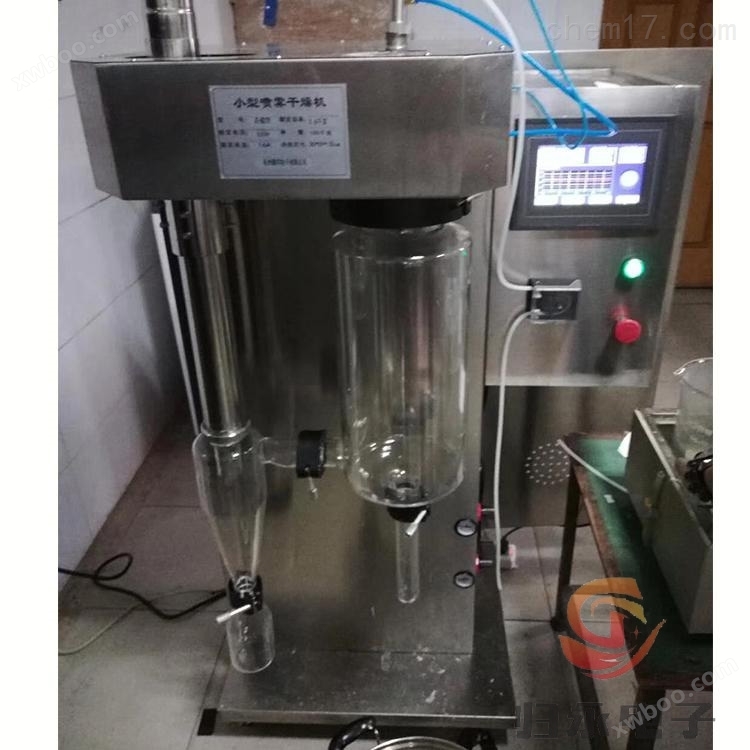
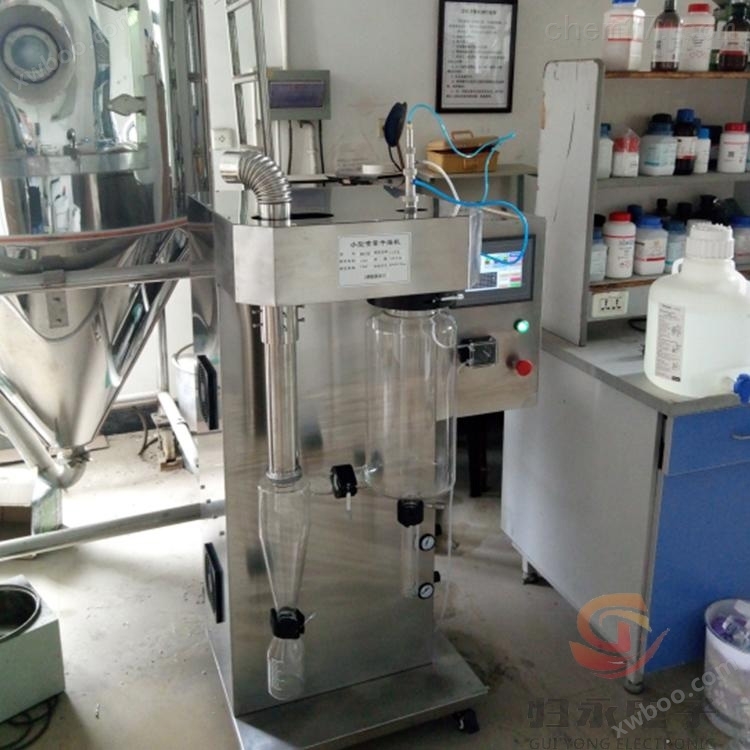
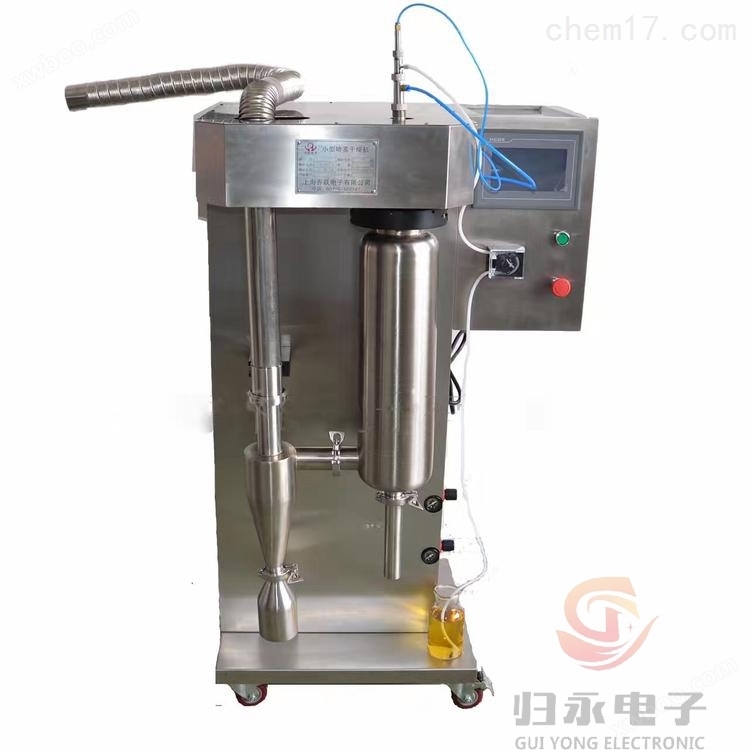
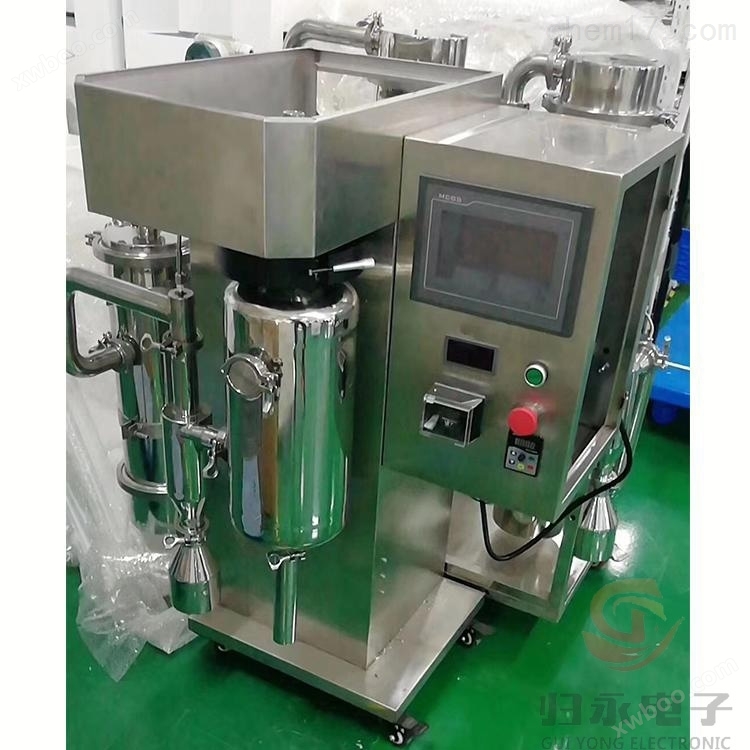
Manufacturer of spray drying equipment for flammable and explosive materials GY-XXGZJ
NegotiableUpdate on 01/23
- Model
- Nature of the Manufacturer
- Producers
- Product Category
- Place of Origin
Overview
The laboratory small spray dryer is that the air enters the air distributor at the top of the drying tower through the filter and heater, and then enters the drying chamber in a spiral shape. The material liquid is pumped from the material liquid tank to the centrifugal atomizer at the top of the drying tower through a filter, causing the material liquid to spray into extremely small mist droplets. The material liquid comes into contact with hot air in parallel, and the moisture evaporates rapidly, drying it into finished products in a very short time. The finished product is discharged from the bottom of the drying tower and the cyclone separator, while the exhaust gas is discharged by the fan. Manufacturer of spray drying equipment for flammable and explosive materials GY-XXGZJ
Product Details
Fruit and vegetable powder spray drying equipment, experimental spray dryer, nano spray drying equipment GY-XXGZJ
Product Introduction
Spray dryer is a kind of equipment that can complete drying and granulation at the same time. It is mainly composed of slurry supply system, atomizer, drying tower, hot air system, waste gas emission and dust removal system, unloading and powder conveying system, etc. In the more than 100 years history of spray drying, it was first used in the production of egg powder, milk powder, detergent, cosmetics and other small products. With the continuous deepening of research, it has been widely used in the production of various industrial ultrafine powders and nano powders, such as battery raw materials in the chemical industry, white carbon black; Aluminum oxide in the ceramic industry; Drying and granulation of drugs in the pharmaceutical field. Compared with non spray drying, spray drying can effectively reduce the agglomeration of ultra-fine powder. Through the spray drying process, particles with high sphericity, good fluidity and high fineness can be produced to meet the requirements of specific fields.
Principle of small spray dryer
Shanghai Guiyong GY-XXGZJLaboratory small spray dryerIt is the air that passes through the filter and heater, enters the air distributor at the top of the drying tower, and then spirals evenly into the drying chamber. The material liquid is pumped from the material liquid tank to the centrifugal atomizer at the top of the drying tower through a filter, causing the material liquid to spray into extremely small mist droplets. The material liquid comes into contact with hot air in parallel, and the moisture evaporates rapidly, drying it into finished products in a very short time. The finished product is discharged from the bottom of the drying tower and the cyclone separator, while the exhaust gas is discharged by the fan.
Features of small spray dryer:
Fast drying speed. After centrifugal spray, the surface area of the feed liquid is greatly increased. In the high-temperature airflow, 95% -98% of the water can be evaporated instantly, and the drying time is only a few seconds.
The production process is simplified and the operation control is convenient. Spray drying is usually used for solutions with a solid content of less than 60%. After drying, there is no need to crush and screen, which reduces the production process and simplifies the production process. Within a certain range, the particle size, bulk density, and moisture content of the product can be adjusted by changing the operating conditions, making control and management very convenient.
To prevent material contamination and extend equipment lifespan, all parts in contact with the material are made of stainless steel material. After spray, the feed liquid is atomized into dispersed particles, and the surface area is greatly increased. After contacting with hot air, the drying process can be completed in a very short time.
The parallel flow spray drying can make the droplets flow in the same direction as the hot air. Although the temperature of the hot air is high, the hot air enters the drying room and immediately contacts with the spray droplets. The indoor temperature drops sharply, while the wet bulb temperature of the material basically remains unchanged, so it is also suitable for drying thermosensitive materials.Manufacturer of spray drying equipment for flammable and explosive materials GY-XXGZJ
Widely applicable. According to the characteristics of the material, this machine can be used for hot air drying, centrifugal granulation, and cold air granulation. Most products with significant differences in characteristics can be produced using this machine.
Due to the instantaneous completion of the drying process, the particles of the finished product can basically maintain a droplet like shape, and the product has good dispersibility, fluidity, and solubility.
Development trend of spray drying technology
The spray drying technology is widely used and has obvious advantages, but its theory still lags behind practice, which is highlighted by the poor practical guidance of the drying theory. Drying kinetics, drying simulation of non spherical particles, spray drying and other fields need to be further studied [3]. The thermal efficiency of spray drying is low, so the problem of energy saving and consumption reduction of spray drying is more prominent [1] Subhigh temperature spray drying (air inlet temperature 60~150 ℃), normal temperature spray drying (air inlet temperature below 60 ℃), energy consumption reduction and multi-stage drying will be the focus of future research. In addition, spray drying technology combined with specific application fields will also be used in spray cooling molding, spray reaction, spray absorption, spray coating, spray granulation and other fields.Manufacturer of spray drying equipment for flammable and explosive materials GY-XXGZJ
Product Description
Laboratory small spray dryerGY-XXGZJ is mainly suitable for the production of trace particle powders in universities, research institutes, and laboratories of food, pharmaceutical, and chemical enterprises. It has broad-spectrum applicability to all solutions such as emulsions and suspensions, and is suitable for drying thermosensitive substances such as biological products, biopesticides, enzyme preparations, etc. Because the sprayed material is only subjected to high temperature when sprayed into mist like particles, it is only instantly heated and can maintain the active ingredients of these active materials without damage after drying.
Laboratory spray dryer price | Experimental spray dryer | Experimental small spray dryer | GY-XXGZJ small spray dryer manufacturer


According to the separation requirements, the mixing clarifier can be used in a single stage or in a cascade. When the cascade counter current operation is carried out, the feed liquid and extractant are separately added to the stages at both ends of the cascade, while the residual liquid and extractant are discharged from the stages at opposite positions. The working volume of the mixing chamber can be calculated by multiplying the total flow rate of the liquid and extractant by the time required for the extraction process. The horizontal cross-sectional area of the clarification chamber can be calculated by dividing the flow rate of the dispersed phase liquid by the coalescence and stratification velocity of the droplets. These operating parameters must be experimentally determined. It is generally believed that when the same stirring power is consumed per unit volume of mixing chamber, the stage efficiency is roughly equal. Therefore, when scaling up the design, production equipment can be designed based on the measured extraction time and layering speed. The hybrid clarifier has a simple structure, high stage efficiency, small amplification effect, and can adapt to various production scales, but the investment and operating costs are relatively high. Extraction towers are tower equipment used for extraction, including packed towers, sieve plate towers, rotary towers, pulsating towers, and vibrating plate towers. The tower body is an upright cylindrical structure. Light phase enters from the bottom of the tower and overflows from the top of the tower; Heavy phase is added from the top of the tower and exported from the bottom of the tower; The two flow in opposite directions inside the tower. Except for sieve plate towers, most extraction towers belong to differential contact mass transfer equipment. The middle of the tower is the working section, and the two ends are the separation sections, which are respectively used for the coagulation and stratification of dispersed phase droplets and the settling and separation of fine droplets carried by continuous phase. In the packed tower and sieve plate tower used for extraction, the liquid relies on pulse sieve plate extraction to install groups of sieve plates (without overflow pipes) or fillers in the working section. The pulsating liquid flow generated by the pulsation device is introduced into the bottom of the tower through a pipeline, causing the entire tower liquid to undergo reciprocating pulsation. Pulsating liquid flow generates vortices through high-speed relative motion between sieve plates or packing materials, promoting droplet fragmentation and uniform distribution. Pulsating tower can achieve higher separation efficiency, but with a smaller processing capacity. It is commonly used in nuclear fuel sieve plate extraction tower packing extraction reciprocating sieve plate extraction tower. The sieve plates are connected in series and driven by a mechanical device installed above the top of the tower to perform reciprocating motion in the vertical direction, thereby stirring the liquid flow and playing a stirring role similar to that in pulsating tower. The rotary sieve plate extraction is carried out in the working section, where a set of ring plates are installed at equal distances to divide the working section into a series of small chambers, with a rotating disk at the center of each chamber serving as a stirrer. These disks are installed on the main shaft located at the center of the tower and are driven to rotate by mechanical devices outside the tower. The rotary tower has a simple structure, high processing capacity, and considerable separation efficiency, and is widely used in the petroleum refining industry and petrochemical industry.
Solution: The small white head was originally a bit dirty and has not been resolved after replacement; After removing the valve core from the active valve, it was found that there were similar bubbles present. They were immersed in a methanol water solution and sonicated for 5 minutes to try to remove the bubbles. After reinstalling it and observing again, the problem was still not solved; After replacing the valve core with a new one and installing it, there was no more jumping. After observing for a period of time, it was relatively stable and successfully resolved. The small cloth is dirty and needs to be replaced. The solution is to remove the online filter, place it in a beaker, add purified water and boil for 5-10 minutes. After boiling, the methanol level should be exceeded. If it still gets clogged, soak it in dilute nitric acid. If it still doesn't work, replace it with a new one. This is a consumable. Remove the one-way valve under the pump head, both of which may get clogged. When you first remove it, shake it vertically in your ear and you won't hear any sound. Simply use an ear wash ball to blow the one-way valve (pay attention to the direction). If there is no response after blowing, you can use solvent ultrasound, but do not boil it in water. Generally, if it exceeds the limit and you can hear the sound when shaking it in your ear, it will not affect the experiment. First, rinse the detection tank with solvent, and the specific sample to be tested depends on what is used; If it still doesn't work after flushing, remove the detection tank and check the energy of the lamp. If the energy is still good (there are several thousand), the light path may need to be cleaned. The electronic balance is a commonly used weighing tool in our experiments, and the experimenters can basically master its usage. However, in many cases, the details of the experiment and the cleaning and maintenance are not done properly. After the experiment, there are some substances remaining under the scale and stains on the scale. Decrease the sensitivity and accuracy of the balance, and shorten its service life. The electronic balance needs to be preheated for 10 minutes before use, but some experimenters weigh it directly after turning it on. The temperature of the weighed object must be the same as the temperature of the balance, and objects that are too hot or too cold cannot be placed on the balance pan. Some volatile and corrosive reagents should be weighed in a closed container. When weighing objects, remember to close the side door of the balance. After weighing, clean the top and bottom of the weighing plate and all corners in a timely manner. When the air is humid and the substance has formed scale blocks, mechanical rust removal methods should be used, that is, first remove the rust layer blocks on the parts by shovel, pick, scrape, etc., then sand and polish with sandpaper, and finally apply a protective layer. After the experiment is completed, close the side door, cover it with a flat cloth, and store it in a dark and dry place. Electric constant temperature drying oven is a conventional instrument used in experiments for baking and drying items. The working voltage of the drying oven is 220V, and the temperature is generally 100-110 degrees, which should not be too high. Flammable and volatile chemicals should not be placed inside the box. The contents inside the box should be placed in the center of the partition, without affecting air circulation to ensure uniform temperature inside the box. During the use of the drying oven, wet hands should not be used to touch the box and switch. If any abnormalities, odors, smoke, or other situations occur during the normal operation of the drying oven, the power should be immediately turned off and professional personnel should be consulted for repair. The inner lining of the box wall and the surface of the equipment should be wiped regularly to maintain cleanliness and increase the transparency of the glass. If the drying oven is not in use, the power cord should be unplugged to prevent the constant temperature water bath pot. The constant temperature water bath pot is mainly used for distillation, drying, and concentration of chemical drugs in the laboratory

