-
E-mail
2914358723@qq.com
-
Phone
13524121256
-
Address
Lane 169, Mengzi Road, Shanghai
Product Categories
Shanghai Xiangyu Electromechanical Equipment Co., Ltd
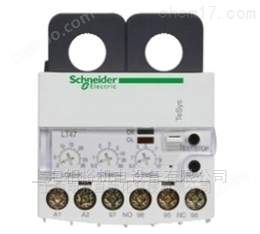
LT4706M7A Schneider Relay
NegotiableUpdate on 01/22
- Model
- Nature of the Manufacturer
- Producers
- Product Category
- Place of Origin
Overview
Application scope of LT4706M7A Schneider relay: Various machinery, machine tools, textiles, plastic machines, logistics, light industry, chemical industry, metallurgy, construction, aviation, power, automotive, transmission, subway and other industries
Product Details
LT4706M7A Schneider RelayThe emergence of this technology can meet more comprehensive protection needs for machinery and equipment.
The action characteristics of electronic overcurrent relays are time limited curves: the basic functions are current threshold setting and time setting.
This type of protective relay * is used for mechanical protection of machines, especially for high load torque, large inertia, and normal operation, and has significant potential
In the event of motor stalling. It is also suitable for motor protection under conditions of long starting time or frequent starting.
In addition, the LR97D product also integrates two fixed action time protection functions: one is rotor lock protection that operates within 0.5s, and the other is
Phase loss protection for actions taken within 3 seconds.
LR97D and LT47 can provide mechanical impact protection to replace traditional safety pin protection methods; Under this protection method, it is possible to
Setting the O-time knob to the minimum value ensures overload tripping within 0.3 seconds.
LT4706M7A Schneider RelayFirst level agent in Shanghai
Key information
范围 TeSys LT electronic over current relays
Product or component type: Electronic over current relay
Device short name LT47
Relay application locks the rotor, mechanical blocking I>3 x I setting
Overload Imax>Isetting
Sensitivity to phase faults
Rated compensation voltage 24 V DC
24V AC
Thermal overload protection setting range 0.5... 6 A
Conforming to IEC 60947-4-1 for AC power circuits with rated insulation voltage of 690 V
600 V AC power circuit conforming to UL
600 V AC power circuit conforming to CSA
First level agent in Shanghai
Supplementary information
Network frequency 50... 60 Hz
Installation support rail
Release threshold 0.5... 5 A
Electromagnetic compatibility Conducted HF disturbances 10 V in accordance with IEC 61000-4-6
Surge withstand 6 kV 符合 IEC 61000-4-5
Exemption from fast transient 2 kV conforming to IEC 61000-4-4
Anti static discharge 6 kV in direct mode conforming to IEC 61000-4-2
Anti static discharge 8 kV outdoor conforming to IEC 61000-4-2
Free from electromagnetic interference at 10 V/m conforming to IEC 61000-4-3
Conducted radiation class A conforming to EN 55011
Auxiliary contact combination 1 NO+1 NC
The agreed heating current in the air is 3 A for signal circuits
Related fuse level 3 A BS for signal circuits
3 A gG is used for signal circuits
Uimp rated impulse withstand voltage 6 kV
Time range 0.3... 30 s - Control type O-time
1... 120 s - Control type R-time
Local signal 1 LED (red)
1 LED (green)
Automatic conversion of control type for reset mode
Technical Features
The Schneider sensor industry is at a critical stage of development from traditional to new sensors, reflecting the overall trend of miniaturization, multifunctionality, digitization, intelligence, systematization, and networking of new sensors. Sensor technology has undergone years of development, and its development can be roughly divided into three generations:
*Dai is a structural sensor that utilizes changes in structural parameters to sense and convert signals.
The second generation is a solid-state sensor developed in the 1970s, which is composed of solid components such as semiconductors, dielectrics, and magnetic materials, and is made using certain properties of the materials. For example, by utilizing the thermoelectric effect, Hall effect, and photosensitive effect, thermocouple sensors, Hall sensors, and photosensitive sensors are respectively made.
The third generation of sensors is a newly developed intelligent sensor that combines microcomputer technology with detection technology, giving the sensor a certain degree of artificial intelligence.