-
E-mail
13858178172@139.com
-
Phone
13858178172
-
Address
66 Zhoushan East Road, Hangzhou City, Zhejiang Province
Product Categories
China National Building Materials Intelligent Automation Research Institute Co., Ltd
Hangzhou paper whiteness tester manufacturer
NegotiableUpdate on 03/29
- Model
- Nature of the Manufacturer
- Producers
- Product Category
- Place of Origin
Overview
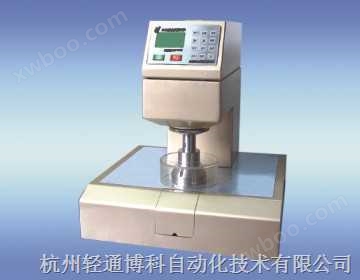
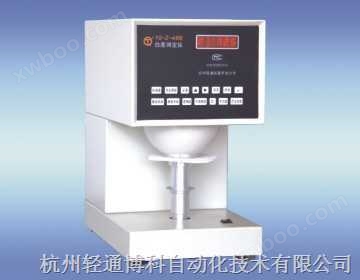
The YQ-Z-48B paper whiteness meter developed and produced by Qingtong Boko, a manufacturer of paper whiteness meters in Hangzhou, is used to measure the whiteness of objects. The instrument can also measure the transparency, opacity, light scattering coefficient, and absorption coefficient of paper. The 48B whiteness meter is a good helper for production and inspection departments that need to measure specific whiteness.
Product Details
HangzhouYQ-Z-48BPaper whiteness tester manufacturer - used to measure the whiteness of objects, widely used in papermaking, textiles, printing and dyeing, plastics, ceramics, enamel, grain, building materials, paints, chemicals, salt and other production and inspection departments that require specific whiteness measurements. Whiteness tester | Whiteness tester can also measure the transparency, opacity, light scattering coefficient, and absorption coefficient of paper.
YQ-Z-48BPaper whiteness meterThe device complies with GB3978-83: Standard Lighting Bodies and Lighting Observation Conditions. Simulate D65 illumination body lighting. Using d/o illumination to observe geometric conditions (ISO2469), the diameter of the diffuser sphere is 150mm, and there are two types of test hole diameters: 30mm and 19mm. A light absorber is installed to eliminate the influence of specular reflection of the sample. The peak wavelength of the spectral power distribution of the R457 whiteness optical system is 457nm, with a full width at half maximum of 44nm; the RY optical system complies with GB3979-83: Object Color Measurement Method.
----------------------------------
YQ-Z-48BPaper whiteness meter--Main performance characteristics
1. ISO Brightness (R457 whiteness) can be measured, and for fluorescent whitening samples, the fluorescence whitening produced by the emission of fluorescent substances can also be determined.
1. ISO Brightness (R457 whiteness) can be measured, and for fluorescent whitening samples, the fluorescence whitening produced by the emission of fluorescent substances can also be determined.
2. Measure the brightness stimulus value Y10.
3. Measure the opacity.
4. Measure transparency.
5. Measure the light scattering coefficient and absorption coefficient.
6. It is possible to measure multiple times and provide the arithmetic mean of a series of measurement results.
7. Equipped with power-off protection, zero adjustment, calibration, and standard measurement data, even in the event of power loss, the data is protected from loss.