-
E-mail
whaisp@163.com
-
Phone
13437188967
-
Address
No. 226 Xinhua Xia Road, Wuhan City
Product Categories
Wuhan Aispei Scientific Instrument Co., Ltd
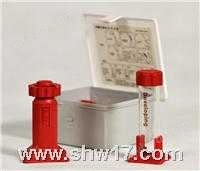
Grinding filter
NegotiableUpdate on 01/22
- Model
- Nature of the Manufacturer
- Producers
- Product Category
- Place of Origin
Overview
Polypropylene engineering plastic, resistant to acetone, alcohol, petroleum ether, methanol, acetic acid, carbon tetrachloride; 25ml; no significant wear at 50000 revolutions per minute.
Product Details
Supplied by Espe InstrumentsGrinding filterWe are dedicated to providing you with a brand new experimental operation experience.
Grinding filterTechnical Specifications:
It is a new type of experimental tool developed by our company. The product is designed reasonably and cleverly combines grinding and filtration, which not only simplifies the experimental operation steps and speeds up the experimental operation, but also effectively prevents volatile components from diffusing into the environment, and has a very significant environmental protection effect. Its speed and environmental friendliness are suitable for laboratory use when handling small amounts of samples, especially for teaching biology experiments in middle schools.
feature
1. Environmental Protection: This product adopts a closed design, which limits the volatilization of harmful substances during the experimental process and is beneficial for protecting the physical health of teachers and students.
2. Save time: This product combines grinding and filtering together, greatly reducing experimental time. Due to the saving of steps and the adoption of a closed design, it also greatly saves materials used in experiments, achieving better results with less time and materials.
3. Good experimental effect: In the student usage survey, a chloroplast extraction experiment was conducted with a success rate of over 90% in one attempt; The same results were obtained in the DNA extraction experiment; This fully demonstrates the effectiveness of using this product.
Scope of application
This product is suitable for the operation process of combining grinding and filtration, especially for the extraction of soluble components in biological materials.
The fast and environmentally friendly characteristics of this product can be well applied to high school experimental teaching with high environmental requirements, tight class hours, and low requirements for experimental accuracy. Can be used for the extraction and separation of chloroplast pigments, DNA extraction experiments, comparison of Vc content in different fruits and vegetables (junior high school), identification experiments of reducing sugars and proteins, and extraction of urease from soybeans and other extracurricular activities.
Instructions for use
Experiment 1 Extraction and Separation of Pigments from Chloroplasts
1、 Experimental principle
The pigments in chloroplasts can be dissolved in the organic solvent acetone, so acetone can be used to extract pigments from chloroplasts.
Layer buffer is a highly lipophilic organic solvent, and the solubility of pigments in chloroplasts varies in the chromatography solution: those with high solubility diffuse faster on the filter paper with the layer buffer, while those with low solubility diffuse slower on the filter paper with the layer buffer. In this way, due to different diffusion rates, different pigments can be separated through diffusion on filter paper.
2、 Purpose requirements
1. Preliminary mastery of methods for extracting and isolating pigments from chloroplasts
2. Explore how many pigments are present in chloroplasts.
3、 Materials and tools
Dried spinach leaves (take fresh spinach leaves with petioles removed, dry at 50 ℃ or in the shade).
Dry qualitative filter paper strip (1x8cm), medicine spoon, sampler
Acetone, carbon tetrachloride*
4、 Method steps
1. Chlorophyll extraction
⑴ Take 0.4g of dried spinach leaves and place them in a grinding drum, then add 2ml of acetone to it.
⑵ Insert the grinding rod into the center, cover the upper cover of the grinding rod, and grind thoroughly for 1-2 minutes. (Rotate the grinding rod for grinding, pay attention to moderate force)
2. Sampling
Open the cover of the grinding rod, insert the sampling device into the grinding rod, dip a small amount of extraction solution into it, and leave it in the air for a moment. Place the sample on one end of the filter paper strip 1.5cm away, forming a green horizontal strip. After the extraction solution dries, depending on the sampling effect, you can choose to repeat this operation one to three times.
3. Separation
Add about 1.5ml of carbon tetrachloride into the vial until the mark is reached, add a small amount of *, tilt the sampling end of the filter paper strip directly downwards and place it into the vial, cover the vial cap, and perform chromatographic separation. (When sampling, be careful not to touch the filter paper with your hands as much as possible to avoid contaminating the filter paper with grease or other dirt on your hands)
4. Observe the experimental results
During the layering process, the results can be directly observed. After the layering is completed, remove the filter paper strip, air dry it, observe the number and color of the pigment bands, and record them. If storing filter paper strips, they need to be kept away from light.
5、 Conclusion
In the layered bottle, four bands can be clearly observed separated from the filter paper. Record and analyze experimental results, draw reasonable conclusions, and fill them in the 'Experimental Report Book'.
Notes:
(1) Do not add quartz sand during grinding;
(2) If the filter cloth is difficult to clean, the grinding head can be removed to take out the filter cloth;
(3) Do not splash organic solvents on the cover of the box, the connection between the display glass and the chassis;
(4) The display bottle is a combination of glass and plastic, please handle with care.
Espex Instruments sincerely works with users and dealers in Beijing, Shanghai, Guangdong, Jiangsu, Zhejiang, Shenzhen, Shandong, Sichuan, Fujian, Hubei, Henan, Liaoning, Hebei, Shaanxi, Hunan, Anhui, Tianjin, Chongqing, Guangxi, Heilongjiang, Jiangxi, Shanxi, Jilin, Yunnan, Xinjiang, Inner Mongolia, Gansu, Guizhou, Taiwan, China and other major cities to provide products, convenient after-sales service of Zui, and technical consultation of *.