-
E-mail
760175302@qq.com
-
Phone
15163622234
-
Address
Weicheng District, Weifang City
Product Categories
Shandong Quanwei Environmental Protection Water Treatment Equipment Co., Ltd

Danzhou has rich experience in the ink and wash wastewater treatment equipment industry
NegotiableUpdate on 01/21
- Model
- Nature of the Manufacturer
- Producers
- Product Category
- Place of Origin
Overview
Danzhou has rich experience in the ink and wash wastewater treatment equipment industry. This regulation is a technical document and basis for guiding wastewater treatment and normal operation. It is applicable to the water treatment operation staff of wastewater treatment plants, as well as management, laboratory, technical, and maintenance inspection personnel. It can also be used as a reference for other relevant personnel. Anaerobic or aerobic microorganisms attach to the surface of the carrier, forming a biofilm to adsorb and degrade pollutants in wastewater, achieving the purpose of purification.
Product Details
Danzhou has rich experience in the ink and wash wastewater treatment equipment industry-Shandong Quanwei Environmental Protection Water Treatment Equipment Co., Ltd
Anaerobic ammonia oxidation process: Anaerobic ammonia oxidation process is a new type of sewage biological denitrification process developed by Delft University of Technology in the Netherlands based on the principle of anaerobic ammonia oxidation. On this basis, various biological denitrification processes have been developed, such as CANON, OLAND, etc. Due to the autotrophic nature of anaerobic ammonium oxidation, there is no need to add COD to support denitrification, which can save carbon sources compared to conventional denitrification processes. Moreover, if the anaerobic ammonia oxidation process is combined with a pre nitrification process, the nitrification process only needs to oxidize a portion of NH4+to NO2-N, which can save 62.5% of oxygen supply and 50% of alkali consumption compared to the entire nitrification process.
Biofilm technology: Biofilm method is an artificial treatment technology mainly used for dispersed domestic sewage treatment, including anaerobic and aerobic biofilm. Anaerobic or aerobic microorganisms attach to the surface of the carrier, forming a biofilm to adsorb and degrade pollutants in wastewater, achieving the purpose of purification.
This method has simple equipment, low operating costs, and high processing efficiency. A reactor generally consists of three parts: packing, water distribution device, and drainage system. The packing used includes inorganic and organic materials. At present, new types of biofilm reactors and immobilized microbial technologies have also been widely studied. MBR (Membrane Bioreactor) technology is one of them. This also includes organisms.
Aerated biofilter, abbreviated as BAF, is the third generation biofilter that combines the advantages of biofilm and activated sludge processes. BAF has the function of removing organic matter, harmful substances, nitrogen and phosphorus; Small footprint, low infrastructure investment, low energy consumption and operating costs.
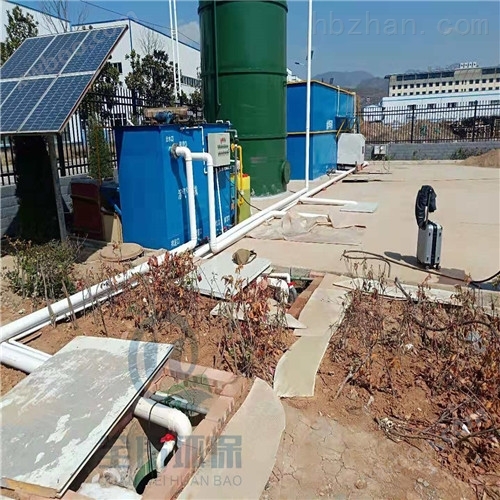
Double membrane solar technology: This technology utilizes a dual-mode reaction system of biofilm and fiber membrane, using a blower and a pump to convert sunlight through solar panels, and then purify domestic sewage through a series of operations. Suitable for southern regions with sufficient sunshine, electricity is required for operation on continuous rainy days with pollution. Although this technology is relatively novel, it has already been used in specific projects, with the advantage of being able to save energy and reduce a significant amount of operating costs.

Danzhou has rich experience in the ink and wash wastewater treatment equipment industry-Shandong Quanwei Environmental Protection Water Treatment Equipment Co., Ltd
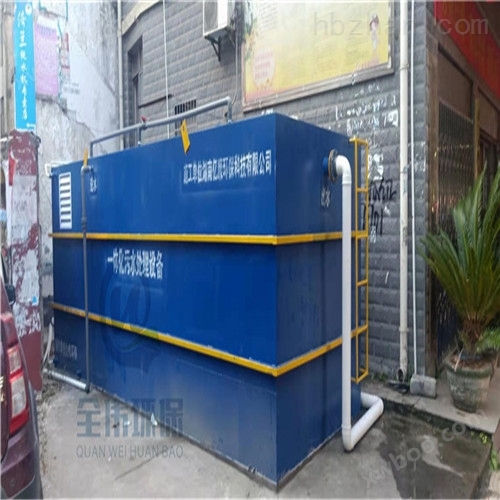
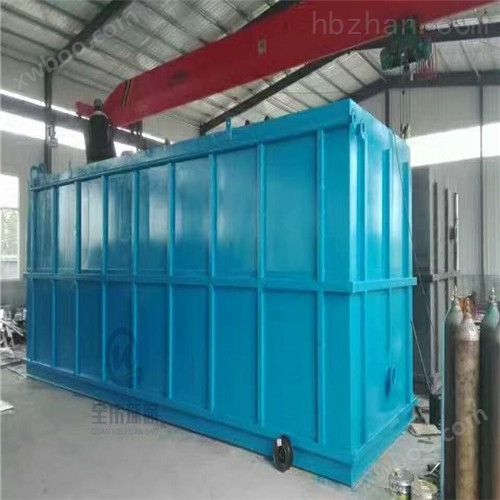
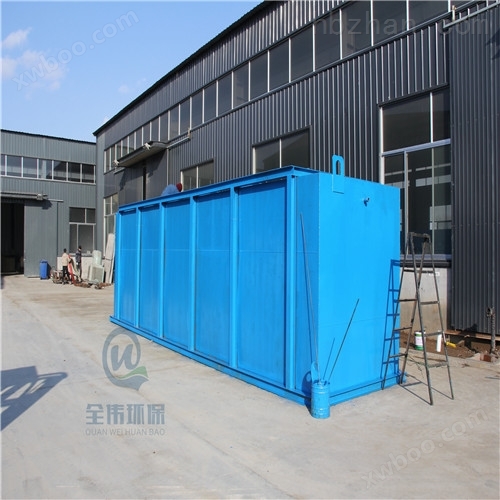
Integrated sewage treatment equipment
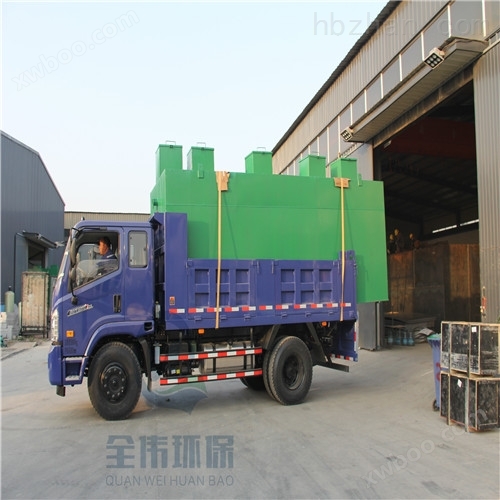
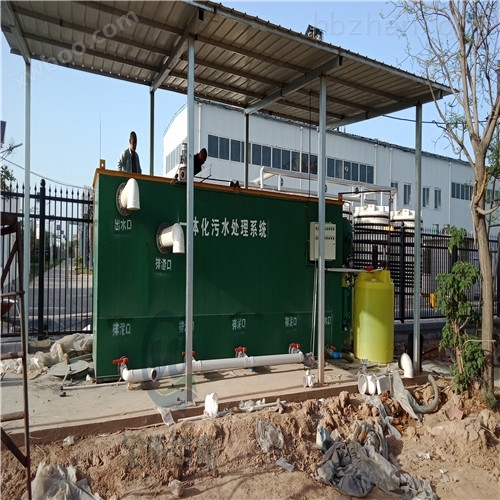
This process adopts an integrated sewage treatment equipment without increasing civil engineering investment. It is a steel composite equipment mainly used for the treatment of domestic sewage. The main treatment method adopts the currently mature biochemical treatment technology contact oxidation method, which consists of six parts:
(1) Biochemical pool
In order to control the dissolved oxygen in the biochemical tank below 0.2mg/l, intermittent aeration is used in the tank. *The packing material for the biochemical tank adopts a new type of spherical packing material. This type of filler has the advantages of being difficult to block, lightweight, having a large specific surface area, stable treatment effect, and easy to maintain and replace, with a retention time of ≥ 7 hours.
(2) O-level biochemical pool
The packing material for the O-grade biochemical tank adopts spherical biological carrier packing set in the tank, which has a larger specific surface area than general biological packing, 16-20 times (same unit volume), thus maintaining a high biomass in the tank and achieving the goal of high-speed removal of organic pollutants. The aeration equipment adopts blowers and microporous aerators, with an oxygen utilization rate of over 30, effectively saving operating costs. The residence time is ≥ 7 hours, and the gas water ratio is around 12:1.
(3) Sedimentation tank
The inclined plate sedimentation tank is a combined sedimentation tank designed based on the shallow pool sedimentation theory. Set up many dense inclined plates in the settling area to allow suspended impurities in the water to settle in the inclined plates or inclined pipes. The water rises and flows along the inclined plates or inclined pipes, and the separated sludge slides down along the inclined plates to the bottom of the pool under the action of gravity, and is then discharged in a concentrated manner. This type of pond can improve sedimentation efficiency by 50-60% and increase processing capacity by 3-5 times on the same area.

Operating Procedures for Sludge Dehydration Workshop Process
In order to better utilize the equipment, ensure that the sludge treatment meets the design and corresponding discharge standards, and meet the production requirements of the entire plant, the process operation instructions are provided.
Operators should strive to learn this instruction and continuously summarize their experience in production practice, propose rational suggestions for sludge treatment, and improve the level of sludge treatment. During the sludge treatment process, operators should closely monitor the operation of equipment and the effectiveness of sludge treatment, and record in detail the operation process and any malfunctions encountered during operation.
1. After the centrifuge is started and reaches zui high speed, adjust the basic speed difference, control slope and control starting point.
2. When the moisture content of the mud cake is too high and the separation liquid is clear, perform the following operation:
⑴ Reduce the speed difference. (Slightly higher moisture content)
⑵ Adjust the clear liquid weir plate or lower the feed rate. (Slightly higher moisture content)
⑶ Increase the dosage of flocculant. (High moisture content)
⑷ Reduce the speed difference and increase the dosage of flocculant. (High moisture content)
3. When the moisture content of the mud cake is too high and cannot be adjusted through step (2), check whether the mud meets the dewatering requirements of the centrifuge and adjust the mud before dewatering.
Similar Product Recommend