-
E-mail
13545224538@163.com lkluo@126.com hangtianxing@whdaq.com
-
Phone
13545224538
-
Address
E-1 Taihe Garden, 269 Qingnian Road, Hankou, Wuhan
Product Categories
Wuhan Aerospace Star Technology Co., Ltd
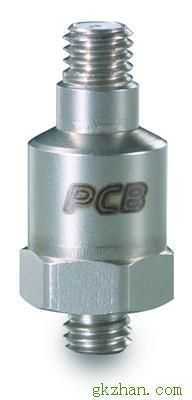
Charge type sensor, price of charge type sensor
NegotiableUpdate on 03/26
- Model
- Nature of the Manufacturer
- Producers
- Product Category
- Place of Origin
Overview
The output signal of a charge type sensor is the amount of charge, which has the characteristics of high internal resistance and low power. This type of sensor converts the measured signal into a change in output charge through a sensitive element. Charge type sensor, price of charge type sensor
Product Details
Charge type sensor, price of charge type sensorThe output signal of is a charge quantity, which has the characteristics of high internal resistance and low power. It must be exported by a charge voltage conversion circuit for subsequent circuit use.
Sensors can convert external physical quantities into electrical quantities. Some sensors, such as acceleration sensors and pyroelectric sensors, output signals in the form of electric charges, which have the characteristics of high internal resistance and low power. To correctly export and convert their electric charge output signals into conventional subsequent circuits that can easily process current or voltage signals, a charge voltage conversion circuit should generally be used.
Charge type sensor, price of charge type sensorIt can be used to measure the amount of charge (the amount of charge carried by the object being measured is very small). For example, in many electrostatic experiments, it can replace traditional gold foil detectors and electrostatic meters to measure the amount and polarity of charge.
With an input precision capacitor, the measured charge charges the input capacitor, resulting in an increase in voltage in the capacitor. Sensors utilize the different potentials in capacitors to calculate charge or voltage.
Electric charge is the amount of electricity carried by a substance, atom, or electron. The unit is Coulomb (marked as C), abbreviated as library. Charged particles are often referred to as charges, but charges themselves are not "particles", we often imagine them as particles for ease of description. Therefore, those with a higher charge are referred to as having more charge, and the amount of charge determines the magnitude of the force field (Coulomb force). In addition, according to the directionality of the electric field force, charges can be divided into positive and negative charges, with electrons carrying negative charges. According to Coulomb's law, objects with the same charge will repel each other, while objects with different charges will attract each other. The force of repulsion or attraction is proportional to the product of the charge. Coulomb's law, a physical law discovered by French physicist Coulomb (Charles Augustin de 1736-1806) in 1785 and later named after himself. Coulomb's law is a quantitative law in the development of electricity, which has led the study of electricity from qualitative to quantitative, and is an important milestone in the history of electricity. It points out that the interaction force between two stationary point charges in a vacuum is inversely proportional to the square of the distance and directly proportional to the product of the electric quantity. The direction of the force is along the line, where charges of the same sign repel each other and charges of different signs attract each other. In particle physics, many particles carry an electric charge. In particle physics, charge is an additive quantum number, and the law of conservation of charge also applies to particles. The sum of charges of particles before a reaction is equal to the sum of charges of particles after the reaction. This holds strictly for strong, weak, and electromagnetic interactions.