-
E-mail
sam.gou@avantes.com.cn
-
Phone
15810092290
-
Address
Room 1209, Building E, Youlehui, No. 601 Wangjingyuan, Chaoyang District, Beijing
Product Categories
Beijing Avantes Technology Co., Ltd. - Avantes
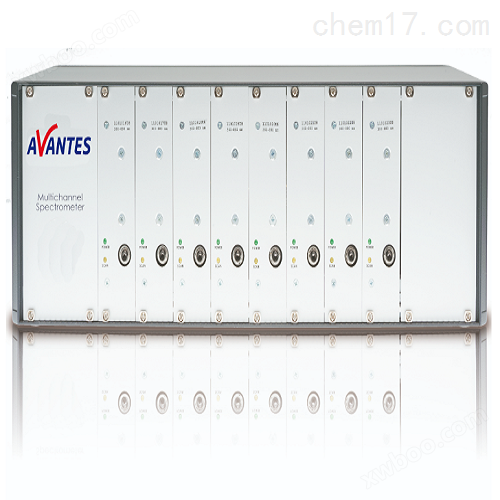
AvaLIBS Laser Induced Breakdown Spectroscopy Measurement System
NegotiableUpdate on 03/05
- Model
- Nature of the Manufacturer
- Producers
- Product Category
- Place of Origin
Overview
The AvaLIBS laser-induced breakdown spectroscopy measurement system can perform rapid qualitative and quantitative analysis of elements in solids, liquids, and gases. The spectral analysis range of AvaLIBS is 200-1070 nm, with an optical resolution of 0.1 nm (FWHM) and a detection sensitivity of ppm level.
Product Details
AvaLIBS Laser Induced Breakdown Spectroscopy Measurement SystemIt can perform rapid qualitative and quantitative analysis of elements in solids, liquids, and gases. The spectral analysis range of AvaLIBS is 200-1070 nm, with an optical resolution of 0.1 nm (FWHM) and a detection sensitivity of ppm level.
Features:
- Wide spectrum, high-resolution spectral analysis (wavelength range 200-1050 nm, optical resolution 0.1 nm)
- Rapid qualitative and quantitative analysis
- Ppm level detection sensitivity
- The application areas include material analysis, environmental monitoring, geological exploration, cultural relic identification, and so on
AvaLIBS Laser Induced Breakdown Spectroscopy Measurement Systemworking principle
Laser induced plasma spectroscopy (LIPS) or more commonly known as laser-induced breakdown spectroscopy (LIBS) is an atomic emission spectroscopy that uses a pulsed laser as the excitation source. Laser pulses (typical value of 10 ns) are focused onto the surface of the tested object, resulting in a laser power density of over 1 GW/cm2 on the surface of the tested material. Under such high laser power density, several micrograms of substance will be ejected from the surface of the tested material, and a short-lived but highly luminous plasma will also be generated on the material surface, with an instantaneous temperature of up to 10000 degrees Celsius. During the cooling process, excited atoms and ions transition from high-energy states to low-energy states and emit light radiation with specific wavelengths. The detection system can be measured using a high-sensitivity, high-resolution, multi-channel fiber optic spectrometer AvaSpec-2048-X, with a 2048 pixel linear array CCD detector for each channel. The collected 200-1050 nm wide spectral data is transmitted to the application software for analysis.
High sensitivity, high resolution, multi-channel spectrometer
The AvaLIBS system can be configured with single channel, dual channel, three channel, four channel, or multi-channel spectrometers (USB 2.0 platform can support 10 channels), controlled by the microprocessor on the instrument motherboard, enabling synchronous sampling between different channels. Accurate synchronous data sampling can enable the spectrometer to quickly read out data, so it can be used to monitor transient events, such as using different channels of the spectrometer to monitor plasma spectra induced by pulsed lasers. And it provides a dynamic link library (DLL) interface software package, which allows you to easily write secondary development application software based on the spectrometer.
Application field
1. Remote non-destructive analysis, qualitative analysis, and identification of materials.
2. Remote detection and elemental analysis of hazardous materials (high-temperature, radioactive, chemically toxic materials)
3. On site detection of radioactive contamination in storage containers (vitrified high-grade waste, intermediate grade waste)
4. On site composition analysis of steel in difficult to access environments (such as nuclear reactor pressure vessels)
5. Rapid identification of metals and alloys during waste recycling process
6. Metal identification of key components during manufacturing and assembly processes.
7. Online composition analysis for process control of liquid metals and alloys (such as determination of carbon, silicon, phosphorus, etc. content in steel)
8. Online component analysis for process control of liquid glass (such as determination of iron, lead, etc. content)
9. On site identification of materials submerged in water (such as metals, alloys, ceramics, minerals, radioactive materials, etc.)
10. Depth profile analysis and composition analysis of surface coatings on objects (such as electroplated steel, plastic film layers, heavy metals in paint, etc.)
11. Online monitoring of particulate matter in the air (such as chimney emission monitoring)
12. Component analysis of complex shaped objects
AvaLIBSThe laser
There are two options for laser selection: one uses a single wavelength laser at 1064 nm, and the other uses dual wavelength outputs at 1064 nm and 532 nm. The pulse energy can be selected from 50 mJ, 100 mJ, or 200 mJ. The melting of laser and the formation of plasma depend on the type of sample, so there are different energy requirements for different samples. For metal materials, a 50 mJ laser is used. For non-metallic and high OH - materials, a 200 mJ laser is more suitable for application. For liquid samples, a dual wavelength laser can be used, as the oxidizing substances in the sample will slow down the formation of plasma. Therefore, another wavelength of laser is needed to enhance the formation of plasma.
Other characteristics
No sample pretreatment required
AvaLIBS can directly analyze materials without the need for any pre-treatment. But if the surface of the sample is coated with other substances (such as oxidized or coated steel), the coating on the surface of the sample should be cleaned with a laser first. The efficiency of laser cleaning process depends on the type of material and laser energy. In addition, the ultrasound generated by laser plasma has a very good effect on removing semi fluid or viscous pollutants. For example, it is possible to analyze a metal with a surface coating of several centimeters thick OH mineral mud.
Quantitative analysis of trace elements
After calibration, AvaLIBS can quantitatively analyze trace elements in matrix materials, such as chromium in steel, magnesium in aluminum alloys, iron in glass, copper in copper sulfate, etc. When calibrating, it is necessary to use identified sample materials, which have the same matrix as the tested material but contain different amounts of the analyzed element. The so-called "internal standardization" process is usually used in analysis, which compares the spectral line intensity of the analyzed element with that of the matrix material. This can reduce the influence of plasma condition changes caused by pulse pulse energy inconsistency of the laser on the measurement results. The sensitivity of AvaLIBS measurement is related to many factors, such as the binding mode between the analysis element and the matrix material, the measurement distance, and whether telemetry is required. The accuracy of the measurement results can be better than 10%, and the precision can be better than 5%.
Similar Product Recommend