-
E-mail
3425968569@qq.com
-
Phone
17701626768
-
Address
C1, 27th Floor, Science and Technology Capital East Building, 668 Beijing East Road, Shanghai
Product Categories
Shanghai West Sensor Instrument Co., Ltd
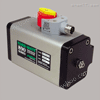
American POS flate actuator complete set equipment
NegotiableUpdate on 01/22
- Model
- Nature of the Manufacturer
- Producers
- Product Category
- Place of Origin
Overview
The air source pressure or power supply voltage of the $r $n actuator in the American POS flate actuator package. The type of actuator is double acting or single acting (spring reset) and the output torque under a certain gas source or rated voltage. It is very important to correctly select an actuator based on its steering and fault mode (fault on or fault off). If the actuator is too large, the valve stem may be subjected to excessive force. On the contrary, if the actuator is too small, it cannot generate enough torque to fully operate the valve. Generally speaking, we believe that the torque required to operate a valve comes from the metal components of the valve, such as the ball core and valve disc
Product Details
American POS flate actuator complete set equipment
West (Shanghai) Sensor Instrument Co., Ltd. also has the following brands with strong advantages:
1. German brands: FESTO pneumatic components from Germany, BURKERT solenoid valves from Germany, Hellon from Germany, Norgren from Germany, PILZ relays from Germany, IFM sensors from Germany, HEIDENHAIN from Germany, P+F sensors from Germany, RENCON encoders from Germany; TURCH Turck, Hesman, HAWE, REXROTH, HYDAC, E+H, RECHNER, Schmersal, Hengstler, Germany; Phoenix, Germany; Siemens Germany, SUCO Suk Germany
2. Italian brands: ATOS Atos from Italy, ODE from Italy, Camry from Italy, ARON from Italy, ELTRA encoder from Italy, UNIVER from Italy, EITRA encoder from Italy
3. American brands: Parker PARKER, ASCO solenoid valve, Bentley BENTLY, ROSS, Denison, JOUCOMATIC, MarshBellofram, Vickers VICKERS; Bray from the United States, CLIPPARD from the United States
4. Korean brands: YPC pneumatic components from Korea, TKC pneumatic components from Korea, YSC pneumatic components from Korea, TPC pneumatic components; Wait. .....
The actuator and regulating mechanism of pneumatic actuators are a unified whole, and their actuators include diaphragm type, piston type, fork type, and gear rack type. Piston type with long stroke, suitable for situations requiring high thrust; The thin film type has a smaller stroke and can only directly drive the valve stem. Fork type pneumatic actuators have the characteristics of high torque, small space, and torque curves that better match the torque curve of valves, but they are not very aesthetically pleasing; Commonly used on valves with high torque. Gear and rack pneumatic actuators have the advantages of simple structure, smooth and reliable action, and safety and explosion prevention. They are widely used in production processes with high safety requirements such as power plants, chemicals, and refineries. When compressed air enters the pneumatic actuator from nozzle A, the gas pushes the double piston to move linearly towards both ends (cylinder head end), and the rack on the piston drives the gear on the rotating shaft to rotate counterclockwise by 90 degrees, and the valve is opened. At this time, the gas at both ends of the pneumatic actuator valve is discharged with the B nozzle. On the contrary, when compressed air enters the two ends of the pneumatic actuator from nozzle B, the gas pushes the double plug to move in a straight line towards the middle. The rack on the piston drives the gear on the rotating shaft to rotate clockwise by 90 degrees, and the valve is closed. At this point, the gas in the middle of the pneumatic actuator is discharged through nozzle A. The above is the standard transmission principle. According to user requirements, the pneumatic actuator can be installed with the opposite transmission principle to the standard type, that is, clockwise rotation of the selected shaft opens the valve, and counterclockwise rotation closes the valve.American POS flateComplete set of actuator equipment
According to their energy forms, actuators are divided into three categories: pneumatic, electric, and hydraulic, each with its own characteristics and suitable for different occasions. Pneumatic actuator is a type of actuator. Pneumatic actuators can also be divided into two types: single acting and double acting: the switching action of the actuator is driven by a gas source, which is called Double Acting. The switch action of Spring RETURN (single acting) is only driven by the air source when it is turned on, and the spring returns when it is turned off. Taking the DA/SR series pneumatic actuator as an example, the purpose of this reference material is to help customers choose the actuator correctly. Before installing the pneumatic/electric actuator on the valve, the following factors must be considered. The operating torque of the valve plus the safety factor of the manufacturer's * based on the operating conditions. The air source pressure or power supply voltage of the actuator. The type of actuator is double acting or single acting (spring reset) and the output torque under a certain gas source or rated voltage. It is very important to correctly select an actuator based on its steering and fault mode (fault on or fault off). If the actuator is too large, the valve stem may be subjected to excessive force. On the contrary, if the actuator is too small, it cannot generate enough torque to fully operate the valve. Generally speaking, we believe that the torque required to operate a valve comes from the friction between the metal components of the valve (such as the ball core, valve disc) and the sealing element (valve seat). According to the valve usage scenario, temperature, operating frequency, pipeline and pressure difference, flowing medium (lubrication, drying, mud), many factors affect the operating torque.
In fact, pneumatic and electric systems are not mutually exclusive. Pneumatic actuators can achieve fast linear cyclic motion with a simple structure and easy maintenance. They can also be used in various harsh working environments, such as explosion-proof requirements, dusty or humid conditions. But in situations where the force rapidly increases and precise positioning is required, electric drives with servo motors have advantages. For applications that require precise, synchronized operation, adjustable, and regulated positioning programming, electric drives are the preferred choice. Electric drive systems composed of servo or stepper motors with closed-loop positioning controllers can supplement the shortcomings of pneumatic systems. In modern control, various systems are becoming increasingly complex and refined, and it is not enough for a certain driving control technology to meet the multiple control functions of the system. Electric actuators are mainly used in applications that require precise control. The flexibility requirements in automation equipment are constantly increasing, and the same equipment often needs to adapt to the processing needs of workpieces of different sizes. The actuator needs to be controlled at multiple points, and the operating speed and torque of the actuator need to be precisely controlled or synchronously tracked. These cannot be achieved using traditional pneumatic control, but electric actuators can easily achieve such control. It can be seen that pneumatic actuators are more suitable for simple motion control, while electric actuators are more commonly used for precision motion control.
At the gear stage, the engine speed can be transmitted to the output rod through two sets of gears. The main reducer is completed by planetary gears, and the auxiliary reducer is implemented by worm gears, which are fixed in the center position by a set of taut springs. In the event of overload, that is, when the output rod exceeds the set torque of the spring, the worm gear will undergo axial displacement, and the switch and signal device will be fine tuned to provide protection for the system. Due to the coupling effect of external control lever manipulation, the output lever is coupled with the worm gear during engine operation and with the handwheel during manual operation. When the engine is not working, it is easy to disconnect the motor drive and simply press the control lever to connect the handwheel. Due to the priority of motor drive over manual operation, the engine will automatically reverse when restarted. This can avoid turning on the handwheel while the engine is running, which is beneficial for protecting the system. Due to the direct coupling between the handwheel and the output rod, normal manual operation of the valve can be ensured in the event of internal gear failure or damage. The switch and signal device installed on the gear is a sealed housing that protects its internal components to achieve the following functions: local or remote display of valve position, overload protection of actuators/valves, limiting valve stroke range, electrical interface, and installation of actuators on different types of valves through output rods. It can be applied to various existing valve stem configurations.American POS flateactuatorcomplete equipment
Similar Product Recommend


