-
E-mail
jinansaichang@163.com
-
Phone
13806407003
-
Address
Room 638, Building 2, Overseas Students Entrepreneurship Park, No. 19 Huaneng Road, Jinan City
Product Categories
Jinan Saichang Scientific Instrument Co., Ltd

5975/5973 MSD Electron Bombardment Ion Source Component (EI)
NegotiableUpdate on 04/06
- Model
- Nature of the Manufacturer
- Producers
- Product Category
- Place of Origin
Overview
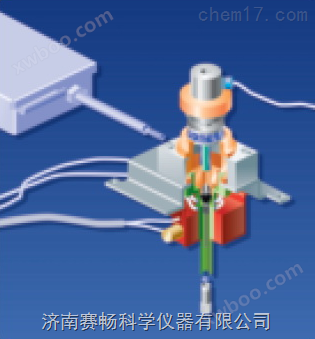
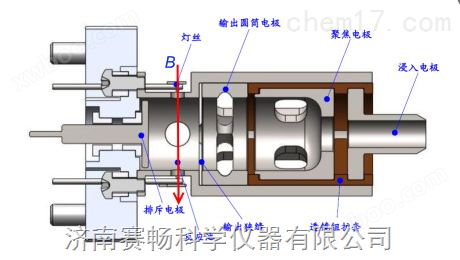
5975/5973 MSD Electron Bombardment Ion Source Component (EI) $r $n Product Features: $r $n Ion Source - The ion source has two modes: electron ionization (EI) or chemical ionization (CI). The $r $n sample enters the ion source from the GC/MSD interface. Electrons emitted by the filament enter the ionization chamber under the guidance of a magnetic field. High energy electrons interact with sample molecules, causing ionization and fragmentation. The positive voltage on the repulsion electrode pushes positive ions towards the lens group, where the ions need to pass through several electrostatic lenses. These lenses aggregate ions into a tightly packed electron beam, which is then directly fed into a mass filter.
Product Details
5975/5973 MSD Electron Bombardment Ion Source Component (EI)
Product Features:
Ionic source - Ionic sources have two modes: electron ionization (EI) or chemical ionization (CI).
The sample enters the ion source through the GC/MSD interface. Electrons emitted by the filament enter the ionization chamber under the guidance of a magnetic field. High energy electrons interact with sample molecules, causing ionization and fragmentation. The positive voltage on the repulsion electrode pushes positive ions towards the lens group, where the ions need to pass through several electrostatic lenses. These lenses aggregate ions into a tightly packed electron beam, which is then directly fed into a mass filter.
Electron bombardment (EI) ion source
The recommended materials for cleaning EI ion sources are sandpaper and alumina powder.
Do not immerse the filament or lens insulator in solvents. If the insulator is dirty, you can use a methanol (reagent grade) cotton swab to clean it. If this does not achieve the purpose of cleaning, replace the insulator
It is necessary to replace scratched lenses and other ion source components,
5975/5973 MSD Electron Bombardment Ion Source Component (EI)

Order Information: |
|
|
|
|
|
|
|
5975/5973 MSDElectron bombardment of ion source components(EI) |
|
||
project |
Instructions |
Part Number |
Part numbers of inert ion sources |
1 |
Ion source body |
G1099-20130 |
G2589-20043 |
2 |
Pull out the electrode plate,3mm |
05971-20134 |
G2589-20100 |
3 |
Pull out the pole body |
G1072-20008 |
G1072-20008 |
4 |
Lens insulator |
G3170-20530 |
G3170-20530 |
5 |
Ion focusing lens |
05971-20143 |
05971-20143 |
6 |
Entrance lens |
G3170-20126 |
G3170-20126 |
7 |
Nut, gold-plated |
G1999-20021 |
G1999-20021 |
8 |
High temperature resistant filament |
G2590-60053 |
G2590-60053 |
9 |
Transmission line conduit |
G1099-20136 |
G1099-20136 |
10 |
Repulsive polar insulator |
G1099-20133 |
G1099-20133 |
11 |
Repeller |
G1099-20132 |
G2589-20044 |
|
|
|
|
5972/5971/GCD MSDIon source components(EI) |
|
||
Instructions |
|
Part Number |
|
Entrance lens |
|
05971-20126 |
|
Lens insulator |
|
G3170-20530 |
|
Ion focusing lens |
|
05971-20143 |
|
Pull out the pole body |
|
G1072-20008 |
|
Pull out the electrode plate,3mm |
|
05971-20134 |
|
Install screws |
|
0515-1446 |
|
Pushing away extreme components |
|
05971-60170 |
|
Screw, used for the filament on the ion source |
|
0515-1046 |
|
Transmission tube end, gold-plated,5972/5971 |
|
05971-20305 |
|
Related information:
EI (electron impact) electron bombardment ion source is a commonly used ionization method in GC-MS, which consists of an accelerating electric field, a repulsive electrode, and a filament.
The filament is usually a tungsten wire, and when heated to 1000K by an electric current, electrons gain energy to break free from constraints and escape from the surface, providing an electron beam. Accelerating electric field is the process of accelerating electrons to obtain greater energy to bombard the material entering the ion source. The repulsion electrode is responsible for pushing charged ions out of the ion source and into the fourth stage rod. In GC-MS, it is generally responsible for pushing positively charged ions into the fourth stage rod, while uncharged organic molecules, negatively charged molecular ions, and carrier gas are evacuated by a vacuum device. In addition, electromagnetic lenses are responsible for focusing the electron beam to improve ionization efficiency.
Generally, in GC-MS, 70eV electrons are used to bombard organic molecules because the ionization of organic compounds occurs only when the energy of the electrons is greater than 10eV, producing molecular ions. As the electron energy increases, the ionization efficiency also increases, and the strength of both molecular and fragment ions increases. The maximum efficiency is reached at 70 eV, and the ionization efficiency decreases when it exceeds 70 eV. The strength of molecular ions decreases, but the number of fragment ions may increase. This is because of the wave particle duality of electrons. When the electron energy is 70 eV, its Broglie wavelength is 0.14 nm, which is the same as the average bond length of organic molecules. At this time, organic molecules absorb electrons the most, similar to resonance. When the electron energy is greater than 70 eV, organic molecules become transparent to electrons like glass to light.
Of course, 70eV is only applicable to most organic compounds, as the average bond length of different organic compounds varies, resulting in different electron energies.
5975/5973 MSD Electron Bombardment Ion Source Component (EI)
Similar Product Recommend