-
E-mail
726888910@qq.com
-
Phone
13665199985
-
Address
5th Floor, Modern Star Building, 999 Xihu West Road, Wuxi City, Jiangsu Province
Product Categories
- Surface inspection lamp
- Pinhole fluorescent inspection lamp
- UV resistant glasses
- Steel strip hardness tester
- Aluminum hardness tester
- Cleaning and degreasing inspection of UV lamp
- rangefinder
- petrochemical industry
- Shore hardness tester
- High intensity black light lamp
- Clean and inspect the black light lamp
- ultrasonic probe
Wuxi Junda Instrument Co., Ltd
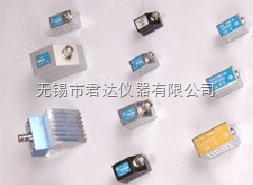
ultrasonic probe
NegotiableUpdate on 01/22
- Model
- Nature of the Manufacturer
- Producers
- Product Category
- Place of Origin
Overview
Ultrasonic probes are mainly composed of piezoelectric chips, which are devices that convert electrical and acoustic signals into each other. They are an important component of ultrasonic flaw detectors. The probes used in ultrasonic flaw detectors produced by various manufacturers can be universal, but attention should be paid to the interface issues of the probes. The majority of ultrasonic flaw detectors currently used are made using the principle of piezoelectric effect.
Product Details
ultrasonic probeCapable of transmitting and receiving ultrasonic waves. Due to their different structures, probes can be divided into straight probes (longitudinal waves), oblique probes (transverse waves), surface wave probes (surface waves), Lamb wave probes (Lamb waves), variable angle probes (longitudinal waves, transverse waves, surface waves, Lamb waves), dual probes (one probe emits and the other probe receives), focusing probes (gathers sound waves into a fine beam), water immersion probes (can be immersed in liquid), and other probes (such as S-shaped or flat probes for detecting high-pressure porcelain bottles or medical probes for detecting human bodies).
Direct probeAlso known as a flat probe, it can emit and receive longitudinal waves. The straight probe is mainly composed of a piezoelectric chip, a damping block (absorption block), and a protective film. (1) The thickness of a piezoelectric chip is inversely proportional to the ultrasonic frequency. For example, the frequency thickness constant of lead zirconate titanate (PZT-5) is 1890 kHz/mm. When the chip thickness is 1 mm, the natural frequency is 1.89 MHz, and when the thickness is 0.7 mm, the natural frequency is about 2.5 MHz. The diameter of a voltage chip is inversely proportional to the diffusion angle. The voltage chip is coated with silver layers on both sides as conductive plates. The bottom of the chip is grounded, and wires are connected to the circuit on top of the chip. (2) To prevent direct contact between the chip and the workpiece and wear of the chip, a protective film is bonded under the chip, which has two types of protection: soft protection and hard protection. Soft plastic film (about 0.3 millimeters thick) can be used, which has good contact with rough surface workpieces. Stainless steel or ceramic sheets can be used for hardness. The thickness of the protective film is an integer multiple of half the wavelength, resulting in the highest sound wave penetration rate. When the thickness is an odd multiple of a quarter wavelength, the transmittance is the smallest. After the chip is bonded to the protective film, the resonant frequency of the probe will decrease. When bonding the protective film to the chip, the bonding layer should be as thin as possible and should not allow air to seep in. The formula for the adhesive is 618 epoxy resin: diethylenetriamine: dibutyl phthalate=100:8:10. After bonding, apply a certain pressure, let it stand for 24 hours, and then dry it at a temperature of 60 ℃~80 ℃ for 4 hours. (3) Damping block, also known as absorption block, is used to reduce the mechanical quality coefficient of the chip and absorb sound energy. If there is no damping block, when the electric oscillation pulse stops, the piezoelectric chip continues to vibrate due to inertia, which prolongs the pulse width of the ultrasonic wave, increases the blind spot, and reduces the resolution. When the acoustic impedance of the absorption block is equal to that of the chip, the effect is *. The commonly used absorption fast formula is as follows: tungsten powder: epoxy resin: diethylenetriamine (hardener): dibutyl phthalate (plasticizer)=35g: 10g: 0.5g: 1g. To ensure good adhesion between the chip and the damping block, clean the surface of the chip and the chip holder with acetone before pouring, and heat them to 60 ℃~80 ℃ before pouring. Epoxy resin and tungsten powder should be thoroughly mixed evenly. After pouring, tilt the probe to tilt the upper surface of the damping block by about 20 °, which can eliminate the emission of sound waves on the absorption block and reduce the clutter on the fluorescent screen.
angle probeUltrasonic flaw detectorThe angle probe can emit and receive transverse waves. The oblique probe is mainly composed of piezoelectric chips, damping blocks, and oblique wedge blocks. The chip generates longitudinal waves, which are obliquely incident on the measured workpiece through a wedge and converted into transverse waves. The wedge is made of organic glass, and the tested workpiece is steel. When the angle of the angle probe (i.e. incident angle) is between 28 ° and 61 °, transverse waves can be generated in the steel. The shape of the wedge should ensure that sound waves do not return to the chip when propagating in the wedge, in order to avoid clutter. When a straight probe is obliquely incident on a workpiece in liquid, it can also generate transverse waves.
Surface probe waveCan emit and receive surface waves. Surface wave probe is a special case of oblique probe. When the incident angle increases to a certain angle such that the refractive angle of the transverse wave in the workpiece is 90 °, surface waves can be generated in the workpiece. When the straight probe is obliquely incident on the workpiece in liquid, surface waves can also be generated
Focusing probeUltrasonic waves can be concentrated into a thin beam (linear or point like), and the sound energy can be concentrated at the focal point, which can improve the sensitivity and resolution of flaw detection. Focusing probes are commonly used for automated liquid immersion testing. The probe emits longitudinal waves, but when obliquely incident on the workpiece in the liquid, transverse waves, surface waves, or Lamb waves can be generated in the workpiece due to different incident angles, depending on the needs. There are two methods for ultrasound focusing: one is to make the piezoelectric chip concave and directly focus the emitted sound waves, and the other is to use a sound lens to focus the sound waves. The former is currently more commonly used due to the difficulty of sintering and the difficulty in ensuring the curvature radius.
Variable angle probeThe variable angle probe can continuously change the incident angle to generate longitudinal waves, transverse waves, surface waves, and Lamb waves. The piezoelectric chip is fixed on a semi-circular wedge block, which is quickly placed in the circular hole of the large wedge block. Oil is injected into the gap to serve as a sound coupling agent. When the semi-circular wedge rotates, the incident angle changes.
Lamb wave probeCapable of transmitting and receiving Lamb waves, it is also a special case of a tilt probe. When the incident angle reaches a certain angle, Lamb waves are generated in the workpiece, and when the straight probe is tilted and incident on the workpiece in the liquid, Lamb waves can also be generated.
Dual probeUltrasonic flaw detector dual probe, also known as combination probe, consists of two piezoelectric chips mounted in a probe holder, with one chip emitting and the other receiving. The dual probe emits and receives longitudinal waves, and the delay block under the chip delays the sound waves for a period of time before entering the workpiece, which can detect defects near the surface and improve resolution. The two chips have an inclination angle (usually about 3 °~18 °), and the area where the sound fields of the two chips overlap (shaded area) is the part with higher sensitivity for flaw detection.
Water immersion probeIt can be tested in water, and its structure is similar to a straight probe, except that the probe is longer for immersion in water, and the protective film can also be removed.
ultrasonic probeFunction: Firstly, it converts the returning sound waves into electrical pulses; The second is to control the propagation direction and energy concentration of ultrasonic waves. When changing the incidence angle of the probe or the diffusion angle of ultrasonic waves, the main energy of the sound waves can be injected into the medium at different angles or the directionality of the sound waves can be changed to improve resolution. The third is to achieve waveform conversion. The fourth is to control the operating frequency, which is suitable for different working conditions Users should choose different ultrasonic flaw detector probes according to their actual situation, so that the ultrasonic flaw detector probes can better serve the quality control of ultrasonic flaw detection.
Various specifications of ultrasonic flaw detectors probe angle probe
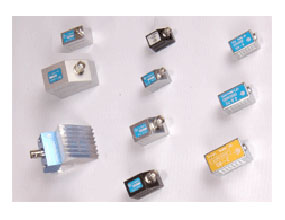
Various specifications of ultrasonic flaw detectors probe angle probe 2
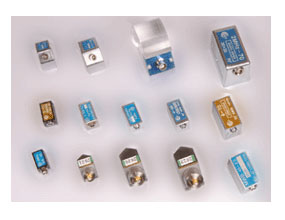
Various specifications of ultrasonic flaw detectors with straight probes
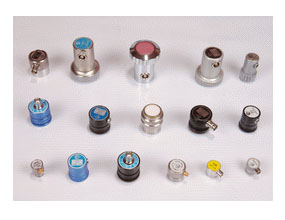
Various specifications of ultrasonic flaw detector probes, twin crystal probes
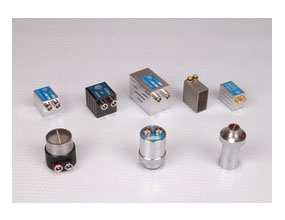
Wuxi Junda Instrument Company specializes in providingUltrasonic flaw detector probeWelcome, you are welcomeUltrasonic flaw detector probeDetailed information!Ultrasonic flaw detector probeThere are many types, differentUltrasonic flaw detector probeThe application scope may also have slight differences, and we will provide you with * solutions.