- Phone
-
Address
Luodong Road, Shengzhou City, Zhejiang Province
Product Categories
- Grading equipment
- Specialized ultrafine grinding equipment production line
- Environmental protection equipment (waste solid treatment) complete set of equipment
- Conveying and dust collection equipment
- Mixing, modification, drying, and powder screening equipment
- Coarse and medium crushing equipment
- Ultra fine grinding equipment
Zhejiang Fengli Crushing Equipment Co., Ltd

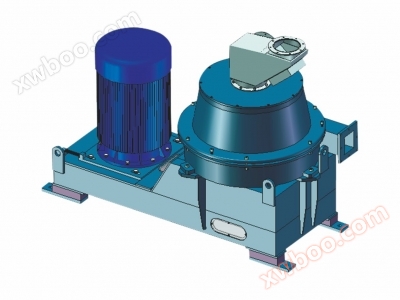
ULS airflow classifier
NegotiableUpdate on 04/29
- Model
- Nature of the Manufacturer
- Producers
- Product Category
- Place of Origin
Overview
The main use of ULS air classifier: This type of classifier does not require any supporting equipment such as fans or dust collectors. The raw materials are quantitatively fed from the top to the classifier and then fall onto a rotating dispersing disk. The dispersing disk will send the materials to the airflow generated by the built-in fan. Fine powder will reach the discharge cone with the airflow, while coarse powder will be thrown onto the outer wall of the classifier and fall into the internal cone. The product will be discharged from the bottom of the device. This device structure can greatly reduce investment costs, maintenance, and operating costs. The ULS classifier is mainly used for sorting 45~300 micron products,
Product Details
ULS airflow classifier

Main purpose:
This type of classifier does not require any supporting equipment such as fans or dust collectors. The raw materials are quantitatively fed from the top to the classifier and then fall onto a rotating dispersing disk. The dispersing disk sends the materials into the airflow generated by the built-in fan. Fine powder will reach the discharge cone with the airflow, while coarse powder will be thrown onto the outer wall of the classifier and fall into the internal cone. The product will be discharged from the bottom of the device. This device structure can greatly reduce investment costs, maintenance, and operating costs. The ULS classifier is mainly used for sorting 45~300 micron products, with high yield and low energy consumption.
In order to improve screening efficiency, the ULS classifier can be installed in front of the vibrating screen to remove particles of 75-125 microns from the raw material. This device not only improves screening efficiency but also produces a second type of "fine powder" product. For abrasive products, all parts in contact with the material can be protected with ceramics or polyurethane. If it is a material with higher hardness, all components of the equipment can be made of wear-resistant materials.
When the material to be processed is abrasive, the feeding chute and rotating part can be made of hard materials or protected with suitable lining. In addition, the equipment itself can also be protected with ceramic tiles or polyurethane to prevent iron contamination of the product.
characteristic:
1. The cutting point can reach d98<45 microns
2. Solid and durable design, reliable operation
3. Extremely low energy consumption
4. Cheap equipment with low investment
5. Easy and fast maintenance with low maintenance costs
6. No need for auxiliary equipment
7. Suitable for abrasive products
8. Improve screening efficiency