-
E-mail
sunxuguang@qdsrd.com
-
Phone
18561800310
-
Address
151 Zhuzhou Road, Qingdao City
Product Categories
Qingdao Shenghan Chromatography Technology Co., Ltd
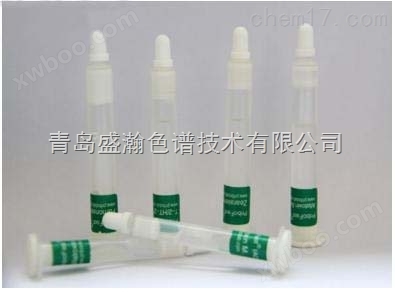
Total amount of aflatoxin immunoaffinity column
NegotiableUpdate on 04/24
- Model
- Nature of the Manufacturer
- Producers
- Product Category
- Place of Origin
Overview
This product can selectively adsorb aflatoxins in the sample extraction solution, thereby achieving highly targeted purification of aflatoxins (B1, B2, G1, G2) in the sample solution. The purity of the purified sample solution after column purification is improved, and it can be used for the determination of different analytical methods.
Product Details
1Product Overview:
Aflatoxin(Aflatoxin)It is a secondary metabolite produced by fungi such as Aspergillus flavus and Aspergillus parasiticus, and is classified by the World Health Organization's Agency for Research on Cancer1It is a carcinogenic substance and also a highly toxic substance. Widely present in various foods, such as corn, peanuts, rice, wheat and other grains and their by-products. Aflatoxin in feedB1Aflatoxin produced after animal metabolismM1It still has strong toxicity and carcinogenicity, and is widely present in foods such as milk, blood, and tissues. Aflatoxin, as one of the three major causes of liver cancer and the main cause of diseases such as gastric cancer and colon cancer, poses a great threat to human health. Countries around the world have strict regulations on aflatoxins in food and feed.
twoReaction principle:
The basis for the determination of this product is antigen antibody reaction. Aflatoxin antibody is fixed on the gel in the column. Aflatoxin in the sample is extracted, filtered, diluted, and then slowly passes through the aflatoxin immunoaffinity column, where the aflatoxin specifically binds to the antibody, and then the immunoaffinity column is washed to remove other unconjugated substances. Wash aflatoxin with methanol and inject it into the analytical instrument for detection.
threeProduct packaging composition:
Each box contains25 aflatoxin total immunoaffinity columns and1Set up the corresponding instruction manual.
fourTheIACPerformance:
1Performance parameters
| Column capacity | ≥200ng |
| Aflatoxin(Recovery rate) | >90%±5% |
2Cross reactivity rate
| AflatoxinB1 | 100% | AflatoxinG1 | 101% |
| AflatoxinB2 | 86% | AflatoxinG2 | 83% |
fivePrecautions:
1. Aflatoxin is harmful to the human body and should be operated with gloves.
2. Used glass containers and aflatoxin solutions5%
Soak overnight in concentrated sodium hypochlorite solution.
3. Do not use immunoaffinity columns that have exceeded their expiration date.
4. When not in use, the immune affinity column should2-8℃Save, do not freeze.
5. Before use, the immunoaffinity column needs to be returned to room temperature(22-25℃).
6. Sampling volume: It can be adjusted appropriately according to the actual situation, but not too little. At the same time, the volume of the extraction solution should be proportionally changed accordingly.
7pH: Upper column liquidpHto be going to6~8If it deviates from this range, it needs to be adjusted with hydrochloric acid or sodium hydroxidepH.
sixRequired materials but not provided in the box:
| equipment | Utensils and consumables | reagent |
| HPLC Pump flow control rack High speed homogenizerHigh speed crusher | graduated cylinder(50/200mL) funnel bottle collection volumetric flask(100mL/1L) Micro pipette: single channel Quantitative filter paper Glass microfiber filter paper centrifuge tube(50mL) | Chromatographic grade methanol distilled water AFT standard |
sevenReagent preparation:
1. Extraction solution: methanol water(7:3)
Transfer 700mL of methanol and add distilled water300mLmixed
eighty percent、Sample processing:The biggest source of error in fungal toxin analysis is the sample collection and sampling process, so it is important to ensure the representativeness of sample collection and sampling.
(1) Peanuts, rice, corn, wheat and their products, vegetable oils
Fat and feed
1. Weighing25gThe crushed sample (direct sampling of vegetable oil) is transferred to a homogenizer and then weighedAdd 5g of sodium chloride into the homogenizer;
2. Add125mLmethanol-Water(7:3)High speed homogenization of solution2min;
34000r/mincentrifugation5minOr filter with filter paper;
4、 取10mLFilter and add30mLDilute with distilled water;
5. UseGlass microfiber filter paperFilter and take the filtered liquid for later use;
(2) Soy sauce
1. Weighing50gSamples and2.5gAdd sodium chloride to the homogenizer;
2. Add100mLmethanol-Water(7:3)High speed homogenization of solution2min;
34000r/mincentrifugation5minOr filter with filter paper;
4、 取10mLFilter and add40mLDilute with distilled water;
5. UseGlass microfiber filter paperfilter,Take the filtered liquid for later use;
(3) Vinegar
1. Weighing5gSample inIn a 25mL volumetric flask, add1.0gSodium chloride, usedpH7.0Dilute phosphate buffer solution to volume25.0mL;
24000r/mincentrifugation5minOr filter with filter paper;
3、 取10mLFilter and add10mLDilute with distilled water;
4. UseGlass microfiber filter paperfilter,Take the filtered liquid for later use;
Note:pH7.0Phosphate buffer solution: Weigh8gSodium chloride,1.2g*,0.2gPotassium dihydrogen phosphate,0.2gPotassium chloride, used990Dissolve in mL distilled water and adjust with concentrated hydrochloric acidpHValue to7.0, Dilute to volume with distilled water after Zui1000mL。
nineOperating procedures:comply withGB/T 18979-2003National standard method
1. Connect:Remove the back cover of the immune affinity column, cut it open with scissors, cover it again, and connect it to the pump flow operation frame30mLUnder the syringe;
2. Sample above:Accurately remove10mLTransfer the sample extraction solution into the syringe and open the lower end plug;
3. Enrichment:Connect the air pressure pump to the syringe and adjust the pressure to slowly pass the sample extraction solution through the immunoaffinity column,Suggest gravity passing through the column;
4. Washing:useWash with 20mL distilled water twice under pressure, discard all the effluent, and make sure to2-3ML of air passes through the column;
5. Wash out:To ensure sufficient elution, it is recommended to use2.0mLChromatography grade methanol is eluted in two steps, gravity elution is sufficient. Firstly, drain the liquid inside the immune affinity column, cover the lower end with a stopper, and add1.0mLIncubate methanol in column tubes60秒以上(Incubation refers to soaking methanol in a column)Gravity passes through the column, and when the solvent passes through the column; add in1.0mLRepeat the above elution steps with methanol, then slightly pressurize and drain the elution solution, and combine the elution solutions for detection.
10、 Operation process diagram

Product Information
| Product Name: | PriboFast®Total Aflatoxin Immunoaffinity Column |
| Product Item Number: | PriboFast® IAC-011-3 |
| Product Description: How to Translate | Monoclonal antibody against aflatoxin |
| Packaging unit: | 25branch/Box |
| Storage conditions: | 2~8℃Do not freeze |
| Shelf life: | 18 months |
The fungal toxin detection products that our company can provide
| type | Product Name |
| ELISAEnzyme linked immunosorbent assay Immunoassay kit | Total amount of aflatoxin(AFT) |
| AflatoxinB1(AFB1) | |
| AflatoxinM1(AFM1) | |
| Vomiting toxin(DON) | |
| 玉米赤霉烯酮(ZON) | |
| Fumonisin toxin(FUM) | |
| T-2Toxins(T-2) | |
| Immune affinity column | Total amount of aflatoxin(AFT) |
| AflatoxinB1(AFB1) | |
| AflatoxinM1(AFM1) | |
| Vomiting toxin(DON) | |
| 玉米赤霉烯酮(ZON) | |
| Fumonisin toxin(FUM) | |
| T-2Toxins(T-2) | |
| Ochratoxin(OTA) | |
| Fungal toxin six in one immunityAffinity column | |
| Customizable multi toxin composite immune affinity column | |
| Multi functional purification column | MFC220(Don+Niv) |
| MFC221(FUMB1+B2+B3) | |
| MFC226(Aft+Zon) | |
| MFC227(Aft+T-2) | |
| MFC228(Aft+Pat) | |
| MFC229(Och A+B) | |
| Colloidal gold quickly detection card | AflatoxinB1(AFB1) |
| AflatoxinM1(AFM1) | |
| Vomiting toxin(DON) | |
| 玉米赤霉烯酮(ZON) | |
| melamine |
Note: Our company provides solid and liquid standards and quality control samples for toxins