-
E-mail
510711593@qq.com
-
Phone
17773134316
-
Address
2301 Changsha Avenue to Ya Building, Changsha City
Product Categories
- Mouse intravenous visual tail injection fixator
- Zero Maze Video Analysis System
- Wired optical genetic system
- Rat and mouse activity wheel system
- Rat and mouse grip strength tester
- T-maze video analysis system
- SuperVogel drinking water conflict experimental system
- Conditional Location Preference Video Analysis System
- Animal behavior analysis software input/output module
- Rat and Rat Feedback Sleep Deprivation Device
- Small animal electrocardiograph
- ANY maze animal behavior analysis system
Hunan Baizhong Biotechnology Co., Ltd
T-maze video analysis system
NegotiableUpdate on 01/22
- Model
- Nature of the Manufacturer
- Producers
- Product Category
- Place of Origin
Overview
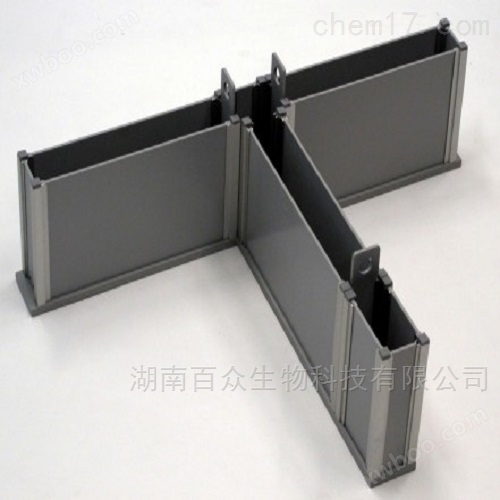
The T-maze video analysis system is a superior tool widely used for studying spatial learning, conditional recognition learning, and working memory. According to its modular design, the T-maze developed by Shanghai Xinruan can operate in different configurations. Each system consists of 2 selection arms and a starting arm above the * area, each arm can be used to place a food bin for holding granular food. Install a surveillance camera system directly above the T maze, and use Xmaze behavior analysis software to automatically track and record animal trajectory data throughout the process.
Product Details
T-maze video analysis system
1、 Product Introduction
T-maze video analysis systemIt is a superior tool widely used for studying spatial learning, condition recognition learning, and working memory. According to its modular design, the T-maze developed by Shanghai Xinruan can operate in different configurations. Each system consists of 2 selection arms and a starting arm above the * area, each arm can be used to place a food bin for holding granular food. Install a surveillance camera system directly above the T maze, and use Xmaze behavior analysis software to automatically track and record animal trajectory data throughout the process.
2、 Product Features
1. The T maze adopts industrial design, which is easy to disassemble and clean, and can be deodorized with alcohol;
2. The software tracks animal trajectories in real-time, calculates experimental data, and has complete indicators;
3. Traditional T-maze experiments and T-maze autonomous alternation experiments can be conducted;
4. Can seamlessly integrate with imported video analysis software, such asANY maze video analysis software
5. The software has various forms of data, which can be exported to Excel spreadsheets, saved in the form of images, and even supports the output of final processed data such as histograms and variances;
3、 Product Material
Maze Palace Body: Specially made medical organic board, gray
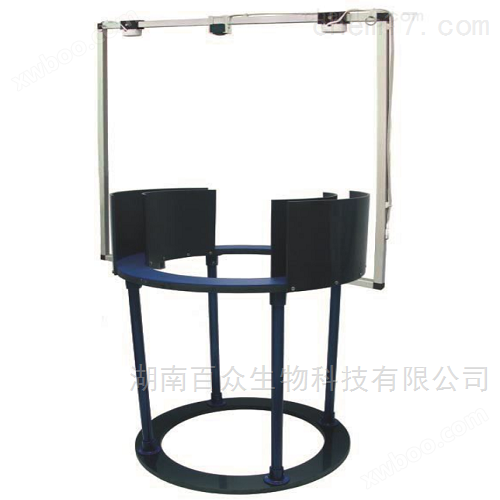
Camera bracket: Industrial aluminum profile, 30 * 30 model
Camera system: Xmaze behavior monitoring gun camera, model XR-VD1
Clarity: 420 lines \ \ \ 480 lines
Collection card: Tianmin UV200, BS7200
4、 Experimental methods
A. Traditional T-shaped maze experiment
(1) Six food pills (45g) were distributed within the T-shaped maze arm to allow rats to adapt to the maze for 5 minutes, once a day for 5 consecutive days.
(2) Forced selection training involves placing the rat into the starting box of the main arm, manually opening the gate, and allowing the rat to enter the main arm of the maze. Randomly and alternately select one of the left and right arms to place 4 food pills, while closing the other arm, forcing the animal to choose the food reinforcement arm and complete feeding; 6 times a day for 4 consecutive days.
(3) Delayed matching to position (DMP) training
a) Place the animal into the starting box with the gate closed, open the gate, and allow the animal to enter the main arm.
b) Close one target arm and force the animal to enter the other open arm to receive 2 food pill rewards.
c) Immediately (with a short delay of less than 5 seconds) place the animal back into the main arm and begin the second training in the matching process; At this point, both target arms are open. Animals complete a 'one-time selection' by placing two forelimbs and at least a portion of two hind limbs on a target arm. Animals returning to the arm they entered during forced selection training will receive a food reward (4 pills), and a correct selection will be recorded once; If an animal enters the other arm, there will be no food reward and it will be restricted within that arm for 10 seconds, recording one incorrect selection.
(4) After one matching training, put the animals back in the cage for 5-10 minutes (while training other animals), and repeat the next matching training. 8 times a day.
If the number of correct animal selections for two consecutive days reaches 15/16, it is considered to meet the standard and the experiment can begin. If the animal still fails to meet the standard after 30 days of training, it will be eliminated.
(5) After the animal training meets the standard, a matching training will be given one day. The difference is that after forced selection training, the T-shaped maze is rotated 180 degrees before undergoing the open arm training mentioned above. The purpose of doing this is to evaluate whether the animal is performing positional manipulation (relying on signals outside the maze) or reactive manipulation (not relying on signals outside the maze).
(6) For the next two days, 10 matching training sessions were conducted daily with an interval of 60 seconds between each session to evaluate the animals' working memory operations. Record the number of times it enters the food reinforcement arm and the number of times it enters the non reinforcement arm again. The latter is considered a working memory error. Normal healthy young rats can operate accurately almost every time. When the operation is stable and the selection accuracy is high (working memory errors are less than 10%), * * testing or operation experiments after brain area damage can be conducted.