-
E-mail
1528643955@qq.com
-
Phone
18754726867
-
Address
Jiaopu Industrial Park, Liangshan County, Jining City, Shandong Province
Product Categories
Huayi Second hand Oil Chemical Equipment Purchase and Sales Department

Second hand steam tube rotary dryer
NegotiableUpdate on 01/22
- Model
- Nature of the Manufacturer
- Producers
- Product Category
- Place of Origin
Overview
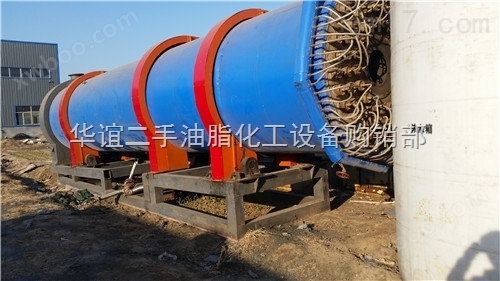
Two brand new second-hand steam tube rotary dryers have been purchased. For customers who need 90% new condition, please contact Liangshan Huayi Second hand Drying Machine Co., Ltd. in a timely manner. For users who need multiple drum dryer equipment, please contact Liangshan Huayi Second hand Chemical Equipment Purchase and Sales Department in a timely manner.
Product Details
Second hand steam tube rotary dryerAlso known as second-hand tube drum dryer equipment
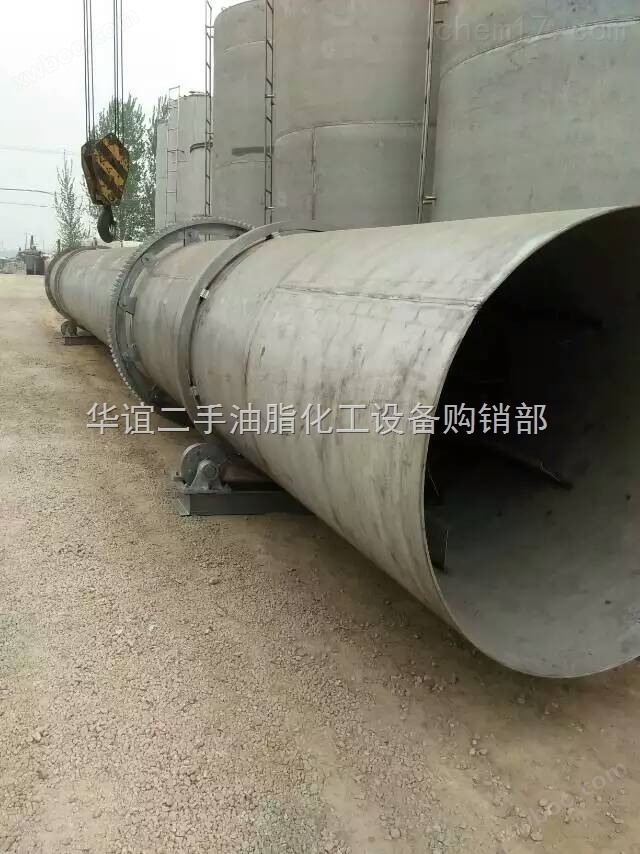
our companyOur company handlesSecond hand drum tube dryerThe equipment has a diameter of 2 meters and a length of 15 meters. It can dry sawdust and is fully equipped with quality assurance. There are currently 6 units available. If needed, please contact Wang
Second hand steam tube rotary dryer


The large-scale steam tube rotary dryer is formed by adding heating tubes on the basis of the traditional direct heat transfer rotary dryer, and belongs to indirect heat transfer drying equipment. The heating tubes are uniformly distributed in concentric circles inside the dryer, and the number of turns for arranging the heating tubes is generally 2-5, which depends on the process conditions, process calculations, and detailed structure of the equipment. Steam is used as a heat source to enter the heating tube and complete condensation and heat release inside the tube. The heat required for drying materials is mainly transferred from the heating tube to the material being dried. The moisture evaporated inside the dryer is carried by the moisture carrying gas to the outside of the dryer for removal. The moisture carrying gas mainly plays a role in moisture carrying, and if it can provide heat, it can only provide a small part of the heat.
For the drying process of flammable and explosive materials, inert gas can be used as the carrier gas to suppress explosions. The transmission device generally uses motors, reducers, and open ring gears for transmission, and the cylinder and tube move in a circular motion under the drive of the large ring gear. The feeder sends wet materials into the dryer, and the materials are discharged from the dryer outlet under the combined action of the rotary cylinder, heating tube, and cylinder inclination, completing the drying process. Compared with traditional direct heat transfer rotary dryers, steam tube rotary dryers have the advantages of easy product quality assurance, high heat utilization rate, low pollution, and easy solvent recovery. It operates stably and is particularly suitable for large-scale production, especially for handling flammable and explosive materials. At present, large-scale steam tube rotary dryers are becoming increasingly widely used in industrial production such as PTA drying and desulfurization gypsum calcination. Figure 2-1 shows a typical steam tube rotary dryer.
In order to smoothly discharge the evaporated moisture and obtain a final product with a lower moisture content, a small flow of moisture carrying gas is usually required to flow backwards through the material through the dryer. Therefore, compared with the direct heat exchange drying process, the drying process inside the steam tube rotary dryer is a complex heat and mass transfer process. In terms of heat transfer, there is not only contact heat transfer between the dried material particles and the tube, but also convective heat transfer between the tube and the wet gas, between the wet gas and the material particles, as well as heat conduction between the material particle layers. In terms of mass transfer, in addition to convective mass transfer between material particles and the moisture carrier medium and moisture diffusion inside material particles, there are also complex moisture diffusion processes between relatively stationary particle clusters (as shown in Figure 2-2).
As the dryer rotates, the particle movement state inside the dryer constantly changes, and the corresponding heat and mass transfer characteristics will also undergo significant changes.
Similar Product Recommend