-
E-mail
2544516211@qq.com
-
Phone
17667566339
-
Address
No.1 Beiling Industrial Park, Chengyang District
Product Categories
Qingdao Lubo Xingye Environmental Protection Technology Co., Ltd
Protective mask particle filtration efficiency tester
NegotiableUpdate on 01/22
- Model
- Nature of the Manufacturer
- Producers
- Product Category
- Place of Origin
Overview
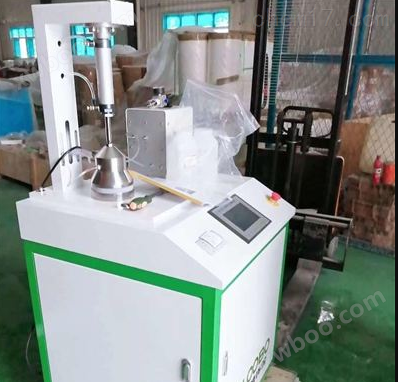
The particle filtration efficiency tester for protective masks produced by Qingdao Lubo Xingye Environmental Protection Technology Co., Ltd. adopts * technology and microprocessor control. It is designed with a good user interface and setting method, which can simplify training and operation. The test results are directly displayed, which is intuitive and convenient.
Product Details
An epidemic is destined to make 2020 different. Even today, various types of anti epidemic masks are still essential epidemic prevention materials, with millions of masks being transported to various places through various means every day.
Masks are currently a simple means for humans to resist viruses, and their effectiveness is also very significant. However, due to the widespread production of masks, the mask market has experienced uneven quality despite its popularity. Whether a mask can truly resist viruses depends on its filtering effect on harmful substances in the air (aerosols). At this point, a mask particle filtration efficiency tester is needed. This is a quality inspection that must be passed before a mask is launched into the market.
The particle filtration efficiency tester for protective masks produced by Qingdao Lubo Xingye Environmental Protection Technology Co., Ltd. adopts * technology and microprocessor control. It is designed with a good user interface and setting method, which can simplify training and operation. The test results are directly displayed, which is intuitive and convenient.
Testing process of particle filtration efficiency tester for protective masks:
1. Test flow rate (85 ± 4) L/min (if multiple filter elements are used, the flow rate should be evenly divided, if dual filter elements are used, the detection flow rate of each filter element should be (42.5 ± 2) L/min); If multiple filtering elements may be used separately, they should be tested according to the detection conditions of a single filtering element;
2. Adjust the detection system of the particulate matter filtration efficiency tester to the detection state and adjust its relevant parameters;
3. Use appropriate fixtures to airtightly connect the mask body or filter element to the detection device;
4. After the testing begins, record the filtration efficiency of the sample, with a sampling frequency of ≥ 1 time/min. The detection should continue until the particle load on the mask body reaches 30mg.
Application scope of detection:
1. Suitable for testing the particle throughput efficiency of medical protective masks, surgical masks, and ordinary medical masks.
2. Suitable for testing the particle filtration efficiency of daily work clothes, * clothing, isolation clothing, and protective clothing (also known as protective clothing filtration performance tester, protective clothing filtration tester, etc.).
Similar Product Recommend