-
E-mail
jkrd@hge7.com
-
Phone
18600516852
-
Address
Room 605, Building B, Xinyuan Science and Technology Park, Changping District, Beijing
Product Categories
Beijing Jingke Ruida Technology Co., Ltd
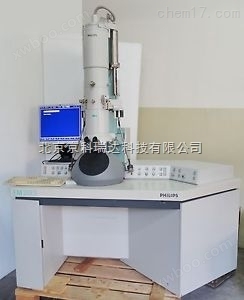
Philips EM208S electron microscope, glassware
NegotiableUpdate on 03/04
- Model
- Nature of the Manufacturer
- Producers
- Product Category
- Place of Origin
Overview
EM208s electron microscope is a small and medium-sized transmission electron microscope mainly used in the fields of medicine and biology research. Our school purchased this type of electron microscope after comparative selection in 1997 and became a new user of Philips electron microscope. Compared to multi-purpose high-end electron microscopes, it simplifies some structures while ensuring high image quality, and has the characteristics of small size, easy operation, and practicality. During more than 3 years of use and maintenance, based on its characteristics and combined with the high temperature and humidity environmental conditions in the south, certain measures were taken to ensure the normal operation of the electron microscope. Philips EM208S electron microscope, glassware
Product Details
Philips EM208S Electron Microscope
95Cheng Xin1Starting from 10000 yuan!!!
Friendly reminder: This instrument95New spot supply negotiation!
Instrument shooting:

Philips EM208S electron microscope, glassware
Philips EM208S electron microscope, glassware
EM208s electron microscope is a small and medium-sized transmission electron microscope mainly used in the fields of medicine and biology research. Our school purchased this type of electron microscope after comparative selection in 1997 and became a new user of Philips electron microscope. Compared to multi-purpose high-end electron microscopes, it simplifies some structures while ensuring high image quality, and has the characteristics of small size, easy operation, and practicality. During more than 3 years of use and maintenance, based on its characteristics and combined with the high temperature and humidity environmental conditions in the south, certain measures were taken to ensure the normal operation of the electron microscope.
The EM208s electron microscope vacuum system is a single diffusion pump and single mechanical pump pumping system. The mechanical pump adopts an intermittent action mode, which is responsible for obtaining the pre vacuum of the mirror body and connecting with the large volume buffer box at the rear end of the diffusion pump, and serves as a front-end pump. Therefore, the mechanical pump has a larger pumping capacity. But its oil volume is relatively small, between 0.75~0.45L. Under normal working conditions, it usually only takes two weeks. The mechanical pump oil has shown obvious emulsification phenomenon, and the pumping efficiency has greatly decreased. At this time, measures should be taken to control the gas flow of the mechanical pump. During the operation of the mechanical pump, a certain amount of air is filled into the exhaust chamber of the pump using the pneumatic valve on the pump, so that the exhaust valve opens when the condensable steam (mainly water vapor) in the pump reaches the partial pressure before condensation, and the steam is smoothly discharged from the pump body, achieving the purpose of cleaning the pump oil and extending the service life of the pump oil.
In addition, the entire electron microscope only has one air leakage valve installed in the photography room as a pathway for air to enter the lens. This simplified design requires full air intake when opening the electron gun chamber and mirror body, increasing the mechanical pump's pumping capacity. Moreover, the entry of air, especially water vapor, is easily absorbed by the film, which affects the vacuum degree. Usually, under the conditions of 20 ℃ and 50% relative humidity, the partial pressure of water vapor is 1165Pa, which is the third largest component of air. However, in the south, the temperature and humidity are much higher than this, and the partial pressure of water vapor in air flow is much higher. Meanwhile, the process of physical adsorption is similar to the liquefaction of gases, and its adsorption heat is of the same magnitude as the liquefaction heat of gases. Gases that are prone to condensation are also easily adsorbed. Therefore, replacing air with gas with low liquefaction heat makes it easier to achieve high vacuum, while nitrogen has a boiling point of -210 ℃ and is safe, harmless, and easy to obtain. Therefore, it is necessary and practical to use nitrogen instead of air to balance the pressure of the mirror body, and the design of a single leakage port also provides the possibility for this method. In practice, we use nitrogen gas with a purity of ≥ 99.2% to spray the mirror body, which can achieve good results even during the rainy season.
Due to seismic requirements, the air compressor and circulating water machine of the electron microscope should be kept away from the electron microscope. Due to limited conditions, they are rarely placed in rooms with constant temperature and humidity. However, we have placed them separately in two locations. Due to the significant impact of humidity on air compressors and the sensitivity of circulating water machines to temperature. Therefore, for air compressors, drainage should be carried out every two weeks to ensure the supply of compressed air for electron microscopy drying and prevent mechanical valves from malfunctioning due to condensation of moisture. The ZEMl000S circulating water machine used in the electron microscope is designed with the compressor always in a cooling state, and the control of its circulating water temperature is achieved through the use of partial circulating water and refrigeration
The set temperature value is obtained by mixing the cold source after heat exchange. In this way, a relatively constant water temperature can be obtained, but it also increases the heat dissipation of the circulating water. In summer, the room temperature can approach 40 ℃, and the circulating water machine is prone to malfunction when operating in this environment. Therefore, when a high-power air conditioner is not installed, the method of installing a high-power exhaust fan can be used to accelerate the air convection near the circulating water. If necessary, the ground around the circulating water machine can also be sprinkled with water to cool down and ensure its normal operation. In addition, under high temperature and humidity conditions in summer, the water temperature of the circulating water is adjusted 2-3 ℃ higher than usual to prevent the mirror body and other cooling components from being too cold and condensing water droplets, which may cause equipment failure. Dehumidification work is also done in the electron microscope room to keep the humidity within 85%.
The EM208s electron microscope has a compact structure, with close spacing between components and circuit boards, and a small heat dissipation space. Therefore, special attention should be paid to maintaining indoor temperature within 25 ± 2 ℃ in summer. For certain heat dissipation components, especially A24 high control units, due to the presence of power components and the use of natural heat dissipation methods, attention should be paid to maintaining unobstructed space near them. At the same time, books and other items should be avoided from being placed on the surface cover plate, which hinders heat dissipation. Even for electron microscope control displays, they should be placed on the mirror column to avoid this position. The keyboard can open the support legs to prevent them from sticking to the cover plate.
Similar Product Recommend