-
E-mail
zhruisi@126.com
-
Phone
15811671806
-
Address
7th Floor, Building 10, No. 85 Cuiwei West Road, Zhuhai City
Product Categories
Zhuhai Ruisi Instrument Co., Ltd

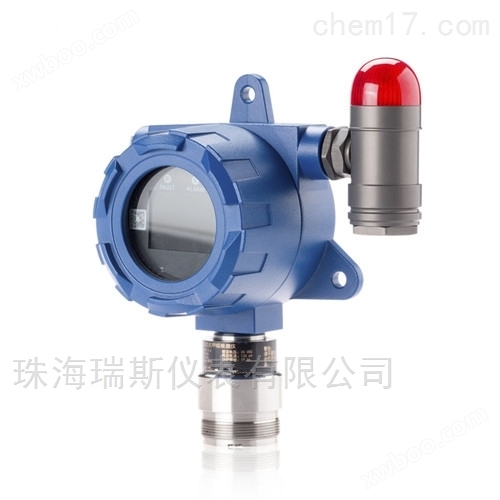
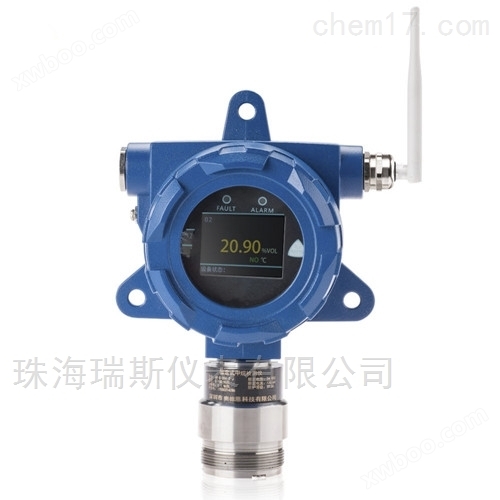
Online azide gas detector
NegotiableUpdate on 01/22
- Model
- Nature of the Manufacturer
- Producers
- Product Category
- Place of Origin
Overview
One of the most widely used online azide gas detectors. It can simultaneously have on-site detection concentration display, signal transmission, LED lights, and relay alarm functions. The working principle of the fixed azide gas detector is to convert the gas concentration detected on site into the corresponding standard signal, and then transmit the signal to the upper computer such as PLC, DCS, alarm control host for unified display, management and control. The fixed gas detector with display has one relay (switch signal) inside, which can control the fan, sound and light alarm, solenoid valve and other devices
Product Details
Online azide gas detector
Online azide gas detector
It can simultaneously have on-site detection concentration display, signal transmission ledLamp and relay alarm function. The working principle of a fixed azide gas detector is to convert the gas concentration detected on site into a corresponding standard signal, and then transmit the signal toPLCTheDCSUnified display, management, and control of upper level computers such as alarm control hosts. Fixed gas with displayThe physical examination instrument has an internal 1 A relay(Switching signal))It can control equipment such as fans, sound and light alarms, solenoid valves, etc.
Hydrozidic acid is a colorless liquid with a pungent odor,Very stable to heat, but explodes upon impact, commonly used as an explosive. Hydrogen azide acidaqueous solutionMedium is stable, slightly in waterionizationIts acidity is similar toacetic acid, Ka=1.9 × 10⁻⁵, is a typeweak acid.
Azide acid detector
chemical property
Dilute solution hardly decomposes, but explosive decomposition occurs immediately upon impact: 2HN3→3N2↑+H2↑
The normal salt of azide acid is stable, but heavy metal salts still explode when impacted, producing nitrogen gas. Its alkali metal and alkaline earth metal salts only decompose and do not explode when heated. Its lithium salt is heated to generate lithium nitride.
molecular structure
Its molecular structure is shown in the figure:
In HN3In the molecule, the angle between two N-N bonds is 171 °, and the H-N bond is adjacent to

The angle between the N-N bonds near H is about 109 °, indicating that the first N atom near H is sp2 hybridized, the second N atom is sp hybridized, and the N atom at the end is not hybridized. The reason is that there is an delocalized π bond in the molecule. The N atoms connected to hydrogen give one electron, the second N atom gives two electrons, and the third N atom gives one electron, forming a large π bond with three centers and four electrons. HN3The average oxidation number of N atoms is -1/3. N3-Ion is a halide like ion with chemical properties similar to halide ions, such as AgN3It is also insoluble in water.
Similar Product Recommend


