-
E-mail
2559293216@qq.com
-
Phone
15216878095
-
Address
13A11, 14th Floor, Hongyuan Hotel Business Building, No.1 Hongyuan Road, Nancheng District, Dongguan City, Guangdong Province
Product Categories
Shanghai Yingzhe Industrial Automation Equipment Co., Ltd. Dongguan Branch

Low price processing of HEIDENHAIN encoder from Germany
NegotiableUpdate on 03/09
- Model
- Nature of the Manufacturer
- Producers
- Product Category
- Place of Origin
Overview
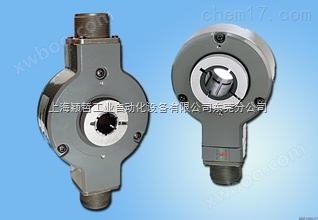
The German HEIDENHAIN encoder is a device that encodes and converts signals (such as bitstreams) or data into signal forms that can be used for communication, transmission, and storage. The encoder converts angular displacement or linear displacement into electrical signals, the former is called a encoder and the latter is called a ruler. According to the readout method, encoders can be divided into two types: contact type and non-contact type. The German HEIDENHAIN encoder has low cost processing
Product Details
Low price processing of HEIDENHAIN encoder from GermanyIt can be classified in the following ways.
1. Classify according to the different ways of engraving holes on the code wheel
(1) Incremental type: It emits a pulse signal (also known as sine and cosine signals, which are then subdivided to produce higher frequency pulses) every unit angle turned. It is usually output in phases A, B, and Z, with phases A and B being pulse outputs delayed by 1/4 cycle each other. According to the delay relationship, forward and reverse can be distinguished, and the rising and falling edges of phases A and B can be multiplied by 2 or 4 times; The Z-phase is a single cycle pulse, which means one pulse is emitted per cycle.
(2) Value type: It corresponds to a circle, and each reference angle emits a binary value of * corresponding to that angle. Multiple positions can be recorded and measured through external loop devices.
2. According to the output type of the signal, it can be divided into voltage output, open collector output, push-pull complementary output, and long line drive output.
3. Classified by mechanical installation form of encoder
(1) Axial type: Axial type can be divided into clamping flange type, synchronous flange type, servo installation type, etc.
(2) Shaft sleeve type: Shaft sleeve types can be divided into semi empty, fully empty, and large-diameter types.
4. According to the working principle of encoders, they can be divided into photoelectric, magneto electric, and contact brush types.
Common faults of HEIDENHAIN in Germany
1. Encoder malfunction: refers to the failure of the encoder's components, which prevents it from generating and outputting the correct waveform. In this case, it is necessary to replace the encoder or repair its internal components.
2. Encoder connection cable fault: This type of fault has the highest probability of occurrence and is often encountered during maintenance, and should be a priority factor to consider. Usually, it is due to open circuit, short circuit or poor contact of the encoder cable, in which case the cable or connector needs to be replaced. Special attention should also be paid to whether the loosening caused by loose cable fixation leads to welding or circuit breaking. In this case, the cable should be clamped tightly.
3. Encoder+5V power supply drop: refers to the situation where the+5V power supply is too low, usually not lower than 4.75V. The reason for the low voltage is due to power supply failure or high resistance of the power transmission cable, which causes losses. In this case, the power supply needs to be repaired or the cable needs to be replaced.
4. The voltage drop of the encoder battery: This fault usually has a clear alarm meaning, and the battery needs to be replaced. If the reference point position memory is lost, the operation of returning to the reference point must also be performed.
5. The shielded wire of the encoder cable is not connected or detached: this will introduce interference signals, make the waveform unstable, and affect the accuracy of communication. It is necessary to ensure reliable welding and grounding of the shielded wire.
6. Loose installation of encoder: This fault can affect the accuracy of position control, causing excessive positional deviation during stopping and movement, and even generating servo system overload alarm as soon as the machine is turned on. Please pay special attention.
7. Grating contamination can cause a decrease in signal output amplitude, and it is necessary to gently wipe off the oil stains with degreasing cotton.
Installation and use of HEIDENHAIN in Germany
Mechanical installation and use of HEIDENHAIN type rotary encoder in Germany:
There are various forms of mechanical installation for rotary encoders, including high-speed end installation, low-speed end installation, and auxiliary mechanical device installation.
HEIDENHAIN High Speed End Installation in Germany: Installed on the power motor shaft end (or gear connection), this method has the advantage of high resolution. Due to the 4096 turns of the multi turn encoder and the motor rotation within this range, sufficient range can be fully utilized to improve resolution. The disadvantage is that there is gear clearance error in the back and forth travel of moving objects after passing through the reduction gear. It is generally used for one-way high-precision control positioning, such as roll gap control in steel rolling. In addition, the encoder is directly installed at the high-speed end, and the motor vibration must be small, otherwise it is easy to damage the encoder.
Low speed end installation: Installed after the reduction gear, such as the shaft end of the winch wire rope drum or the shaft end of the last reduction gear. This method has no gear backlash, and the measurement is more direct and accurate. This method generally measures long-distance positioning, such as various lifting equipment, feeding trolley positioning, etc.
HEIDENHAIN Germany auxiliary mechanical installation:
Commonly used ones include gears and racks, chain belts, friction wheels, rope winding machinery, etc.
HEIDENHAIN Wiring Method in Germany
The HEIDENHAIN rotary encoder from Germany is a photoelectric rotary measuring device that directly converts the measured angular displacement into a digital signal (high-speed pulse signal).
Low price processing of HEIDENHAIN encoder from GermanyAccording to the principle of signal, there are incremental encoders and type encoders.
We usually use incremental encoders, which can directly input the output pulse signal of the rotary encoder to the PLC, and use the PLC's high-speed counter to count its pulse signal to obtain measurement results. Different models of rotary encoders have different numbers of output pulses. Some rotary encoders output three-phase pulses of A, B, and Z, some only have two phases of A and B, and the simplest one only has phase A.
The encoder has 5 leads, including 3 pulse output lines, 1 COM terminal line, and 1 power line (OC gate output type). The power supply of the encoder can be an external power supply or directly use the DC24V power supply of the PLC. The "-" end of the power supply should be connected to the COM end of the encoder, and the "+" end should be connected to the power supply end of the encoder. The COM end of the encoder is connected to the input COM end of the PLC, and the A, B, and Z phase pulse output lines are directly connected to the input end of the PLC. A and B are pulses that are 90 degrees apart, and the Z phase signal has only one pulse when the encoder rotates once, usually used as a basis for zero point. When connecting, attention should be paid to the response time of the PLC input. The rotary encoder also has a shielded wire, which should be grounded during use to improve anti-interference performance.
Encoder ----------- PLC
A-----------------X0
B-----------------X1
Z------------------X2
+24V------------+24V
COM------------- -24V-----------COM
working principle
A photoelectric encoder with a central axis, which has circular markings for light and dark, is read by photoelectric emitting and receiving devices to obtain four sets of sine wave signals combined into A, B, C, and D. Each sine wave has a phase difference of 90 degrees (360 degrees relative to one cycle), and the C and D signals are reversed and superimposed on the A and B phases to enhance stable signals; Additionally, output a Z-phase pulse for each revolution to represent the zero reference position.
Due to the 90 degree difference between phase A and phase B, the forward and reverse rotation of the encoder can be determined by comparing whether phase A is ahead or phase B. By using the zero position pulse, the zero position reference position of the encoder can be obtained. The materials of encoder encoders include glass, metal, and plastic. Glass encoders deposit very thin engraved lines on glass, which has good thermal stability and high accuracy. Metal encoders directly engrave lines with or without lines, which are not fragile. However, due to the thickness of metal, the accuracy is limited, and its thermal stability is one order of magnitude worse than that of glass. Plastic encoders are economical and have low cost, but their accuracy, thermal stability, and lifespan are all inferior.
Resolution - The number of lines provided by an encoder for each 360 degree rotation is called resolution, also known as resolution division or directly referred to as number of lines. Generally, it ranges from 5 to 10000 lines per rotation.
HEIDENHAIN photoelectric encoder from Germany
Advantages: Small size, precision, high resolution, no contact or wear; The same variety can detect both angular displacement and linear displacement with the help of mechanical conversion devices; The multi turn photoelectric encoder can detect linear displacement over a considerable range (such as 25 bit multi turn). Long lifespan, easy installation, diverse interface forms, and reasonable price. Mature technology has been widely applied both domestically and internationally for many years.
Disadvantages: Precise but requires high protection for outdoor and harsh environments; Measuring linear displacement requires the conversion of mechanical devices and the elimination of errors caused by mechanical clearances; Detecting objects in orbit is difficult to overcome slip.
HEIDENHAIN static magnetic grating encoder from Germany
Advantages: Moderate size, direct measurement of linear displacement, digital encoding, no limit to theoretical range; No contact or wear, resistant to harsh environments, can be used underwater up to 1000 meters; Rich interface forms and diverse measurement methods; The price is still acceptable.
Disadvantages: Low resolution of 1mm; Different varieties should be used to measure straight lines and angles; Not suitable for displacement detection in small areas (greater than 260 millimeters).
Selection Attention
HEIDENHAIN in Germany should pay attention to three parameters:
1. Installation dimensions of equipment: including positioning stop, shaft diameter, and installation hole position; Cable outgoing method; Installation space volume; Whether the protection level of the working environment meets the requirements.
2. Resolution: Refers to the number of pulses output by the encoder per revolution during operation, and whether it meets the precision requirements for design and use.
3. Electrical interface: Encoder output methods commonly include push-pull output (F-type HTL format), voltage output (E), open collector (C, commonly C is NPN transistor output, C2 is PNP transistor output), and long line driver output. Its output mode should match the interface circuit of its control system.
The main role of HEIDENHAIN in Germany
It is a rotary sensor that converts rotational displacement into a series of digital pulse signals, which can be used to control angular displacement. If the encoder is combined with a gear bar or screw, it can also be used to measure linear displacement.
Similar Product Recommend