-
E-mail
psf@china-jianan.com
-
Phone
15057360160
-
Address
Zhejiang Wenzhou Oubei Town Dongou Industrial Park Park Avenue Linpu Road Canaan Technology
Product Categories
Zhejiang Canaan Technology Co., Ltd
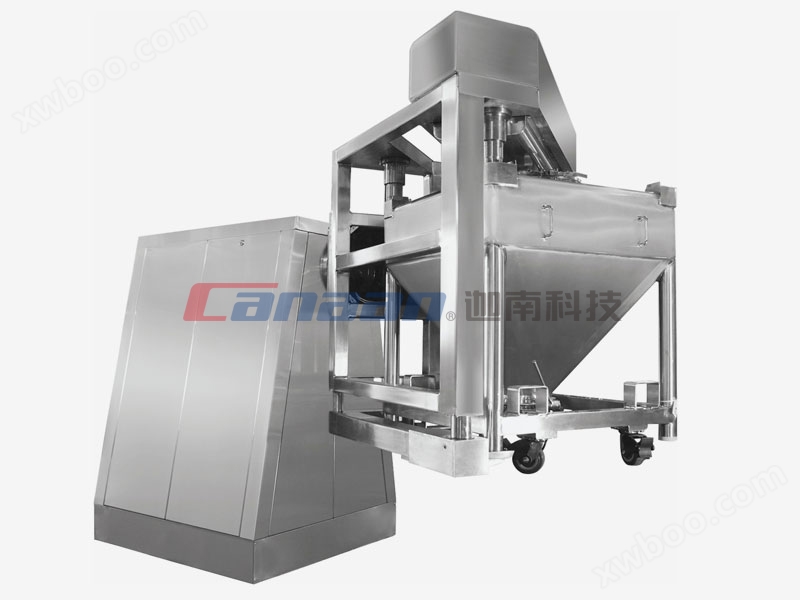
HDD series single arm lifting hopper mixer
NegotiableUpdate on 05/24
- Model
- Nature of the Manufacturer
- Producers
- Product Category
- Place of Origin
Overview
The function automatically completes all actions such as lifting, clamping, mixing, and lowering
Product Details

purpose
This function automatically completes all actions such as lifting, clamping, mixing, and lowering. Equipped with a single arm lifting hopper mixer and multiple mixing hoppers of different specifications, it can meet the mixing requirements of large quantities and multiple varieties, making it an ideal equipment for pharmaceutical factory mixing. It is widely used in other industries such as pharmaceuticals, chemical food, etc.
principle
The machine consists of a base, a rotating body, a drive system, a lifting system, a braking system, and a control system. When working, first push the mixing hopper into the rotating body, press the "confirm" button on the touch screen, and the mixing hopper will be automatically lifted into place and clamped. After the pressure sensor receives the clamping signal, the driving system works and mixes according to the set time and speed; After reaching the set parameters, the rotating body can automatically stop vertically, and the braking system will work, ending the mixing process; Then improve the system's operation, the mixing hopper inside the rotating body descends into place, automatically stops, and prints process data. Push out the mixing hopper and move on to the next process.
feature
This machine is a new model developed by our company through extensive absorption and digestion of technology, combined with national conditions. Reasonable structure, stable performance, easy operation, complete machine, no exposed screws. The rotating body (mixing hopper) forms a 30 ° angle with the rotating axis, and the material in the mixing hopper flips along with the rotating body while making tangential motion along the bucket wall, producing strong flipping and high-speed tangential motion, thus achieving the mixing effect. The discharge butterfly valve adopts PLC fully automatic control and is equipped with infrared safety devices and anti misoperation devices to ensure production safety. Materials can pass through different process stages in the same container without the need for frequent material transfer, addition, and other procedures. Effectively controlling dust and cross contamination, reducing material loss, controlling material stratification, optimizing production processes, and meeting GMP requirements for pharmaceutical production.
Similar Product Recommend