-
E-mail
robert711024@aliyun.com
-
Phone
13311870883
-
Address
Room 1208, Hongkou Mall, No. 1457 Sichuan North Road, Shanghai
Product Categories
Shanghai Lidu Electronic Technology Development Co., Ltd

GARDCO Linear Friction and Wear Tester
NegotiableUpdate on 04/19
- Model
- Nature of the Manufacturer
- Producers
- Product Category
- Place of Origin
Overview
The wear tester series covers from Z's simple abrasion resistance tester to Z's precision equipment that can provide recording of test motion resistance. This type of force measurement method can eliminate the potential impact of subjective human factors.
Product Details
|
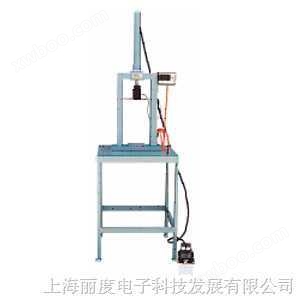
GARDCOLinear Friction and Wear Tester
22 multi model testers: capable of conducting wear, abrasion resistance, wash resistance, static, and dynamic friction tests. The testing of this type of device involves rubbing two surfaces against each other under certain conditions and determining any changes in the sample or interactions between the surfaces resulting from this. The wear tester series covers from the simplest abrasion resistance tester to the most precise equipment that can provide recording of test motion resistance. This type of force measurement method can eliminate the potential impact of subjective human factors. ·Size/Weight: The base of all models is a 0.25-inch thick aluminum plate. All models are 16 inches wide and 22 inches long, except for D5, D7, D8, D9&D10 models which are 16 inches long. Net weight is approximately 40-50 pounds. ·To prevent the risk of accidental liquid leakage, all functional components are installed above the testing plane. ·All functional components are made of thick and polished aluminum. ·The drive rod is welded from 1/16 inch stainless steel. ·Linear friction is powered by a single drive system. ·The drive rod is vertically adjustable relative to the drive frame. At the lowest position, it should be at least half an inch higher than the test surface and glass plate. This relatively low position reduces the inclination in the horizontal direction. ·There are three equally spaced holes on each tooth of the drive rod. There are two basic factors in friction testing: one is the smoothness of the sample surface, but another factor may be more important: after cleaning or wear testing, the surface condition of the sample will undergo significant changes. The definition of frictional force is: the force that impedes significant movement of an object relative to another object is called frictional force. Friction characteristics between surfaces of objects: Characteristics of sample surface The pressure exerted on the surface of the sample The contact area between two media within a certain range The motion speed of two media within a certain range Static friction is always greater than dynamic friction The definition of friction coefficient is the ratio of the frictional force between two surfaces to the vertical force acting on one surface. The friction coefficient has a wide range. For example, oiling can be as low as 0.05 relative to metal surfaces, wet leather is about 0.36 relative to metal, and dry leather is about 0.56 relative to metal. In order to test the friction between the surfaces of any two objects, one object must have relative movement to the other. The pressure acting on the surface of an object must be fixed and known. This linear wear tester is suitable for testing friction. In order to meet different testing requirements, various types of instruments can not only be used for testing between samples, but also directly for friction testing between samples and instrument surfaces. In the case of adjustable speed, the wear gauge can operate at a sufficiently low speed, so that the factors of kinetic energy and momentum may be ignored. When used on most object surfaces, it is recommended to use a speed of 3-5 inches per second. Even with strong displays on the machine panel, the recorder is still used for testing. During the testing process of the machine, the recorder demonstrated good accuracy and timely feedback on frictional resistance. To test various object surfaces, we propose adding a certain weight to the friction moving device and sponge box. Both of these are driven directly through standard rods or machine driven rods. Parameters of linear friction and wear tester
Note: V =speed regulationF =Force inductionI =Built in data transmission
| |||||||||||||||||||||||||||||||||||||||||||||||||||||||||||||||||||||||||||||||||||||||||||||||||||||||||||||||||||||||||||||||||||||||||||||||||||||||||||||||||||||||||||||||||||||||||||||||||||||||||||||||||||||||||||||||||