-
E-mail
13930089572@126.com
-
Phone
15716826172
-
Address
23rd Floor, Wenxin Building, No. 325 Shuguang Street, Congtai District, Handan City, Hebei Province
Product Categories
Hebei Feimeng Electronic Technology Co., Ltd
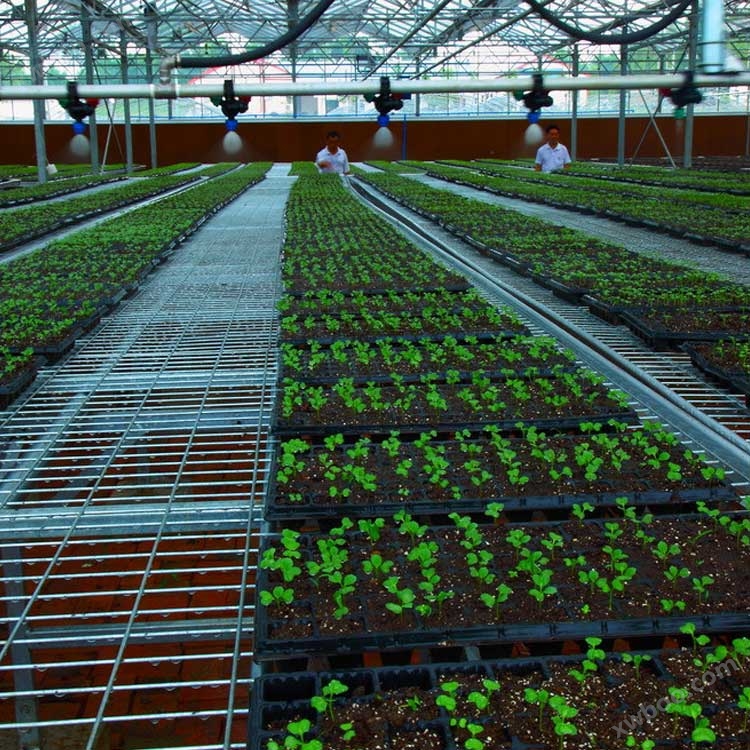
FM-SKY water-saving irrigation automatic control system
NegotiableUpdate on 01/21
- Model
- Nature of the Manufacturer
- Producers
- Product Category
- Place of Origin
Overview
The FM-SKY water-saving irrigation automation system adopts the principle of adapting to local conditions, selects different irrigation facilities according to the different needs of different regions and crops, and uses technologies such as computers, data acquisition controllers, and sensors to monitor and manage farmland irrigation, ensuring timely and appropriate water supply for crop growth, thus achieving the goal of water-saving irrigation and water-saving irrigation automation.
Product Details
Basic Parameters
-20 ~85℃
Greenhouse, laboratory, breeding, artificial climate
detailed introduction
FM-SKY water-saving irrigation automatic control system
one、sketch:
The FM-SKY water-saving irrigation automation system adopts the principle of adapting to local conditions, selects different irrigation facilities according to the different needs of different regions and crops, and uses technologies such as computers, data acquisition controllers, and sensors to monitor and manage farmland irrigation, ensuring timely and appropriate water supply for crop growth, thus achieving the goal of water-saving irrigation and water-saving irrigation automation.
IIEquipment composition and main functions:
The FM-SKY irrigation self-control system mainly consists of a central control system (main computer, control cabinet), solenoid valves, soil moisture sensors (capable of measuring soil moisture values), meteorological observation stations (capable of measuring temperature, humidity, wind speed, wind direction, rainfall) and other equipment.
Operators can sit in the control room and comprehensively analyze the collected meteorological data, field soil moisture, and other data. They can use manual or automatic methods to irrigate the entire community without leaving their homes. At the same time, data query systems and printing systems can be used to record, query, and print meteorological data, soil moisture, irrigation settings, irrigation progress, irrigation history records, and other data of the entire irrigation community at any time.
The system consists of multiple control units, each managing an area. Using PRS/GSM network, managed uniformly by computers. The outdoor air temperature and humidity sensor sends the results to the computer, where irrigation parameters are set and irrigation conditions are statistically analyzed. The data and charts can be stored and displayed on the computer through dedicated software. At the same time, special operations can be manually performed. Obtain weather information through the Internet and implement irrigation in a predictable manner.
IIIThe main functions of the controller and data acquisition are:
Monitor soil moisture content;
Monitoring of EC (conductivity) and pH values (optional);
Monitoring the status of solenoid valves;
Control the status of the solenoid valve;
Communication transmission of various monitoring and control signals;
Alarm for low voltage;
Technical parameters of moisture sensor:
Measurement parameter: Soil volumetric moisture content
Range: 0-99%
Unit:% (m3/m3)
Measurement accuracy: ± 3%
Exchange accuracy:<3%
Retest error:<1%
Operating current: approximately 20mA
Operating frequency: 100MHz
Response time:<1 second
Measurement stability time: 1 second Measurement area: 95% of the influence is within a cylinder with a diameter of 7cm and a height of 7cm, centered around the probe
Characteristics of moisture sensor:
High stability, easy installation, and simple maintenance and operation;
Adopting flame-retardant epoxy resin curing, waterproof, can be used in soil for a long time without corrosion;
The steel needle is made of high-quality materials that can withstand long-term electrolysis and are not corroded by acid and alkali in the soil;
High measurement accuracy, reliable performance, less affected by soil salinity, and adaptable to various soil types;
4Software and control functions
On the management software of the monitoring computer, relevant irrigation parameters can be set and transmitted to various control units. In addition, it can also receive real-time outdoor weather temperature and humidity information, and obtain recent weather conditions through the Internet for pre processing.
The main functions of monitoring and management software
1) Management of operator permissions;
2) Dynamically display various parameters graphically;
3) Artificially develop a set of irrigation plans;
4) Automatically record data transmitted from various sites;
5) Automatically analyze data transmitted from various sites;
6) Can intervene and control the irrigation status of each station at any time;
7) You can freely combine sites and partition them according to the actual situation;
8) Set various parameters for the divided areas;
9) Record operator information at any time;
10) Record operational information at any time;
11) Can display the status of each site at any time;
12) Can query various information recorded in the database at any time;
13) Capable of managing archives for administrators;
14) Printing historical records at any time;
15) Automatically generate irrigation record reports;
Similar Product Recommend


