-
E-mail
563055309@qq.com
-
Phone
13757115859
-
Address
6th Floor, Building 7, Chuangmei Huacai International, 567 Dengcai Street, Xihu District, Hangzhou City, Zhejiang Province, China
Product Categories
Hangzhou Ruixi Technology Co., Ltd
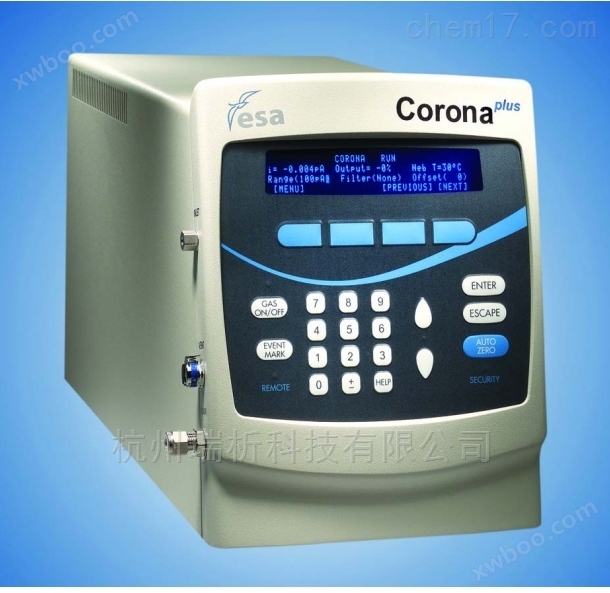
Electric fog detector CAD
NegotiableUpdate on 03/03
- Model
- Nature of the Manufacturer
- Producers
- Product Category
- Place of Origin
Overview
CAD detector is a new principle, high sensitivity, and good reproducibility universal detector that can be accurately used for quantitative or semi quantitative analysis, and can detect most non-volatile and semi volatile organic compounds.
Product Details
The main features of the electric fog detector are:
1) Based on the design principle and structure of the detector, The detector has high sensitivity overall, When analyzing glucose When using sucrose and lactose, can
Detected 0.5ngThe sample size on the column;
2) Response factor *, Not dependent on the structure of the compound, The reproducibility is very good, As for 24 Under the same chromatographic conditions, the compounds were analyzed separately
Sample injection 1µg( Not connected to chromatography column) , The peak area of its response RSDThe value is only 10.7%;
3) The dynamic detection range is wide, reach 3-4An order of magnitude;
4) Widely used, Capable of analyzing small molecules Macromolecular compounds, Such as amino acids Protein Polymers, etc;
5) The operation is intuitive and simple, The maintenance is very simple, Working flow rate 0.2-2.0ml/min, *Compatible UHPLCUltra fast analysis.
Precautions for using electric fog detector: Electric fog detectors require atomization of the flowing phase, So when it is necessary to use acids or salts to regulate the mobile phase, volatile organic acids and organic salts should be used, Such as formic acid Acetic acid, etc, Organic salts should use ammonium salts; pHSuggested value range 2-7.5, higher pHValues may increase background and noise levels.
Active pharmaceutical ingredients and ion analysis in the pharmaceutical industry
In the pharmaceutical industry, It is often necessary to detect and quantify active pharmaceutical ingredients and their various impurities, And in the final finished drug, Auxiliary materials or ions are often added, Sometimes quantitative analysis is also necessary, To ensure the quality of drugs, Meanwhile, In the process of drug development, Drug metabolism experiments and some drug screening analyses are needed, All can be used. CADTo conduct testing and quantification. Pistorinowait [5]compared MSThe ELSDand CADright6-deoxyerythronolide BConduct quantitative analysis, From the perspective of detection limit and analysis cost, CADMore advantageous, Meanwhile, For bisphosphonates, adopt UVanalysis, Unable to meet the requirements, Therefore, adopt Dionex.The combination of biphasic separation chromatography columns CADDetector, Capable of simultaneously analyzing sodium ions and bisphosphonates, Can achieve good separation and quantification requirements.
Determination and Analysis of Carbohydrates and Aminoglycosides
The common characteristic of sugars and aminoglycoside compounds is strong polarity ODSThere is no retention on the column, and in addition, they all have no UV absorption. Therefore, amino columns or HILICSeparate the columns, Quantitative analysis using an electric mist detector, Obtained good separation and low detection limit. Wardwait [11]Analysis and research on monosaccharides and dehydrated anhydrides indicate that, In biomass combustion, Often produces L-glucan, Most of them are derived into silane esters and then used GCor GCMSanalysis, Recently, it has also been adopted ESI MSanalysis, Or ion chromatography - PADanalysis, But HPLC-CADIt can be analyzed directly without the need for derivation and concentration steps; Shinsuke Inagakiwait [12]adopt HPLC-CADDirectly analyzed oligosaccharides, Using amino column separation, the determination was carried out SGPSugar, Detection limit reached 0.40pmol(S/N=3), Although the sensitivity of this method is lower than FLDDetector, but is UVDof 5 About times, Meanwhile, It is also possible to simultaneously measure monosialose and desialose without the need for derivatization. Roy W. Dixonwait [13]Using a strong cation exchange column and washing with pure water, Analyzed L-glucan and other dehydrated monosaccharides, The detection limit of the method is approximately 90µg/ml.
Application analysis of surfactants, polymers and other chemical industries
Surfactants and polymer materials are widely used in modern industry, However, due to its complex composition, Lack of corresponding standard substances, Meanwhile, due to the majority being absorbed at the ultraviolet end, Therefore, Many analysts have used electric fog detectors for detection and analysis, Obtained satisfactory results. Dawen Kouwait [14]adopt SECand CADCombined with analysis PEGSurfactant like compounds and their dimer impurities, The results indicate that the comparison RIThe ELSDand CADThe analysis results, CADMore accurate. In polymer analysis, Takahashiwait [15]in SFCUp, comparedCADand ELSDUsed for measuring PEGThe molecular weight distribution, The results show that CADThe reproducibility is much better than ELSD, CADof S/NIt is also higher, therefore, CADCan be used for the detection of synthesized polymers.
Electric fog detector( CAD) and CPThe BPThe USPRelated analysis methods
Determination of Ginkgolides in Ginkgo Preparations
Method Introduction:
Ginkgolide compounds belong to terpenoid compounds, Composed of sesquiterpene lactones and diterpene lactones, It is an important active ingredient in Ginkgo biloba leaves. right
In the analysis of ginkgolides, Due to its weak UV absorption, adopt more HPLC-ELSDMethod( See figure 3) . Pharmacopoeia of the People's Republic of China 2010 The mobile phase in the version method
Using unconventional solvent n-propanol -Tetrahydrofuran -Water, but the boiling point of n-propanol is close to 100℃Poor volatility can easily lead to CADThe detector noise increases.
This experiment improved this method, adopt HPLC-CADmethod, The mobile phase consists of conventional reverse phase chromatography solvents methanol and water, Improved the above shortcomings
Rapid liquid chromatography combined CADDetection of Madumin Ammonium in Veterinary Drugs by Detector
Method Introduction:
《 Chinese Veterinary Pharmacopoeia 2010 Version adopts high-performance liquid chromatography -Evaporative light scattering detector (HPLC-ELSD), methanol -0. 02 mol/Lammonium acetate
The solution is the mobile phase, routine C18The chromatographic column is used to determine the concentration of ammonium madomixing. This experiment adopts UPLC-CADDetector for detecting Madumin ammonium
determination, The experimental results indicate that Madumin ammonium is CADThere is a good response on the detector, Injection precision The stability is good, Among them, sensitivity
Compared with the stability of the evaporative light scattering detector method in animal pharmacopoeia, it has significant advantages, and the analysis time is greatly shortened. and CADEasy to operate
Set fewer parameters, Good stability, Less influenced by environmental factors. This detector * can meet the requirements for the determination of Madumin ammonium.
Bile( Pigs Sheep Cow) Middle bile acids CADComparative analysis of characterization and bile acid differences
Method Introduction:
This method adopts CADDetector, Six common bile acid components after bile hydrolysis, apply HPLCThe method analyzed pig bile powder Sheep Gallbladder
image 5 Sample determination spectrum image 6 Detection limit determination spectrum( concentration 10ppm, injection 2µL, s/n 6.94)
The difference between powder and cow bile powder, Pharmacopoeia of the People's Republic of China 2010 In the version method, it is ultraviolet
192nmdetermination, For end absorption, Low sensitivity, Impurities affect the principal components
Significant interference. adopt CADThe detection separation and sensitivity are both high, for
Quality control of pig bile powder The source identification of bile powder provides an effective method
The method.
Analysis of fatty acids in medicinal excipients
Method Introduction:
Mixed fatty acids are a common medicinal excipient, As a carrier for suppositories and other preparations, Its application is in line with medicine“Low toxicity efficient”Basic Development
Principles and the willingness of the public to provide healthcare, In recent years, it has developed rapidly. Fatty acids have weak UV absorption, Using traditional methods UVThe method cannot detect, This experiment adopts
HPLC-CADThe method achieved good analysis results in detecting common fatty acids in excipients.
CADApplication in the analysis of traditional Chinese medicine and natural products
Establishment of liquid chromatography fingerprint of Panax notoginseng medicinal materials
Method Introduction:
The fingerprint spectrum has a holistic effect on the quality control of traditional Chinese medicine The characteristics of objectivity. There have been numerous reports on the fingerprint analysis of Panax notoginseng and its preparations, Most methods are HPLC-UV, A few are HPLC-ELSD. UVThe detector is suitable for detecting compounds with UV absorption, but it is not ideal for detecting compounds such as saponins that only have terminal absorption, And it is easy to cause baseline drift during gradient elution. although ELSDThe sensitivity of detecting saponins, sugars and other compounds is higher than UV, But the repeatability is poor when detecting low content components. This article utilizes HPLCElectric fog detector combination technology, A simple fingerprint of Panax notoginseng was established Reliable analytical methods.
Evaluation on the Performance of the Determination of Ginsenoside by Electrospray Detector
Method Introduction:
This method establishes the utilization of HPLCElectric fog detector combination technology, detection 7 Methods for identifying common ginsenoside compounds. Meanwhile, Compare this method with the other two methods ELSDand UVRegarding sensitivity Linear Comparisons were made in terms of accuracy.
*Determination of relative response factor of impurities
Method Introduction:
adopt HPLCThe UVand CADThe relative response factor of * related impurities in series( RRFs) Conduct measurements. Under isocratic elution conditions, CADThe peak response is independent of the structure of the substance. use HPLC-UV-CADAnalyze samples containing known and unknown impurities, Developed an empirical method to calculate all impurities RRFs, Known impurities RRFsAlso calculated through linear correction curves. Comparing the results obtained from two calculation methods for known impurities RRFsValue. When real samples with standard samples are not obtained, This new method is useful for determining unknown impurities or degradation products RRFsEffective.
Detection of artemisinin and its derivatives
Method Introduction:
artemisinin (Artemisinin)It is independently developed by our country *The anti malaria drug, The market demand is high. This article utilizes HPLCElectric fog detector combination technology, Established a simple method for artemisinin and its derivatives Reliable analytical methods.
CADApplication in chemical analysis
Mixed mode separation-CADCombined method analysis for the detection of disodium eptiphosphate
Method Introduction:
Diphosphate can effectively inhibit bone resorption, Commonly used to treat hypercalcemia and metastatic bone diseases such as osteoporosis and Paget's disease. Due to its strong polarity and chelating properties, And there isn't UVAbsorption, The analysis of such substances is very challenging. This method introduces a novel direct detection method for *, Adopting ion exchange -Reverse phase mixed mode column for chromatographic separation, Universal detector CADConduct testing, in 8minRapid and efficient analysis of disodium eptiphosphate and its related substances can be achieved internally.
*Determination of * content in the film
Method Introduction:
*( ethambutol hydrochloride, EMB), It is an anti tuberculosis drug, Often associated with isoniazid *Waiting for combination therapy to enhance efficacy, And delay the development of bacterial resistance. Due to EMBWithout UV absorbing functional groups, Cannot be detected by conventional high-performance liquid chromatography ultraviolet detection method (HPLC-UV)Conduct testing, The determination of its content has always been a difficult point in the field of drug analysis. At present, there are gas chromatography, polarimetry Pre column derivatization high-performance liquid chromatography and online derivatization high-performance liquid chromatography. There are also reports abroad of using indirect UV spectroscopy or pre column derivatization to improve the sensitivity and selectivity of its determination. But these methods or separation degrees are poor, Or the operation may be cumbersome, Or derived without *, Even some derivative products are not stable enough, Affects the accuracy of the measurement.
Analysis of sulfuric acid * and its related substances in ointment using pentafluorophenyl column
Method Introduction:
Sulfuric acid * is a commonly used broad-spectrum aminoglycoside antibiotic, Mostly used for Gram negative and Gram positive bacteria. *It mainly includes four active ingredients, * C1The C1aThe C2The C2aAnd a small amount C2b. Due to * being a class of strongly polar compounds, conventional RP-HPLCNot easy to retain, And the structure only contains one weak one UVHair Color Group, When the concentration is low UVThe detector is greatly limited. Other commonly used detectors include RIThe ELISDand ECD, but RIThe detector is incompatible with gradients, ELSDLow sensitivity Narrow dynamic range, not suitable for this type of detection; ECDAlthough the detector has high sensitivity, However, the electrodes are prone to poisoning during testing, And electrode maintenance is very time-consuming. In response to the above situation, This method uses a short pentafluorophenyl column Ion pair reagent gradient, Capable of separating similar substances, Including all known and unknown active pharmaceutical ingredients( API), Detector selection CADTo achieve high sensitivity and accurate detection of sulfuric acid *.
Determination of enantiomer ratio by high-performance liquid chromatography
Method Introduction:
different from RIDetector, ELSDCan be compatible with gradients, Therefore, as UVA powerful supplement to the detector, 1978 It has been widely used for liquid chromatography detection since the beginning of the year. ELSDAs a universal detector, Used for chiral separation hand
Factors affecting the separation of stationary phases and enantiomer purity. but due to ELSDThe linear range is very narrow, It is easy to cause distortion in the calculation of the aspect ratio. This method * compares the systemsELSDThe UVand CADThe detector detects differences in enantiomeric measurements. Select methods separately 3A compound, rac-3The rac-4and (R)-5/(S) -5Compare as a target object. For rac-3, UVDetermine its enantiomer ratio using the method( er) yes 49.8:50.2, CADThe appraisal results and UV*, But ELSDThe measured values vary greatly, for60.5:39.5For rac-4, Its UV absorption ratio rac-3Slightly stronger, use 200μg/mlConcentration is the object of investigation. Similarly appearing and rac-3The same result. And by changing the flow matching ratio, it was found that, As the proportion of isopropanol in the mobile phase increases, ELSDDetected erShowing a decreasing trend. Similarly for (R)-5/(S) -5The investigation also showed the same pattern, namely UVand CAD*, And it is very close to the theoretical value, But ELSDIt shows significant differences.
Determination of anticonvulsants by electrospray detector
Method Introduction:
This method adopts CADDetector for 4 The anti dizziness fern drugs were tested, The results show CADBoth have demonstrated high sensitivity and accuracy, Dynamic range from ngLevel up to μgGrade.
Active pharmaceutical ingredients(APIs)Simultaneous determination of anions and cations in the middle
Method Introduction:
Approximately used in clinical medicine 50%The above drugs are all administered as salts of drug molecules, The form of salt can improve the active pharmaceutical ingredients( API)The biological and physicochemical properties, 包括水溶性、 Moisture absorption pHValue Dissolution rate Chemical stability Crystallization form and mechanical properties, etc. More common counterions of drugs include: Chlorine Sodium Sulfate radical Acetate radical Phosphoric acid Potassium Maleate Calcium Citrate Bromide compounds, Nitrates
Ammonium salt Toluene sulfonate ester Phosphates Tartrate and ethylenediamine. During routine testing, Several different methods need to be combined to achieve accurate analysis of drug active ingredients and their multiple ion pairs. The implementation of innovative mixed mode chromatography column technology and universal detection technology can be updatedAPIIngredients and their various inorganic Simultaneously, organic ions are rapidly Sensitivity analysis. characteristic Acclaim Trinity P1The chromatographic column combines cation exchange There are three functions: anion exchange and reverse phase chromatography, One injection can be achieved, Anion and lipid solubility APIsSimultaneously separating. Universal detector for combined use CAD, Overcoming the challenge of selecting detectors for simultaneous analysis of different substances.
CADAnalytical applications in biochemical drugs
Determination of glycerol content in brewing yeast fermentation broth
Determination of phospholipid content in liposomes
22 Simultaneously detecting amino acids directly
CADAnalysis and application in pharmaceutical excipients
Determination of poly esters in protein drugs by mixed mode chromatography and electrospray ionization detector 20
Non ionic surfactants: Poly ester 20, Poly ester 80 and Triton X100The detection
CADApplication in the food and chemical industry
adopt HPLC-CADDirect detection of oligosaccharides using the method
Analysis of Polyethylene Glycol by Exclusion Chromatography
Anionic surfactants Cationic surfactants Determination of zwitterionic and non-ionic surfactants
Analysis of theanine using post column compensation liquid chromatography and electrospray ionization detector
Artificial sweeteners Sweet’N Low®The detection
CADOther featured application materials
Evaluation of material balance during the strong degradation process of digitalis toxin glycosides
Determination of glycerol and glycerides in biodiesel
Similar Product Recommend