-
E-mail
CONNORTEK@163.com
-
Phone
18049721441
-
Address
Room 901, No. 6, Lane 1011, Moyu South Road, Anting Town, Jiading District, Shanghai
Product Categories
Conner (Shanghai) Environmental Technology Co., Ltd
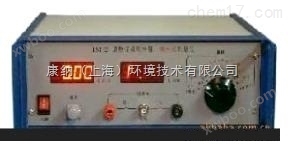
EST121 digital ultra-high resistance and microcurrent measuring instrument
NegotiableUpdate on 01/22
- Model
- Nature of the Manufacturer
- Producers
- Product Category
- Place of Origin
Overview
According to Ohm's Law, the measured resistance Rx is equal to the applied voltage V divided by the current I. The working principle of traditional high resistance meters is to measure the voltage V fixed and obtain the resistance value by measuring the current I flowing through the sampling resistor. From Ohm's Law, it can be seen that since the current I is inversely proportional to the resistance, rather than directly proportional, the displayed value of the resistance is nonlinear. That is, when the resistance is infinite, the current is zero, and the zero position of the meter head is ∞. The scales near it are very dense, and the resolution is very low. The entire scale is non-linear.
Product Details
EST121 digital ultra-high resistance and microcurrent measuring instrument
I. Overview
The EST121 digital ultra-high resistance and microcurrent measuring instrument adopts large-scale integrated circuits from the United States and our technology, making the instrument small in size, light in weight, and high in accuracy. A high resistance meter that displays resistance and current directly using double 3.1/2 digits. The measurement limit ranges from 0.01 × 10⁴ Ω to 1 × 10¹⁸ Ω, making it the most widely measured and accurate digital ultra-high resistance measuring instrument in China. The current measurement range is 2 × 10⁻⁴ to 1 × 10-16A. The test voltage inside the machine can be adjusted to any of 10/50/100/250/500/1000V. This instrument has high accuracy, fast display, good stability, and convenient reading. It is suitable for testing the resistance values of anti-static products such as anti-static shoes, anti-static plastic and rubber products, anti-static raised floors in computer rooms, as well as measuring the insulation resistance of insulation materials and electronic and electrical products. This instrument can not only measure resistance, but also directly measure weak currents.
*Meets and exceeds the requirements of standards such as GB/T 1410-2006 "Test Method for Volume and Surface resistivity of Solid Insulation Materials" and ASTM D257 "Test Method for DC Resistance or Conductivity of Insulation Materials" in the United States. Its accuracy is several times or even more than 10 times higher than the standard requirements (the standard GB/T1410-2006 "Test Method for Volume and Surface resistivity of Solid Insulation Materials" specifies an accuracy of ± 10% below 1010 Ω and ± 20% at higher resistances). ).
Main applicable standards:
GB/T 1410-2006 Solid insulation materials - Test methods for volume resistivity and surface resistivity
GB 12014 Anti static Work Clothes
GB/T 20991-2007 Test Methods for Personal Protective Equipment Shoes
GB 4385-1995 Technical Requirements for Anti static Shoes and Conductive Shoes
GB 12158-2006 General Guidelines for Preventing Static Electricity Accidents
GB 4655-2003 Safety Regulations for Static Electricity in Rubber Industry
GB/T 12703.4-2010 Evaluation of Electrostatic Properties of Textiles Part 4: Electrical Resistance
GB/T 12703.6-2010 Evaluation of Electrostatic Properties of Textiles Part 6 Fiber Leakage Resistance
GB 13348-2009 Safety Regulations for Static Electricity of Liquid Petroleum Products
GB/T 15738-2008 Test Method for Electrical Resistance of Conductive and Antistatic Fiber Reinforced Plastics
GB/T 18044-2008 Carpet Static Behavior Evaluation Method Walking Test
GB/T 18864-2002 Limits of electrical resistance for antistatic and conductive products used in vulcanized rubber industry
GB/T 22042-2008 Test method for surface resistivity of anti-static performance of clothing
GB/T 22043-2008 Test Method for Antistatic Performance of Clothing by Resistance (Vertical Resistance) of Materials
GB/T 24249-2009 Anti static Clean Fabric
GB 26539-2011 Antistatic Ceramic Tiles
GB/T 26825-2011 Anti static and Anti corrosion Adhesive
GB 50515-2010 Code for Design of Conductive (Anti static) Grounds
GB 50611-2010 Code for Design of Anti static Electrical Engineering for Electronic Engineering
GJB 105-1998-Z Electronic Product Anti static Discharge Control Manual
GJB 3007A-2009 Technical Requirements for Anti static Working Areas
GJB 5104-2004 General Requirements for Anti static Coatings and Static Performance of Radio Fuze Wind Hats
2、 Main features
The resistance measurement range is wide from 0.01 × 10⁴ Ω to 1 × 10¹⁸ Ω
The current measurement range is 2 × 10⁻⁴A to 1 × 10-16A
Small size, light weight, high accuracy
Dual display of resistance and current
Good and stable performance, easy to read
All test voltages (10/50/100/250/500/1000V) require direct reading of resistance results, eliminating the inconvenience of using old-fashioned high resistance meters to multiply coefficients at different test voltages or ranges. This makes measuring ultra-high resistance as simple as using a multimeter to measure ordinary resistance samples.
Can measure both ultra-high resistance and microcurrent
Wide applicability: Suitable for the inspection of resistance values of anti-static products such as anti-static shoes, anti-static plastic and rubber products, anti-static raised floors in computer rooms, and insulation resistance measurement of electronic and electrical products
3、 Technical indicators
1. Resistance measurement range: 0.01 × 10⁴ Ω~1 × 10¹⁸ Ω.
2. Current measurement range: 2 × 10⁻⁴A to 1 × 10-16A
3. Dual header display: 3.1/2 LED display
4. Built in test voltage: 10V, 50V, 100V, 250, 500, 1000V
5. Basic accuracy: 1%
6. Operating environment: Temperature: 0 ℃~40 ℃, relative humidity<80%
7. In machine test voltage: 10/50/100/250/500/1000V can be switched freely
8. Power supply form: AC 220V, 50HZ, power consumption of about 5W
9. Instrument size: 285mm × 245mm × 120mm
10. Quality: Approximately 2.5KG
4、 Working principle
According to Ohm's Law, the measured resistance Rx is equal to the applied voltage V divided by the current I. The working principle of traditional high resistance meters is to measure the voltage V fixed and obtain the resistance value by measuring the current I flowing through the sampling resistor. From Ohm's Law, it can be seen that since the current I is inversely proportional to the resistance, rather than directly proportional, the displayed value of the resistance is nonlinear. That is, when the resistance is infinite, the current is zero, and the zero position of the meter head is ∞. The scales near it are very dense, and the resolution is very low. The entire scale is non-linear. Moreover, due to the variation in voltage V when measuring different resistances, ordinary high resistance meters have poor accuracy and low resolution.
The EST121 digital high resistance meter simultaneously measures the voltage V across the resistor and the current I flowing through the resistor. It calculates the voltage divided by the current through an internal large-scale integrated circuit, and then displays the resistance value digitally after A/D conversion. Even if the voltage V across the resistor and the current I flowing through the resistor change at the same time, the displayed resistance value does not change due to changes in the measured voltage V or current I like ordinary high resistance meters. Therefore, even if the measured voltage, measured resistance, power supply voltage, etc. change, their measurement accuracy is very high. Theoretically, the error can be zero, while the actual error can reach a few thousandths or ten thousandths. A few. According to the standard GB/T1410-2006 "Test Methods for Volume and Surface resistivity of Solid Insulation Materials", the accuracy specified in the metrological verification certificate is ± 10% for values below 1010 Ω and ± 20% for values higher than 1010 Ω. )
Typical Applications
1. Measure the resistance value of anti-static shoes and conductive shoes
2. Measure the resistance and resistivity of anti-static materials
3. Measure the system resistance value of the raised floor used in the computer room
4. Measure the resistance (rate) of insulation materials
5. Measurement of Dark Current in Photodiodes
6. Physics, Optics, and Materials Research
Standard configuration:
1. Testing instrument: 1 unit
2. Power cord: 1
3. Measurement wires: 3 (shielded wire, test wire, grounding wire)
4. User manual: 1 copy
Other optional accessories:
This instrument, equipped with different measuring electrodes (fixtures), can measure the volume resistivity, surface resistivity, or conductivity of different materials (solid, powder, or liquid). It meets or exceeds the requirements of standards such as GB1410-89 Solid Electrical Insulation Material Insulation Resistance, Volume Resistance Coefficient, and Surface Resistance Test Method, ASTM D257 Insulation Material DC Resistance or Conductivity Test Method, etc.
Surface resistance and volume resistance test electrode (three electrode) shielding box
Similar Product Recommend