-
E-mail
1216538471@qq.com
-
Phone
13331959633
-
Address
Room C1, 27th Floor, Science and Technology Capital East Building, 668 Beijing East Road, Huangpu District, Shanghai
Product Categories
Shanghai Yingzhe Industrial Automation Equipment Co., Ltd. Third Business Department
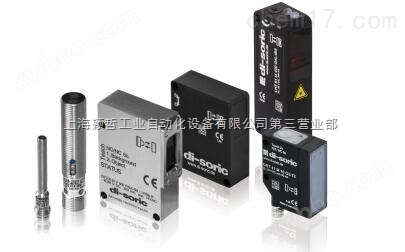
Di soric proximity switch DCC04M0.6PSLK has arrived
NegotiableUpdate on 03/18
- Model
- Nature of the Manufacturer
- Producers
- Product Category
- Place of Origin
Overview
Our company has over 500 brands in Germany, more than 300 brands in Europe, and over 200 brands in the United States. We specialize in BERNSTEIN, BURKERT, Rexroth, FESTO, ATOS, Norgren, HAWE, P+F, BALLUFF, Pilz, MOOG, MAC, SICK, E+H, PARKER, VICKERS, ASCO, OMAL, HYDAC, IFM, and Huntsman
Product Details
Di soric proximity switch DCC04M0.6PSLK has arrived
In various switches, there is a component that has the ability to "perceive" objects approaching it - a displacement sensor. The use of displacement sensors to control the on or off of proximity switches based on their sensitivity to approaching objects is called proximity switches.
When an object moves towards the proximity switch and approaches a certain distance, the displacement sensor will "sense" and the switch will act. This distance is usually referred to as the 'detection distance'. But the detection distance of different proximity switches is also different.
Sometimes the object being tested is moved towards the proximity switch one by one at a certain time interval, and then left one by one, repeating this process continuously. Different proximity switches have different response capabilities to the detected object. This response characteristic is called "response frequency".
Di soric proximity switch DCC04M0.6PSLK has arrived
Proximity switches can be divided into cylindrical, square, groove, perforated (through), and separated types according to their external shapes. The circular pillar type is easy to install, but its detection characteristics are the same. The detection part of the groove type is on the inside of the groove, used to detect objects passing through the groove. The through type is rarely produced in China, but it is more commonly used in Japan and can be used for assembling small parts such as screws or balls and buoys into water level detection devices.
Proximity switch wiring diagram
1) There is a difference between two-wire and three wire proximity switches. Three wire proximity switches are divided into NPN and PNP types, and their wiring is different. Please refer to the following figure:
2) The wiring of the two-wire proximity switch is relatively simple. The proximity switch can be connected in series with the load and then connected to the power supply.
3) The wiring of the three wire proximity switch: the red (brown) wire is connected to the positive end of the power supply; Connect the blue wire to the 0V end of the power supply; The yellow (black) line is the signal and should be connected to the load. The other end of the load is connected as follows: for NPN type proximity switches, it should be connected to the positive terminal of the power supply; For PNP type proximity switches, they should be connected to the 0V terminal of the power supply.
4) The load of the proximity switch can be a signal light, relay coil, or digital input module of a programmable logic controller (PLC).
5) Special attention should be paid to the type selection of the three wire proximity switch connected to the PLC digital input module. PLC digital input modules can generally be divided into two types: one type has a common input terminal as the positive pole of the power supply, and current flows out from the input module. In this case, NPN type proximity switches must be selected; Another type of common input terminal is the negative terminal of the power supply, where current flows into the input module. In this case, it is necessary to use a PNP type proximity switch. Don't choose the wrong one.
6) The two-wire proximity switch is limited by working conditions. When it is turned on, the switch itself generates a certain voltage drop, and when it is turned off, there is a certain residual current flowing through it. Therefore, it should be considered when selecting it. Although the three wire proximity switch has an additional wire, it is not affected by adverse factors such as residual current and works more reliably.
7) Some manufacturers will simultaneously output the "normally open" and "normally closed" signals of the proximity switch, or add other functions. In this case, please follow the product manual for specific wiring. [1]
Slot type photoelectric switch wiring
The diode of the photoelectric switch is a light-emitting diode, and the output is a phototransistor. C is the collector and E is the emitter.
When a transistor is used as a switch, the collector is usually used as the output terminal.
General connection: The diode is the input terminal, E is grounded, C is connected to the load, and the other end of the load needs to be connected to a positive power supply. This method has a wide range of applications.
Special connection method: The diode is the input terminal, C is connected to the positive power supply, E is connected to the load, and the other end of the load needs to be grounded. This connection method is only applicable when the equivalent resistance of the load is very small (within a few tens of ohms). If the equivalent resistance of the load is relatively large, it may cause the working point of the switch transistor to be abnormal, resulting in unreliable switch operation.
In general industrial production sites, eddy current proximity switches and capacitive proximity switches are usually used. Because these two types of proximity switches have lower environmental requirements.
When the tested object is a conductive object or an object that can be fixed on a metal object, eddy current proximity switches are generally selected because of their high response frequency, good resistance to environmental interference, wide application range, and low price.
If the measured object is non-metallic (or metallic), liquid level height, powder height, plastic, tobacco, etc. A capacitive proximity switch should be selected. This type of switch has a low response frequency but good stability. Environmental factors should be considered during installation.
204448 BEK 1-P14-G0TI-IBS
205328 DCR 40 K 04 NOLK
202001 WRB 120 S-M6-2.5
208711 SLI2-1809-S
202597 US 60 K 5000 PSA-I-TSSL
209161 SLIH4-3B-WTHF
205590 FS 12-100-2 M G8-B8
202809 SHB-M18
202023 WRB 130 P-5.6-2.5
200209 DCC 05 V 1.5 PSK-TSL
209053 SLI4-609
201628 SH 4
208569 SLBH4-2B
208059 DCC 30 M 10 NSLK
205225 DCC 12 M 08 NSK-IBSL
207834 KSSTS 1000/80 FG3LK-IBS
207697 BE-F150/150-F5-K
Similar Product Recommend