-
E-mail
zhruisi@126.com
-
Phone
15811671806
-
Address
7th Floor, Building 10, No. 85 Cuiwei West Road, Zhuhai City
Product Categories
Zhuhai Ruisi Instrument Co., Ltd
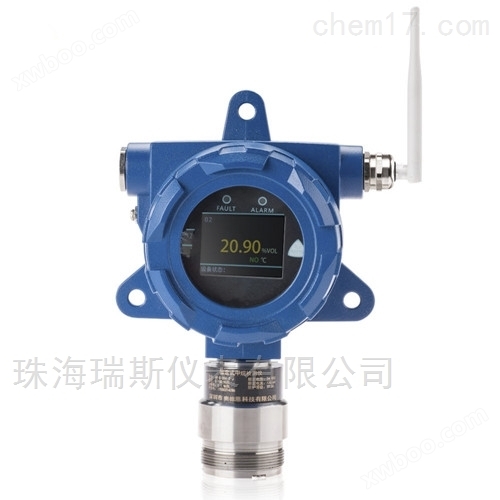
Combustible gas detector
NegotiableUpdate on 01/22
- Model
- Nature of the Manufacturer
- Producers
- Product Category
- Place of Origin
Overview
Combustible gas detector is a gas leak detection and alarm instrument. When combustible or toxic gases leak in industrial environments and the gas alarm detects that the gas concentration reaches the critical point set by the explosion or poisoning alarm, the alarm will emit an alarm signal to remind workers to take safety measures and drive the exhaust, cut-off, and sprinkler systems to prevent explosions, fires, and poisoning accidents. The industrial fixed gas alarm consists of an alarm controller and a detector. The controller can be placed in the duty room and mainly controls various monitoring points. The detector is installed in locations where gas leakage is likely to occur, and its core component is an internal one
Product Details
RS-2021Combustible gas detector
RS-2021Combustible gas detector
gas alarm
As China gradually enters industrialization, industrial accidents that occur every year in China are also recurring. News reports such as coal mine explosions, factory fires, and worker poisoning are constantly emerging. These accidents are mainly caused by improper use of flammable, explosive, toxic and harmful gases in industrial environments. The Chinese government has continuously introduced relevant laws and regulations (such as requiring the installation of gas alarms in specific environments) to prevent industrial accidents. On June 29, 2002, the 28th meeting of the Standing Committee of the 9th National People's Congress of the People's Republic of China passed the "Work Safety Law of the People's Republic of China", which came into effect on November 1, 2002.
definition
Classification of gas alarms
Gas alarms are divided into household gas alarms and industrial gas alarms. Household gas alarms are mainly used to detect formaldehyde concentration, gas leaks, and natural gas leaks. Industrial gas detectors are used to detect harmful gases such as ammonia and nitrogen dioxide in industries.
Composition and principle
The structural composition of gas alarm:
The industrial fixed gas alarm consists of an alarm controller and a detector. The controller can be placed in the duty room and mainly controls various monitoring points. The detector is installed in locations where gas is prone to leakage. Its core component is the built-in gas sensor, which detects the concentration of gas in the air. The detector converts the gas concentration detected by the sensor into an electrical signal, which is transmitted to the controller through a cable. The higher the gas concentration, the stronger the electrical signal. When the gas concentration reaches or exceeds the alarm point set by the alarm controller, the alarm sends an alarm signal and can activate external devices such as solenoid valves and exhaust fans to automatically eliminate hidden dangers.
The portable gas detector is handheld and can be carried by staff to detect gas concentrations in different locations. The portable gas detector integrates a controller and a detector, making it compact and flexible. The main difference compared to fixed gas detectors is that portable gas detectors cannot be connected to other devices.
Installation location
1. The detector should be installed in areas prone to gas leakage, and the specific location should be determined based on the specific gravity of the detected gas relative to air.
2. When the specific gravity of the detected gas is greater than that of air, the detector should be installed at a distance of (30-60) cm from the ground, with the sensor facing downwards.
3. To use the detector correctly and prevent detector malfunctions, please do not install it in the following locations:
a. Places directly affected by steam and oil fumes;
b. Places with high airflow, such as air vents, ventilation fans, and doors;
c. Places with high levels of water vapor and droplets (relative humidity: ≥ 90% RH);
d. Places with temperatures below -40 ℃ or above 55 ℃;
e. Places with strong electromagnetic fields.
Similar Product Recommend


