-
E-mail
jssc18@163.com
-
Phone
15261724159
-
Address
No. 8 Donglian Road, Dailou Industrial Concentration Zone, Jinhu County
Product Categories
Jiangsu Suchuan Instrument Co., Ltd

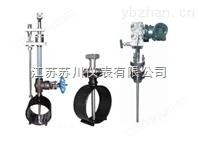
Anuba flowmeter SCANB
NegotiableUpdate on 01/31
- Model
- Nature of the Manufacturer
- Producers
- Product Category
- Place of Origin
Overview
The SCANB flowmeter, with its advantages of easy installation, low pressure loss, high strength, no wear and tear, and no leakage, has become an ideal product to replace orifice plates. Anuba flowmeter can be widely used for flow measurement of blast furnace gas, compressed air, steam, and other liquids and gases in industrial and mining enterprises.
Product Details
annubar flowmeterSCANB
annubar flowmeterOverview:
Anuba flowmeter belongs to differential pressure flowmeter. It uses the principle of differential pressure measurement of high and low pressure to measure the pressure difference formed between the dynamic pressure upstream and the static pressure downstream of the fluid, in order to achieve the purpose of measuring flow rate. Measure the diameter of the pipeline between DN30mm and DN12000mm. Anuba flowmeter is mainly used for measuring various energy sources such as liquids, fuel gases, vapors, and gases in industrial processes, with high stability and repeatability. The design theory of the Annubar flowmeter conforms to the Bernoulli equation principle, has passed the EU CE quality certification, and has been registered through automated design technology.
The Annubar flowmeter (also known as the flute shaped averaging tube flowmeter) is a new type of differential pressure flow detection element developed based on the principle of pitot tube speed measurement. It outputs differential pressure signals and is used in conjunction with instruments for measuring differential pressure. It can accurately measure the flow of various liquids, gases, and steam (superheated steam and saturated steam) in circular and rectangular pipelines. With its high accuracy, low pressure loss, and easy installation, it gradually replaces orifice plates and other detection elements and is widely used in industries such as power (including nuclear industry), chemical industry, petroleum and metal smelting.
annubar flowmeterPurpose and characteristics:
The Anuba flowmeter has become an ideal product to replace orifice plates due to its advantages of easy installation, low pressure loss, high strength, no wear and tear, and no leakage. Anuba flowmeter can be widely used for flow measurement of blast furnace gas, compressed air, steam, and other liquids and gases in industrial and mining enterprises.
The internal quadratic average structure of 1 * provides high accuracy (reading ± 1%) and high repeatability (± 0.1%). The outer impact tube is made of a single piece of material without welding points, which naturally has higher strength compared to similar products welded by a double body structure. Moreover, high temperature resistant and corrosion-resistant materials are selected for better protection performance.
The honeycomb shaped hexagonal stable structure produces a beam distribution shape of *, ensuring the stability of low-pressure signals and generating a higher differential pressure than similar products, thereby improving the range ratio.
B is suitable for square or rectangular pipes.
For the inevitable blockage problem of similar products when measuring dirty media, there are online pull-out models or manual and automatic blowing solutions and devices available to achieve non-stop maintenance.
The D-speed averaging tube, three valve group, temperature and pressure compensation, and transmitter form an integrated structure that is easy to use.
E has no drift in flow coefficient and is stable.
F * provides intuitive resonance verification to ensure stable operation.
Small pressure loss, low energy consumption, energy-saving*
The output of the Anuba flowmeter is a differential pressure signal, which can be used in conjunction with instruments for measuring differential pressure. It can accurately measure various liquids, gases, and vapors (superheated steam and saturated steam) in He shaped and rectangular pipelines. The size range of the tested pipeline is from 20MM to 3000MM. Anuba has been successfully used in sectors such as power industry (including nuclear industry), chemical industry, petrochemical industry, and metal smelting industry. It is suitable for:
1. Gas and liquid transportation
2. Energy research, steam boiler heat rate, water pump efficiency, gas compressor efficiency, and fuel consumption
3. Process control: input-output, ratio, balance; Cooling water or air, steam heating.
annubar flowmeterParameters of:
1、 Specification: DN50-DN5000 (mm); Insertion type: DN500-DN5000 (mm);
2、 Measurement accuracy: ± 0.5%, ± 0.2%; Repeatability: ± 0.1%;
3、 Range: Volume flow rate: 10:1; 100; 1. Quality flow rate: 8:1;
4、 Work pressure: The average speed tube has no raised function type: ≤ 29.00MPa; Adjustable type of averaging tube: ≤ 10MPa;
5、 Fluid temperature: ≤ 450 ℃;
6、 Medium viscosity: ≤ 30CP (equivalent to heavy oil);
7、 Body material: Sensor, three valve group: all made of 316L stainless steel, alloy steel, Hastelloy, Monel and other materials to choose from;
Accessory material: Flange: 316L stainless steel or carbon steel, alloy steel, Hastelloy, Monel and other materials can be selected;
annubar flowmeterIntroduction to the working principle of:
When fluid flows through the probe, a high-pressure distribution area is generated in its front, and the pressure in the high-pressure distribution area is slightly higher than the static pressure of the pipeline. According to the Bernoulli equation principle, the velocity of the fluid increases as it flows through the probe, creating a low-pressure distribution area at the back of the probe. The pressure in the low-pressure distribution area is slightly lower than the static pressure of the pipeline. After the fluid flows through the probe, a partial vacuum is generated at the back of the probe, and vortices appear on both sides of the probe. The cross-sectional shape, surface roughness, and position of the low-pressure tapping hole of the average velocity flow probe are key factors determining the performance of the probe. The stability and accuracy of low-voltage signals play a decisive role in the accuracy and performance of the uniform velocity probe. The Weiliba average velocity flow probe can accurately detect the average differential pressure generated by the average velocity of the fluid. The Weiliba average flow probe has multiple pairs of pressure tapping holes arranged according to certain criteria in the high and low pressure areas, making it possible to accurately measure the average flow velocity
Parameters required for Anuba flowmeter:
1. Measured media: flow measurement of various gases, liquids, and vapor media
2. Temperature of the measured medium: -60 ℃ to 850 ℃
3. Pressure of the measured medium: -1.0 to 42MPa
4. The flow rate of the measured medium: calculated based on the medium
5. Viscosity of the measured medium: calculated based on the medium
annubar flowmeterThe main advantages are:
The Annubar flowmeter (also known as the flute shaped averaging tube flowmeter) is a new type of differential pressure flow detection component developed based on the principle of pitot tube speed measurement. Our factory's Anuba flowmeter has a novel design, reasonable structure, high accuracy, low pressure loss, and easy installation and use. With its special advantages, it has gradually replaced orifice plates and other detection components in many occasions. The product has passed provincial appraisal. The output of the Anuba flowmeter is a differential pressure signal, which can be used in conjunction with instruments for measuring differential pressure. It can accurately measure various liquids, gases, and vapors (superheated steam and saturated steam) in circular and rectangular pipelines. The size range of the tested pipeline is from 20mm to 3000mm. Anuba has been successfully used in sectors such as power industry (including nuclear industry), chemical industry, petrochemical industry, and metal smelting industry. It is suitable for:
·Gas and liquid transportation
·Energy research, steam boiler thermal efficiency, water pump efficiency, gas compressor efficiency, and fuel consumption;
·Process control: input/output, ratio/balance; Cooling water or air; steam heating
·Adding materials in the chemical industry
·Load balancing: pumps, compressors, coolers, filters
Advantages of Anuba flowmeter (compared to orifice plate)
·High accuracy and good stability
The accuracy of Anuba is ± 1% and the stability is ± 0.1%. It can maintain a very stable differential pressure signal output, ensuring the mapping relationship between the output differential pressure signal and the pipeline flow rate. This is because factors such as wear, corrosion, and adhesion of oil and dust during use have little effect on the coefficient of the Annubar flowmeter, but these factors increase the flow coefficient of the orifice plate, which can reach over 20%, resulting in errors of over 20%. We can see from this that the accuracy of Anuba is * stable.
Reasonable design, easy installation, and economy
Anuba is lightweight and easy to install and disassemble, without the need for lifting tools. The product line includes a range that can be installed or disassembled without stopping the pipeline being tested. Due to its lightweight and convenient installation and disassembly, Anuba can save you considerable installation costs. For example, when installing a flow meter on a 200mm diameter pipeline, Anuba only has one 150mm long weld seam, while the orifice plate has two 1200mm long welds. In terms of working hours, installing an Annubar flowmeter only requires 1.5 hours, while installing an orifice plate requires 12 hours
Beneficial for pipeline layout
Anuba is not only suitable for circular pipelines, but also for rectangular pipelines and pipelines buried at any depth below the ground. The length requirement for the straight pipe section upstream and downstream of Anuba is much lower than that of the orifice plate. When installed behind the elbow at a distance of twice the pipe diameter, stable and high accuracy can still be obtained. This is the * advantage of Anuba, which brings great flexibility to the layout design of pipelines, especially large-diameter pipelines, and saves costs
·The pressure loss is small and the energy loss is low. Pressure loss is power loss, and the pressure loss of Annubar only accounts for 2-15% of the differential pressure, while the pressure loss of a general orifice plate accounts for 40-80% of the differential pressure. From the figure below, it can be seen that the pressure loss of Annubar is much smaller than that of an orifice plate. As the pipe diameter increases, the pressure loss of Annubar can be ignored. For example, using an Annubar flowmeter on a pipeline with a diameter of 1000mm results in an energy loss of only a few hundred yuan per year, while using an orifice plate can result in an energy loss of over 20000 yuan per year. This is very controversial for today's efforts to save energy.
(1) When installing and using, if the straight pipe sections upstream and downstream of the pipeline are not long enough, install the power bar at twice the diameter of the pipeline after the bend. Due to the complex fluid profile after bending the pipe, a slight adjustment of the fluid coefficient K is required. According to relevant data, after adjusting the K coefficient, the measurement accuracy decreased from ± 1% to ± 3%, and the repeatability decreased from ± 0.1% to ± 0.3%. (2) The continuous operation of the power bar fundamentally eliminates the possibility of blockage, but in the following situations, the power bar still needs to pay attention to preventing blockage:
When the pressure tube leaks, the high-pressure area of the probe is damaged, and particles with smaller diameters in the impurities may enter the pressure tapping hole;
When the pipeline is shut down, small impurities may enter the pressure tapping hole due to the Brownian motion of molecules;
When the system is frequently turned on, small particles of impurities may enter the pressure tapping hole at the moment of formation in the high-pressure zone. Over time, this may cause blockage of the probe;
The medium contains a large amount of tar, algae, or fibrous substances, which may also cause blockage of the probe.