-
E-mail
1964962058@qq.com
-
Phone
18626328873
-
Address
Dongfang Steel City, Xishan District, Wuxi City
Product Categories
Wuxi Minghongda Metal Products Co., Ltd


440 Stainless Steel Rod _ Today's Quotation _ Specifications
NegotiableUpdate on 01/22
- Model
- Nature of the Manufacturer
- Producers
- Product Category
- Place of Origin
Overview
440 Stainless Steel Rod _ Today's Quotation _ Specification $r $n Assuming that the surface of the stainless steel plate has obvious directional textures, plans, or contours, and is horizontally oriented, the surface will accumulate more dirt and require more frequent cleaning.
Product Details
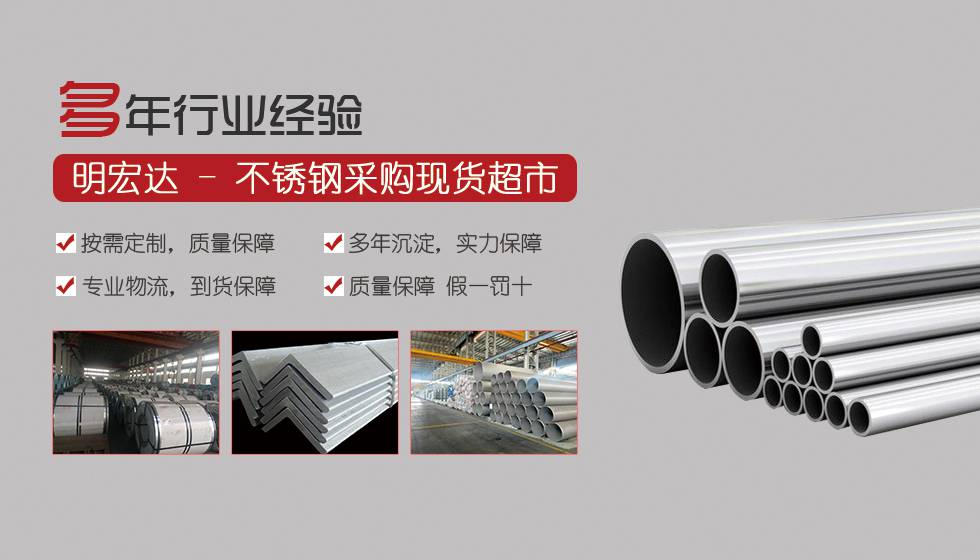
440 Stainless Steel Rod _ Today's Quotation _ Specifications
To improve the cutting performance of stainless steel, it can be achieved by adding elements such as sulfur, lead, bismuth, selenium, and tellurium, similar to carbon steel. Adding elements such as sulfur, selenium, and tellurium can reduce the wear of processed materials, while incorporating elements such as lead and bismuth can improve cutting conditions.
Although adding sulfur can improve the cutting performance of stainless steel materials, its corrosion resistance is significantly reduced because it is present in the steel in the form of MnS compounds. To deal with this issue, it is generally necessary to involve a small amount of molybdenum or copper.
For martensitic chromium nickel stainless steel, heat treatment such as quenching and tempering is generally required. Different alloy elements and addition amounts have varying effects on the hardenability of stainless steel during this process.
When quenching martensitic stainless steel, it is rapidly cooled within the temperature range of 925-1075 ℃. Due to the low phase transformation rate, both oil cooling and air cooling can achieve sufficient hardening. In the necessary tempering process, different mechanical functions can be obtained due to different tempering conditions.
In martensitic chromium stainless steel, the addition of chromium enhances the hardenability of iron carbon alloys, making it widely used in steels that require quenching. The primary function of chromium alloy element is to reduce the critical cooling rate of quenching and significantly enhance the quenching function of stainless steel.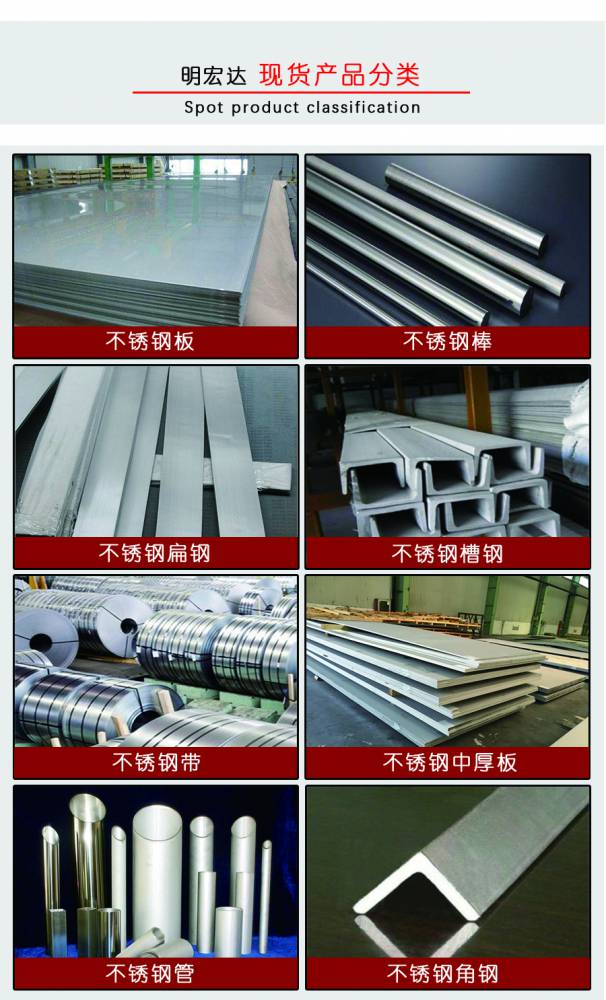
440 Stainless Steel Rod _ Today's Quotation _ Specifications
The research indicates a direct correlation between the roughness of mechanical wear or polishing surface treatment and the possibility of corrosion. A smoother surface treatment generally preserves less dirt and debris, and provides better corrosion resistance than rough surfaces. Therefore, the European standard EN 10088 recommends a surface roughness Ra of 0.5 micrometers (20 microinches) or less for polished surfaces used in environments with high levels of particulate, corrosive contamination, and/or salt exposure.
Assuming that the surface of the stainless steel plate has obvious directional textures, plans, or contours, and is horizontally oriented, the surface will accumulate more dirt and require more frequent cleaning. Vertical particle orientation is easier to wash with rain and collects less dirt.
It is cost-effective to use rolling forming technology to produce large quantities of long parts. The width planning of stainless steel strip is 2.5-1500mm, and the thickness is 0.25-3.5mm. The shape of the processed parts ranges from simple to messy, closed sections.
Generally, due to the high cost of tool processing compared to equipment, it is only cost-effective to use roll forming technology when the output value is above 30000 meters. However, it is still unclear about the trial production of stainless steel using a roll forming machine for carbon steel profiles. Careful attention must be paid here to avoid contamination or abrasion of the stainless steel surface, and the equipment should also have a tolerance for stainless steel cold work hardening and a high rebound margin. 
Similar Product Recommend
